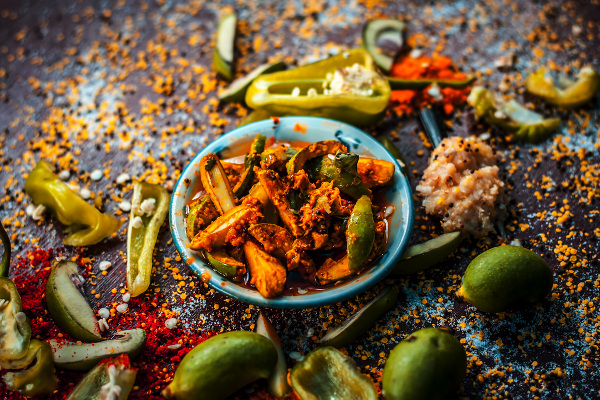
India’s traditional food heritage is increasingly becoming part of a modern rural enterprise economy as small producers transform familiar recipes, regional crops and inherited processing techniques into packaged, branded and market-ready products. The transformation was visible at the PMFME Bazaar held in New Delhi on August 24–25, 2026, where micro food-processing enterprises from 25 States and Union Territories showcased the commercial potential hidden within India’s extraordinary culinary diversity.
The Bazaar, organised as part of the PMFME Conclave 2026 at the India Habitat Centre, brought together micro entrepreneurs, women’s Self Help Groups, Farmer Producer Organisations, cooperatives and individual food producers. Their products ranged from millet preparations, spices and pickles to traditional snacks, beverages and other value-added foods built around locally available crops and regional culinary practices.
The significance of the event extended beyond the products displayed on individual stalls. It demonstrated how India’s food-processing strategy is attempting to move thousands of small producers from informal household or village-level activity into organised enterprises capable of meeting standards for packaging, quality, branding, finance and wider market access.
At the centre of this transformation is the Pradhan Mantri Formalisation of Micro Food Processing Enterprises Scheme, launched in 2020 under the Aatmanirbhar Bharat initiative. The programme was designed to address a structural challenge within India’s food economy. The country possesses a vast network of small food processors producing region-specific foods, but many historically operated informally with limited access to bank finance, modern machinery, technical assistance, food-quality systems or organised retail markets.
The PMFME model seeks to change this by helping micro businesses modernise without separating them from the local food traditions that gave rise to them. Rather than replacing traditional processing with uniform industrial products, the programme attempts to improve production systems around existing local knowledge.
A family producing a regional pickle, for example, may already possess generations of knowledge about ingredients, proportions, preservation and flavour. Its commercial limitations may instead lie in areas such as hygienic processing, shelf-life testing, food licensing, packaging, branding, machinery, working capital and access to customers outside the surrounding district.
Formalisation can address precisely these gaps. The traditional product remains recognisable, but its production moves towards a system capable of reaching supermarkets, e-commerce platforms, institutional buyers and potentially export markets.
This process is already taking place on a substantial scale. By the end of December 2025, 59,202 micro food-processing enterprises had been formalised under PMFME, while more than ₹17,015 crore of investment had been mobilised through the wider programme. The scheme had generated approximately 5.18 lakh direct and indirect employment opportunities, demonstrating how relatively small processing units can collectively create significant economic activity across rural and semi-urban India.
Women form a particularly important part of this transformation. Loans had been sanctioned for more than 75,000 women-led micro food-processing enterprises by the end of 2025, alongside financial assistance for Self Help Groups and Farmer Producer Organisations. This is significant because many traditional food skills in India have historically been preserved and transmitted within households, particularly by women, without necessarily being recognised as formal economic assets.
Pickling, drying, spice blending, millet processing, preparation of traditional snacks, preservation of fruits, fermentation and numerous other techniques can represent considerable practical knowledge. When this knowledge is linked with credit, machinery, food-safety standards and marketing, an activity previously undertaken on a small domestic scale can become a source of independent income and employment.
The PMFME framework therefore creates an unusual bridge between cultural knowledge and economic formalisation. Instead of viewing traditional food simply as heritage to be preserved, it treats that knowledge as intellectual and entrepreneurial capital capable of supporting viable businesses.
Local agricultural produce is equally important to this model. Many micro food-processing enterprises are closely connected to crops characteristic of their districts. Millets, spices, fruits, vegetables, oilseeds and other agricultural products can gain considerably more value when processed locally rather than being sold entirely as raw commodities.
A farmer producing fruit, for example, faces problems of seasonality and perishability. Processing the crop into juice, preserves, dried products or other value-added foods can extend its commercial life and create an additional market. Similar opportunities exist for millet flour, spice blends, pickles, traditional beverages and numerous other products.
Local processing can consequently keep a larger share of agricultural value within the producing region. Instead of sending raw material elsewhere for processing, packaging and branding, villages and districts can progressively develop their own food enterprises around the crops they already produce.
This is also closely connected with the One District One Product approach, under which particular regional products are identified and encouraged as potential engines of local economic development. Food-processing enterprises built around distinctive district-level crops and recipes can help create recognisable regional brands while strengthening demand for local agricultural produce.
The challenge, however, is moving from a good product to a sustainable business. A traditional recipe alone does not guarantee success in modern retail. Consumers increasingly expect consistent quality, reliable packaging, ingredient information, food-safety compliance, attractive branding and predictable availability.
This is why PMFME support extends beyond financing machinery. The programme includes assistance for training, capacity building, common infrastructure, branding, marketing and technology adoption. Incubation centres and technical institutions can help enterprises improve processing methods, develop packaging and test products before attempting larger-scale commercial expansion.
Common infrastructure is particularly important for very small businesses. An individual micro enterprise may not be able to afford expensive processing, testing, cold-storage or packaging equipment. Shared facilities can allow several producers to access modern infrastructure without each having to make the entire investment independently.
The scheme had sanctioned more than 100 common-infrastructure loans by the end of 2025, while incubation centres were being established across numerous States and Union Territories. Such facilities can become an important intermediate layer between household-scale food production and conventional industrial manufacturing.
Market access is the next crucial step. A micro enterprise may improve its production and packaging but still fail if its products remain confined to a small local market. The 2026 PMFME Conclave therefore placed particular emphasis on connecting entrepreneurs with institutional procurement, modern retail, e-commerce and export opportunities.
Three agreements signed during the Conclave with APEDA, ONDC and NABKISAN illustrate this direction. APEDA can help create stronger links with agricultural export markets, while ONDC offers a pathway into digital commerce. NABKISAN can strengthen financial and institutional support for farmer-linked enterprises.
Such connections are especially important for entrepreneurs located far from major urban markets. Digital commerce can allow a specialised product from a relatively remote district to reach consumers across India without requiring the producer to establish a traditional nationwide distribution network.
The Government e-Marketplace has similarly been linked with PMFME to expand opportunities for supported enterprises. Exhibitions, buyer-seller interactions and participation in national and international trade events provide additional routes through which small producers can move beyond neighbourhood sales.
For traditional Indian foods, this creates a possibility that did not exist at comparable scale a generation ago. A regional product that may once have been available only within a particular district can now potentially reach customers nationally through digital marketplaces and modern logistics.
That wider reach can also encourage preservation of local food traditions. Commercialisation is sometimes seen as a threat to traditional culture, but the opposite can occur when a regional product develops a sustainable market. If consumers are willing to pay for a traditional millet preparation, spice mixture, pickle or preserved food, producers have an economic reason to maintain the skills and ingredients associated with it.
The challenge is ensuring that growth does not remove the product’s distinctive identity. Excessive standardisation can turn unique regional foods into generic mass-market products. The strongest micro-enterprise model therefore combines improved hygiene, packaging and consistency with preservation of the recipe, local ingredients and cultural character that make the product different in the first place.
Millets provide a particularly useful example. For generations, several millet varieties were associated mainly with local diets and dryland agriculture. Renewed interest in nutrition, climate-resilient crops and traditional grains has created an expanding market for millet-based snacks, beverages, mixes and ready-to-cook foods.
Micro food processors can occupy an important position in this transition because many already understand how these grains are traditionally prepared. Modern processing and branding can take that existing knowledge into new consumer categories without requiring the food tradition to be reinvented from the beginning.
Traditional preservation techniques offer similar possibilities. Pickling, drying, roasting and fermentation emerged historically because communities needed methods to preserve seasonal foods in different climates. Modern food science can complement these practices by improving hygiene, standardising shelf life and introducing packaging that allows products to travel greater distances.
This combination of old knowledge and modern technology could become one of the most distinctive features of India’s food-processing industry.
The potential economic scale is considerable because India possesses both an enormous agricultural base and exceptional culinary diversity. Every region contains foods shaped by its climate, crops, history and cultural practices. Turning even a fraction of these into viable enterprises creates economic opportunities that are geographically dispersed rather than concentrated only around major industrial cities.
That makes micro food processing especially relevant to rural development. A successful processing enterprise can create demand for farmers, packaging suppliers, transport providers, retailers and local workers. It can also allow more young people to build businesses within their home districts rather than relying entirely on migration to large urban centres.
The PMFME Bazaar demonstrated this model in tangible form. The products displayed from 25 States and Union Territories represented more than culinary variety. Behind each packaged millet product, spice blend, beverage or pickle stood a wider process involving local raw materials, traditional knowledge, entrepreneurship, finance, processing technology and access to new markets.
The next stage will depend on whether these businesses can move successfully from exhibition stalls to sustainable commercial scale. Reliable credit, consistent quality, stronger cold chains, food testing, packaging innovation and affordable logistics will remain essential. Digital platforms can widen visibility, but enterprises must also be capable of fulfilling larger volumes while maintaining the quality that initially attracted consumers.
A stronger PMFME 2.0, now being discussed as the programme evolves, could therefore focus increasingly on the transition from formalisation to competitiveness. Once an enterprise has been registered and basic machinery installed, the more difficult task is helping it grow into a durable brand capable of surviving in competitive food markets.
India’s advantage is that the raw material for such an industry already exists in abundance. It lies not only in farms and crops but also in thousands of regional recipes, preservation techniques and food traditions accumulated over generations.
The emerging micro food-processing ecosystem is beginning to recognise that knowledge as an economic asset. By combining traditional expertise with modern machinery, formal finance, packaging, food standards, digital commerce and branding, small producers can retain the identity of regional foods while giving them access to entirely new markets.
The transformation visible at the PMFME Bazaar therefore represents something larger than the formalisation of small food businesses. It shows how India’s culinary heritage can become a foundation for contemporary entrepreneurship, creating rural employment and stronger agricultural value chains while ensuring that traditional foods do not remain confined to local memory.
From millet preparations and inherited pickle recipes to spices, snacks and regional beverages, India’s traditional food knowledge is increasingly making the journey from the household and village to the organised marketplace. Through PMFME, that journey is beginning to produce something distinctly Indian: modern commercial brands whose real strength comes from knowledge that is generations old.
You may also like
-
JSW Steel’s Crude Steel Production Rises 5% to 7.27 Million Tonnes in Q2 FY2027
-
Jubilant Pharmova Announces CAD 94.5 Million Expansion of Canadian Radiopharmaceutical Facility
-
Kabra Extrusiontechnik’s GEON Commissions 20 MWh Battery Storage Project in Rajasthan
-
OBSC Perfection Secures ₹8.9 Crore Israeli Defence Order for Precision Fuze Components
-
India’s Wind Energy Capacity Reaches 59.20 GW as Government Targets 100 GW by 2030
