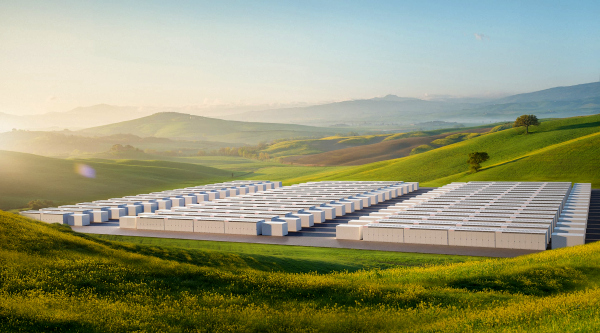
India is set to invite bids by May 2026 for manufacturing grid-scale battery energy storage systems (BESS), marking a major push to strengthen the country’s renewable energy infrastructure and grid stability. The move, announced by Renewable Energy Secretary Santosh Sarangi, will focus on developing 10 GWh of domestic battery storage capacity under the government’s Production Linked Incentive (PLI) framework.
The initiative comes as India accelerates efforts to meet its ambitious target of 500 GW of renewable energy capacity by 2030, up from the current ~267 GW. Grid-scale battery storage is considered critical for managing the intermittent nature of renewable sources such as solar and wind, by storing surplus energy during low demand and supplying it during peak hours.
The upcoming tender is expected to be among the first large-scale domestic manufacturing initiatives specifically targeting grid-scale storage systems. It complements the government’s broader push under the Advanced Chemistry Cell (ACC) PLI scheme, which aims to build a total of 50 GWh battery manufacturing capacity in India, with a dedicated allocation of 10 GWh for stationary storage applications.
To further support deployment, the government is rolling out viability gap funding (VGF) schemes aimed at enabling around 43 GWh of battery storage installations, reflecting the scale of anticipated demand in the coming years.
Falling battery costs are also improving the economic viability of large-scale storage projects. Prices have dropped sharply from ₹10.18 per kWh in 2022–23 to around ₹2.1 per kWh in recent months, making battery-backed renewable power increasingly competitive.
Despite this progress, India’s current battery storage deployment remains relatively low at around 0.7 GWh, highlighting significant headroom for expansion. The Central Electricity Authority (CEA) projects that the country will require approximately 411 GWh of energy storage capacity by 2031–32, underlining the urgency of scaling domestic manufacturing and deployment.
The push for grid-scale battery storage is also closely tied to India’s energy security and decarbonisation goals. With peak power demand expected to reach around 270 GW, energy storage systems will play a crucial role in ensuring reliable, round-the-clock renewable power supply while reducing dependence on fossil fuels.
Overall, the planned tender signals a shift from policy intent to execution, positioning battery storage as a central pillar in India’s transition toward a cleaner, more resilient and flexible power grid.
Reference:
https://www.ibef.org/news/india-to-call-bids-for-grid-scale-battery-storage-manufacturing-by-may
https://www.moneycontrol.com/news/business/india-to-call-bids-for-grid-scale-battery-storage-manufacturing-by-may-says-renewable-energy-secy-13881052.html
https://www.ibef.org/industry/renewable-energy
https://www.ibef.org/news/india-s-energy-storage-projects-installation-to-surge-10-fold-to-5gwh-in-2026
You may also like
-
India’s Economic Warfare Challenge: Strategic Autonomy, Energy Security and the Rise of a Global Power
-
India-US Trade Deal Stalemate: Why Washington’s Tariff Pressure Has Failed to Secure an Agreement
-
US Double Standards in Foreign Policy: 16 Recent Cases Involving India, Russia, China and Global Trade
-
India’s Arctic Energy Ambitions: Russian Oil, LNG and a New Sea Route to Indian Ports
-
India and Russia Explore Joint Icebreaker Construction as Maritime Industrial Cooperation Expands
