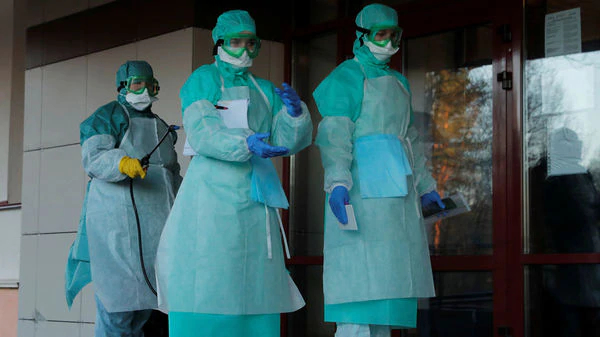
India has revived strict health-screening procedures for travellers arriving from or transiting through Ebola-affected regions, bringing back a familiar public-health model used during the Covid period: early declaration, screening at entry points, onboard vigilance and rapid isolation of suspected cases. The move comes after the Ebola outbreak caused by the Bundibugyo virus in the Democratic Republic of the Congo and Uganda was classified as a Public Health Emergency of International Concern.
The immediate purpose is prevention. India has not reported any case of Ebola disease caused by the Bundibugyo strain so far, but the government is moving early to reduce the risk of imported infection. Citizens have already been advised to avoid non-essential travel to the Democratic Republic of the Congo, Uganda and South Sudan until further notice.
The new travel-linked measures focus on passengers arriving from or passing through affected countries. Airlines with direct or indirect connectivity to Uganda and Congo have been asked to ensure that travellers complete Self Declaration Forms before de-boarding. In-flight announcements are also being used to alert passengers that anyone with symptoms such as fever, weakness, muscle pain, headache, sore throat, vomiting, diarrhoea, rash or bleeding must immediately report to the crew and to the medical or immigration unit on arrival.
This is the same logic that made Covid-era travel protocols useful: identify risk before passengers disappear into the city. A self-declaration form gives health authorities a first layer of information. Thermal and symptom-based screening at airports provides a second layer. Immediate reporting and isolation of symptomatic travellers creates a third layer. Together, these measures are meant to slow the movement of risk from aircraft cabin to airport terminal to community.
The aviation protocol also covers suspected cases during flight and after landing. If a passenger shows symptoms onboard, the person may be moved to the rear of the aircraft, with nearby rows kept vacant where possible. On arrival, the aircraft can be parked at a separate designated bay, allowing health teams to assess the situation without creating crowd exposure inside the terminal. Airlines have also been asked to keep supplies such as triple-layer masks, disposable gloves, PPE kits, hand sanitiser and bio-hazard disposal bags ready for use.
This preparation matters because Ebola is a different kind of public-health threat from routine respiratory infections. Bundibugyo virus disease is a severe form of Ebola disease. It spreads through direct contact with the blood, secretions, organs or other bodily fluids of infected persons, and can also spread through contaminated surfaces. The incubation period can range from 2 to 21 days, and early symptoms such as fever, fatigue, muscle pain, headache and sore throat can resemble other common illnesses.
That 21-day window is central to the advisory. Travellers who develop symptoms after arrival have been urged to seek medical care quickly and clearly inform doctors about their travel history. This is a crucial instruction because early clinical suspicion can determine whether a patient is isolated, tested and managed quickly or mistaken for a routine fever case.
The international background explains the urgency. The outbreak was detected in the Democratic Republic of the Congo, with confirmed Bundibugyo virus disease cases, suspected deaths and healthcare-worker fatalities reported in affected health zones. Uganda also confirmed imported cases linked to the outbreak. WHO has warned that Ituri’s role as a commercial and migratory hub, along with its proximity to Uganda and South Sudan, increases the risk of cross-border spread.
India’s response is therefore built around a simple idea: keep the outbreak outside the country through layered surveillance rather than waiting for a domestic case. Airports are the first line because international movement can carry infection across continents faster than traditional border systems can react. Airlines, immigration counters, airport health officers and state surveillance units now become part of a single public-health chain.
The advisory also reflects a lesson learned during Covid: travel control works best when passengers, airlines and health authorities act in coordination. Passengers must disclose symptoms and travel history honestly. Airlines must make announcements, collect declarations and identify suspected cases. Airport health teams must screen, isolate and guide passengers. Hospitals must remain alert for fever cases with relevant travel exposure.
There is also a communication challenge. Ebola creates fear because of its high fatality reputation, but fear alone does not improve safety. The practical message is discipline: avoid unnecessary travel to affected countries, follow airport instructions, report symptoms, disclose contact with suspected or confirmed patients, and seek care quickly if illness develops within 21 days of arrival.
India’s decision to reactivate strict flyer protocols is a preventive shield, not a sign of panic. The country has no reported Bundibugyo Ebola case, but the combination of a global emergency declaration, affected African travel corridors and the absence of approved vaccines or specific treatments for this strain makes early vigilance the safest route.
In public health, speed often decides containment. A passenger form filled before landing, a fever detected at the airport, an onboard report made in time, or a travel history shared honestly with a doctor can stop a possible chain of transmission before it begins. That is why these airport measures matter. They convert memory from the Covid years into a practical defence against a new imported-risk threat.
You may also like
-
Robotics, AI and Nanoscience Set to Transform Precision Medicine in India
-
Why Ayurveda Recommends Eating Only When Hungry
-
Ayurveda on Eating at the Right Time: How Food Timing Supports Balance and Health
-
Ayurveda and Late-Night Living: What Irregular Sleep Does to the Body
-
India’s Ayush Services Economy Reaches $36.92 Billion, RIS Study Projects Strong Growth to 2047
