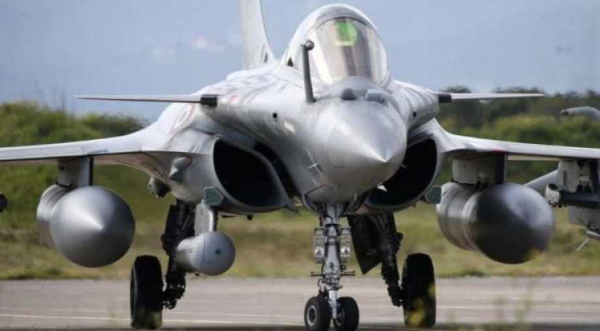
India has reportedly moved closer to one of its biggest fighter aircraft procurements, with the government finalising the Letter of Request for 114 Dassault Rafale fighter jets for the Indian Air Force. The proposal, estimated at around ₹3.25 lakh crore, is expected to be sent to France in the coming weeks and could become India’s largest-ever combat aircraft acquisition if it proceeds to contract stage. Multiple reports say the plan involves a mix of direct deliveries from France and large-scale production in India.
The key point is that this is still a reported procurement movement, not a signed contract. A Letter of Request is an important step because it formally opens the government-to-government process, but the final agreement would still require negotiations over price, delivery schedule, weapons package, maintenance, technology transfer, Indian industrial participation and life-cycle support. The deal’s real shape will depend on how these negotiations settle.
According to the reported plan, around 90 to 92 aircraft may be manufactured in India through a partnership involving Dassault Aviation and an Indian private-sector company, while the remaining aircraft would arrive in fly-away condition from France. The Indian Express reported that around 90 aircraft are expected to be made in India, while ThePrint earlier reported a 22 fly-away and 92 India-made split.
This matters because the Rafale proposal is no longer only about buying aircraft. It is about creating a deeper aerospace production ecosystem inside India. If large-scale local manufacturing is built into the programme, the deal could strengthen assembly capability, supply chains, component manufacturing, maintenance infrastructure, testing facilities and skilled employment in the defence aviation sector.
The urgency comes from the Indian Air Force’s fighter squadron gap. India has long planned for a larger combat fleet, but retirements of older aircraft and delays in new inductions have kept pressure on squadron strength. The retirement of the MiG-21 fleet added to the modernisation requirement, while India continues to induct indigenous Tejas fighters and pursue future platforms. AP reported in 2025 that the IAF had 29 operational fighter squadrons against a required 42, underlining the scale of the capability gap.
The Rafale already has a strong base in Indian service. India signed the original agreement for 36 Rafale aircraft with France in September 2016, and the Ministry of Defence later confirmed that all 36 aircraft had been delivered by December 2022, with both Rafale squadrons becoming fully operational.
That existing operational experience is one reason the Rafale is attractive for a larger order. The IAF already has trained pilots, ground crew, simulator infrastructure, weapons familiarity and operational doctrines built around the aircraft. Expanding an existing fleet is usually easier than introducing a completely new fighter type because training, maintenance, spares, mission planning and weapons integration can build on the existing base.
The Rafale also fits India’s requirement for a multi-role aircraft that can perform air defence, deep strike, maritime strike, reconnaissance, precision attack and nuclear-delivery-related roles depending on configuration. Dassault describes the Rafale as an omnirole fighter with AESA radar, front-sector optronics, SPECTRA electronic warfare protection, net-centric capability, reconnaissance pod options and compatibility with weapons such as MICA, Meteor, AASM, SCALP, Exocet and laser-guided bombs.
For the IAF, the value of such a platform lies in mission flexibility. A Rafale formation can conduct air superiority missions, carry beyond-visual-range missiles, deliver stand-off weapons, support deep-penetration strikes and operate in high-threat environments with advanced sensors and electronic warfare support. This allows commanders to use the same aircraft type across multiple theatres and mission profiles rather than depending on narrowly specialised fleets.
The proposed 114-aircraft order also comes after India’s separate naval Rafale decision. In April 2025, India and France signed an Inter-Governmental Agreement for 26 Rafale-Marine aircraft for the Indian Navy, including 22 single-seat and four twin-seat aircraft, along with training, simulators, weapons and performance-based logistics support. The Ministry of Defence stated that deliveries would be completed by 2030.
Together, the IAF’s existing Rafales, the Navy’s Rafale-Marine order and the proposed 114-aircraft acquisition point to a broader Indian shift towards fleet commonality with a trusted French platform. Commonality can reduce long-term complexity in areas such as spares, weapons, simulators, support contracts, training pipelines and upgrade planning. It also gives India more leverage to negotiate deeper industrial participation.
The industrial angle may become the most important part of the new proposal. Reuters reported in 2025 that Dassault Aviation and Tata Advanced Systems had agreed to manufacture Rafale fuselage sections in Hyderabad, with deliveries targeted from FY2028 and an eventual output goal of two fuselages per month. This was described as the first time Rafale fuselage production would take place outside France.
If the 114-aircraft plan advances, this kind of industrial base could become the foundation for a much larger programme. India would want the deal to support domestic aerospace manufacturing, not merely screwdriver assembly. The real test will be the depth of technology transfer, the level of Indian content, the role of Indian MSMEs, the ability to build high-value structures and systems, and the long-term creation of maintenance and upgrade capabilities within India.
Strategically, the deal would strengthen India’s air posture across both the western and northern fronts. The IAF requires aircraft that can operate from dispersed bases, carry long-range weapons, support high-altitude operations and integrate with India’s wider network of radars, airborne warning systems, air defence grids and command networks. A larger Rafale fleet would give India more high-end combat mass, especially for missions requiring survivability, precision and rapid response.
The proposal also reflects a practical procurement choice. India is developing indigenous platforms such as Tejas Mk1A, Tejas Mk2 and AMCA, but these programmes will enter service in stages. The IAF needs numbers in the near and medium term while indigenous programmes mature. A large Rafale acquisition would therefore act as a bridge between today’s squadron shortfall and tomorrow’s Indian-designed combat aircraft ecosystem.
The challenge will be cost. At around ₹3.25 lakh crore as reported, this would be an enormous financial commitment. The government would have to balance combat urgency with budget discipline, domestic production priorities, weapons packages, sustainment costs and future upgrade requirements. Fighter aircraft are not one-time purchases; they require decades of spending on engines, avionics, weapons, software, spares, training and mid-life upgrades.
Still, if negotiated well, the 114-Rafale programme could become a defining moment in India’s air-power modernisation. It would bring combat numbers, deepen the India-France defence partnership, support domestic aerospace manufacturing and give the IAF a stronger high-end fighter fleet for the next several decades.
The reported finalisation of the request letter therefore should be seen as a major step, but not the finish line. The real milestone will come when India and France finalise the contract, lock the manufacturing model, define the technology package and set a delivery schedule that matches the IAF’s urgent operational needs. If that happens, the Rafale will move from being a premium two-squadron asset in Indian service to one of the central pillars of India’s future air combat architecture.
You may also like
-
PRAHAAR: India’s First National Counter-Terrorism Policy and Strategy
-
Takshak Heavyweight Torpedo: How India’s Indigenous Submarine Weapon Compares With the World’s Leading Torpedoes
-
Embraer Builds Dual Aerospace Strategy in India Through C-390 Military and E175 Regional Aircraft Programmes
-
NextLeap Tests Indigenous Jet Engine for Long-Range Stryker Kamikaze UAV
-
Côte d’Ivoire Military Delegation Visits HAL, Shows Interest in India’s Indigenous Aerospace Platforms
