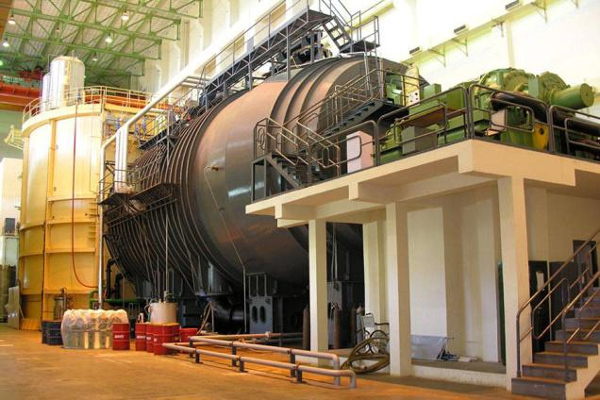
India is set to become the second country in the world after Russia to operate a commercial-level Fast Breeder Reactor, Union Minister Dr Jitendra Singh said, describing the development of the 500 MWe Prototype Fast Breeder Reactor at Kalpakkam as a major milestone in India’s nuclear journey. The reactor, indigenously designed and developed, achieved first criticality on April 6, 2026, marking a significant step forward in the country’s three-stage nuclear power programme.
Addressing a workshop of MPs and MLAs on Small Modular Reactors, Dr Singh said the Kalpakkam-based Prototype Fast Breeder Reactor has been developed by the Indira Gandhi Centre for Atomic Research and built by BHAVINI. The reactor uses uranium-plutonium mixed oxide fuel and is designed to produce more fuel than it consumes, making it central to the second stage of India’s nuclear strategy.
The minister said the achievement places India in a select group of nations with advanced fast breeder reactor capability. While countries such as the United States, United Kingdom, France, Japan, Germany and China have historically developed or operated experimental fast reactors, most of those programmes are currently shut down. Russia remains the only country operating commercial fast breeder reactors, while India is now in the advanced stage of commissioning its own.
The successful progress of the Prototype Fast Breeder Reactor is also important because it moves India closer to the eventual use of its vast thorium reserves. India’s three-stage nuclear programme was designed to first use natural uranium, then plutonium in fast breeder reactors, and finally thorium-based fuel cycles. The Kalpakkam reactor therefore acts as a bridge between India’s current nuclear capabilities and its long-term ambition of using thorium more extensively for clean energy generation.
Dr Singh also underlined the growing importance of nuclear power in India’s clean energy transition. He said nuclear energy will play a crucial role in achieving India’s long-term sustainability goals, including the target of reaching 100 GW of nuclear power capacity by 2047. He added that sectors such as artificial intelligence, data infrastructure and advanced manufacturing will increasingly require reliable, round-the-clock clean power, making nuclear energy an indispensable part of India’s future energy mix.
The minister also highlighted the government’s push for Small Modular Reactors. Under the recently launched Nuclear Mission, which has an allocation of ₹20,000 crore, five SMRs are planned by 2033. According to Dr Singh, SMRs can be useful for captive power generation in industries, dense population zones, remote areas without strong grid connectivity and for repurposing thermal power plants.
He further said that policy support and the proposed SHANTI Act will help enable private-sector participation in expanding India’s nuclear energy capacity. This is significant because India’s nuclear expansion will require not only public-sector scientific capability but also wider industrial participation, manufacturing support and faster deployment models.
Dr Singh said India’s energy future will depend on a balanced mix of nuclear, renewable and other clean energy sources. As the country works toward its Net Zero target for 2070, the development of fast breeder reactors and Small Modular Reactors could become major pillars of a more secure, cleaner and technologically advanced power system.
Source: PIB
You may also like
-
Koraput Kalajeera Rice of Odisha: The GI-Tagged Aromatic Heritage of India’s Ancient Rice-Growing Region
-
ICAR Scientists Develop Indigenous Protective Gloves for Cotton Farmers, Sign Commercial Manufacturing Agreement
-
BHEL–Coal India Joint Venture Begins Construction of ₹25,016 Crore Indigenous Coal Gasification Project in Odisha
-
PM Modi to Inaugurate RBI’s Tier IV Data Centre and Cybersecurity Training Institute in Bhubaneswar
-
India Creates 11 Crore Digital Farmer IDs Five Months Ahead of Target, Strengthening AgriStack Infrastructure
