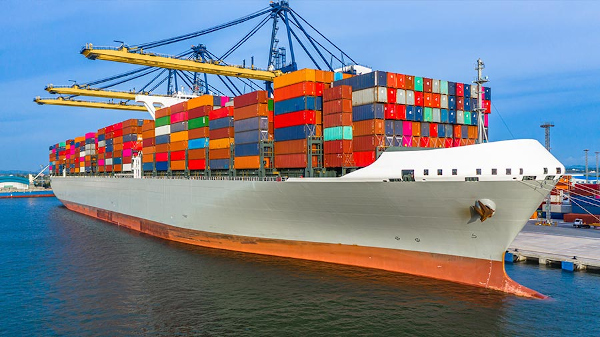
India began the new financial year on a strong export note, with total exports of merchandise and services estimated at US$ 80.80 billion in April 2026, compared with US$ 71.13 billion in April 2025, marking an estimated growth of 13.59%. The data, released by the Ministry of Commerce and Industry points to broad-based momentum across goods and services, even as imports also rose during the month.
The total import bill for April 2026 was estimated at US$ 88.61 billion, up 7.67% from US$ 82.29 billion in April 2025. Despite higher imports, the overall trade deficit narrowed to US$ 7.81 billion, compared with US$ 11.16 billion a year earlier. This makes the April trade picture significant because export growth outpaced import growth in the combined merchandise-and-services account.
Merchandise exports were the main headline driver. India’s goods exports rose to US$ 43.56 billion in April 2026, against US$ 38.28 billion in April 2025, registering a growth of 13.78%. Merchandise imports also increased, reaching US$ 71.94 billion, compared with US$ 65.38 billion in the same month last year.
A particularly important number is the rise in non-petroleum exports, which stood at US$ 33.97 billion, growing 9.01% from US$ 31.16 billion in April 2025. This indicates that India’s export growth was not carried by petroleum alone, but also supported by manufacturing and value-added sectors. Non-petroleum and non-gems-and-jewellery exports also rose to US$ 31.64 billion, compared with US$ 28.66 billion a year earlier.
The strongest sectoral performances came from petroleum products, electronic goods, engineering goods, meat, dairy and poultry products, and drugs and pharmaceuticals. Petroleum product exports increased by 34.66%, from US$ 7.12 billion to US$ 9.59 billion. Electronic goods exports rose sharply by 40.31%, from US$ 3.69 billion to US$ 5.18 billion, showing the growing importance of electronics in India’s export basket. Engineering goods exports increased by 8.76%, from US$ 9.52 billion to US$ 10.35 billion.
The rise in electronics exports is especially important for India’s manufacturing story. For years, India’s export basket was more heavily associated with petroleum products, gems and jewellery, textiles, agriculture-linked goods and pharmaceuticals. The strong April performance in electronics suggests that India’s production-linked incentive push, mobile manufacturing ecosystem and supply-chain integration are gradually giving the country a stronger presence in high-value manufacturing exports.
India’s pharmaceuticals sector also continued to contribute steadily. Drugs and pharmaceutical exports rose 7.12%, from US$ 2.49 billion in April 2025 to US$ 2.66 billion in April 2026. Meat, dairy and poultry product exports grew even faster, rising 48.03% from US$ 0.37 billion to US$ 0.55 billion. These figures show that both industrial and agri-linked export segments helped support the April performance.
Services trade remained another major strength. Services exports for April 2026 were estimated at US$ 37.24 billion, compared with US$ 32.85 billion in April 2025, reflecting estimated growth of 13.36%. Services imports were estimated at US$ 16.66 billion, slightly lower than US$ 16.91 billion a year earlier. This gave India a strong services surplus, helping reduce the overall combined trade deficit.
The services number should be read with one technical caution. The official release notes that the latest RBI services data available was for March 2026, so the April 2026 services figures are estimates. It also notes that April 2025 data has been revised on a pro-rata basis using quarterly balance of payments data.
Overall, the April 2026 trade data gives India a positive start to the export year. Merchandise exports showed strong double-digit growth, services exports remained robust, electronics recorded a sharp rise, engineering goods crossed the US$ 10-billion mark for the month, and the combined trade deficit narrowed from the previous year. The key policy challenge will be to sustain this momentum across more months, broaden the manufacturing export base, reduce import dependence in critical sectors and keep services exports strong.
You may also like
-
India Advances Trade Diplomacy at G20 Ministerial in Milwaukee
-
Kokasa Launches to Build Indigenous Mission-Critical Systems for Su-30MKI, MiG-29 and T-72
-
Tata Projects and MDS Aero Partner to Build Advanced Aero-Engine Test Infrastructure in India
-
Flying Wedge Defence Partners With Portugal’s Keydef to Manufacture Kaal Bhairava and YAMA Drones in Europe
-
Armenia Conducts Live-Fire Exercise With Indo-French TRAJAN 155 mm Howitzers Manufactured in India
