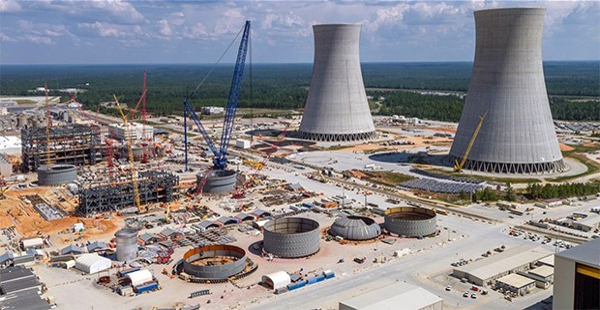
A senior delegation from the American nuclear industry is visiting India this week, marking one of the clearest signs yet that India’s newly opened civil nuclear sector is beginning to attract serious global commercial attention. The delegation, hosted by the US-India Strategic Partnership Forum in partnership with the Nuclear Energy Institute, is in India from May 18 to 21, 2026, with engagements in Delhi and Mumbai. It is being led by Maria Korsnick, President and CEO of the Nuclear Energy Institute, and includes senior executives from leading U.S. nuclear companies covering advanced reactor technologies, fuel cycle innovation, engineering and nuclear infrastructure development.
The visit comes at a crucial moment for India’s energy policy. For decades, India’s nuclear power sector was almost entirely state-driven, shaped by strategic restrictions, public-sector control and liability concerns that limited the participation of foreign and private companies. That structure is now changing. India has set an ambitious goal of developing 100 GW of nuclear power capacity by 2047, making nuclear energy a major pillar of its long-term energy transition and energy security strategy. The Union Budget 2025–26 announced a Nuclear Energy Mission with an outlay of ₹20,000 crore for research and development in Small Modular Reactors, with a target of operationalising at least five indigenously developed SMRs by 2033.
The U.S. delegation’s visit is therefore not just a routine business mission. It represents the commercial follow-through to India’s larger nuclear policy reset. American companies are expected to explore opportunities in project development, component manufacturing, advanced reactor deployment, fuel-cycle technologies, supply-chain partnerships and possible collaboration with Indian private-sector players. According to the NewsBytes report, the delegation is also expected to meet officials from the Department of Atomic Energy, Nuclear Power Corporation of India Limited and the Maharashtra government, including Chief Minister Devendra Fadnavis.
A major driver behind this renewed momentum is India’s legislative reform in the civil nuclear sector. The Sustainable Harnessing and Advancement of Nuclear Energy for Transforming India Bill, 2025 — known as the SHANTI Bill — was introduced in Parliament in December 2025 to replace the Atomic Energy Act, 1962 and the Civil Liability for Nuclear Damage Act, 2010. The reform was designed to consolidate India’s nuclear legal framework and open space for a wider range of participation under a modernised regulatory structure.
This change matters because liability and ownership restrictions had long been among the biggest obstacles to India-U.S. civil nuclear cooperation. The 2008 India-U.S. civil nuclear agreement was a landmark diplomatic achievement, but the expected wave of reactor projects did not fully materialise because suppliers remained cautious about legal exposure, project economics and implementation risks. With India now pushing for private-sector participation and advanced nuclear technologies, the commercial conversation has shifted from broad diplomatic intent to actual project structures, manufacturing partnerships and deployment models.
Small Modular Reactors are likely to be one of the most important areas of discussion. SMRs are smaller, modular nuclear plants that can theoretically be built faster, deployed more flexibly and used in locations where very large conventional nuclear plants may not be practical. They are also being studied globally as possible replacements for retiring coal-based power plants, because they can provide steady, low-carbon baseload electricity. India’s official SMR programme is focused on indigenous design and deployment, but global collaboration may help accelerate manufacturing, safety systems, supply chains and regulatory learning. PIB has confirmed that India’s Nuclear Energy Mission provides ₹20,000 crore for research, design, development and deployment of SMRs.
For American nuclear firms, India is emerging as one of the world’s most significant long-term markets. The country’s electricity demand is rising due to industrialisation, urbanisation, data centres, electrified transport, green hydrogen ambitions and manufacturing expansion. Solar and wind power are growing rapidly, but they require storage and balancing systems. Nuclear energy offers a steady, high-capacity, low-carbon power source that can complement renewables and reduce dependence on fossil fuels. This is why India’s target of 100 GW by 2047 is not merely a power-sector target; it is linked to climate policy, energy sovereignty, industrial competitiveness and strategic technology partnerships.
The delegation also comes at a time when India is examining wider regulatory and land-use reforms to make nuclear expansion more practical. Reuters recently reported that India is considering reducing exclusion zones around nuclear reactors to free up land and support nuclear expansion, especially for SMRs and expansion at existing sites. Such steps show that India’s nuclear roadmap is moving beyond declarations and into the difficult details of land, regulation, financing, safety and public acceptance.
The larger strategic backdrop is equally important. Nuclear energy has returned to the centre of global energy policy because countries are searching for clean, reliable power that can support energy-intensive economies without increasing carbon emissions. For India and the United States, cooperation in nuclear energy also fits into a wider strategic technology partnership that includes clean energy, critical minerals, semiconductors, defence technology, artificial intelligence and resilient supply chains.
If the visit produces concrete partnerships, it could mark the beginning of a new phase in India-U.S. civil nuclear cooperation. The first phase was diplomatic, symbolised by the 2008 nuclear agreement. The second phase was cautious and slow, constrained by liability concerns and limited project execution. The emerging third phase could be commercial and industrial, driven by private-sector participation, SMRs, supply-chain localisation and India’s massive long-term energy demand.
For India, the challenge will be to balance speed with safety, foreign collaboration with indigenous capability, and private investment with strict regulatory oversight. For the United States, the opportunity lies in entering a market that could become one of the largest nuclear expansion programmes in the world. The visit of the U.S. nuclear industry delegation is therefore more than a business trip; it is an early signal that India’s nuclear sector may be entering its most transformative phase since the original civil nuclear agreement.
You may also like
-
India Advances Trade Diplomacy at G20 Ministerial in Milwaukee
-
Kokasa Launches to Build Indigenous Mission-Critical Systems for Su-30MKI, MiG-29 and T-72
-
Tata Projects and MDS Aero Partner to Build Advanced Aero-Engine Test Infrastructure in India
-
Flying Wedge Defence Partners With Portugal’s Keydef to Manufacture Kaal Bhairava and YAMA Drones in Europe
-
Armenia Conducts Live-Fire Exercise With Indo-French TRAJAN 155 mm Howitzers Manufactured in India
