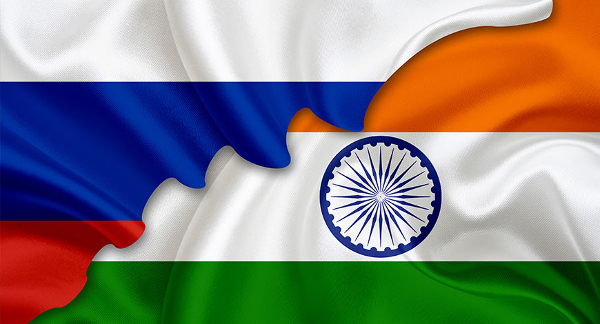
India and Russia moved to further strengthen their long-standing strategic partnership as External Affairs Minister Dr S. Jaishankar met Russian President Vladimir Putin at the Kremlin in Moscow on August 24. The meeting placed particular emphasis on expanding trade, economic cooperation and energy ties while maintaining the broader political and strategic relationship that has connected New Delhi and Moscow for decades.
During the meeting, Jaishankar conveyed Prime Minister Narendra Modi’s greetings to President Putin and handed over a personal message from the Prime Minister. The two sides reviewed the state of bilateral relations and discussed opportunities to deepen cooperation across a range of sectors, including trade, energy, fertilisers and civil nuclear cooperation. The discussions reflected the effort by both countries to give the India-Russia relationship a stronger economic foundation alongside its established strategic and defence dimensions.
The meeting came as Jaishankar co-chaired the 27th India-Russia Inter-Governmental Commission on Trade, Economic, Scientific, Technological and Cultural Cooperation (IRIGC-TEC) with Russian First Deputy Prime Minister Denis Manturov. The commission serves as one of the principal institutional mechanisms for expanding economic relations between the two countries and covers sectors ranging from trade and investment to science, technology and industrial cooperation.
A major objective remains the target of taking bilateral trade to $100 billion by 2030. India and Russia are therefore seeking greater market access, removal of tariff and non-tariff barriers, improved payment mechanisms and stronger business-to-business engagement. Improving connectivity and making trade flows more balanced have also become important as economic ties have expanded rapidly in recent years. Official Indian data previously placed bilateral trade at a record $68.7 billion in FY2024-25, demonstrating how dramatically the commercial relationship has grown.
Energy remains one of the central pillars of the partnership. Russia has developed into an important energy supplier for India, while cooperation extends beyond crude oil into nuclear power and other areas of the energy economy. The broader economic engagement increasingly includes fertilisers, pharmaceuticals, chemicals, metals, technology and industrial collaboration, creating opportunities to diversify a relationship once seen largely through the prism of defence cooperation.
Agricultural cooperation also received fresh attention during the Kremlin meeting. President Putin offered to increase Russian fertiliser supplies to India, underlining the connection between bilateral trade and India’s agricultural requirements. Greater access to fertilisers could further strengthen an area of cooperation that has become strategically important for India’s food-security and farm sectors.
The economic push is taking place within one of India’s most durable major-power relationships. Since the Declaration on the India-Russia Strategic Partnership in 2000, cooperation has expanded across political engagement, defence and security, trade, science and technology, energy, culture and people-to-people exchanges. Multiple institutional mechanisms now support the relationship, allowing both governments to maintain regular engagement even during periods of major geopolitical change.
Jaishankar’s Kremlin meeting therefore signals an effort to move the partnership into a broader phase in which economic, industrial and technological cooperation increasingly complements traditional strategic ties. If the two countries can resolve trade barriers, strengthen payment channels, improve connectivity and expand investment, the planned $100-billion trade target could give the India-Russia partnership considerably greater economic weight by the end of the decade.
For India, the relationship also remains consistent with its wider approach of maintaining strategic autonomy and developing partnerships based on national interests across different centres of global power. The latest Moscow engagement shows that New Delhi and Moscow are looking not merely to preserve their historical relationship, but to reshape it around trade, energy, investment, technology and long-term economic cooperation suited to a changing global order.
You may also like
-
India and Italy Hold First Maritime Security Dialogue in Rome, Strengthen Strategic Maritime Cooperation
-
India and Azerbaijan Agree to Strengthen Security, Trade, Energy and Economic Cooperation
-
Jaishankar Meets Azerbaijan President Ilham Aliyev in Baku, Discusses Trade, Technology and Strategic Cooperation
-
Piyush Goyal Holds High-Level Talks in Berlin to Strengthen India–Germany Trade, Investment and Industrial Cooperation
-
Indian Navy to Host Indo-Pacific Regional Dialogue 2026 with Experts from 18 Countries on Maritime Science and Technology
