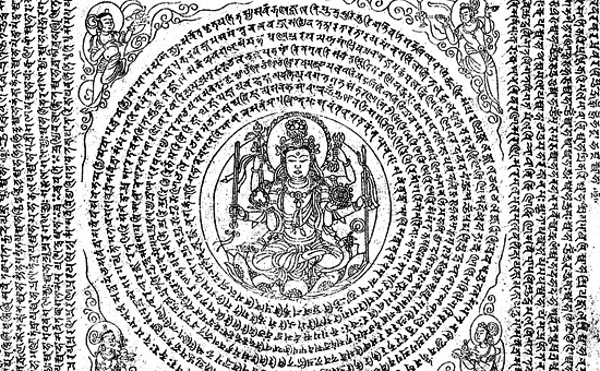
India’s Ayurveda knowledge tradition has entered another important preservation phase with the inauguration of a 15-day capacity-building workshop in Udupi, Karnataka, focused on the transliteration of Ayurveda manuscripts written in Tigalari and Old Kannada scripts. The programme was opened at Sri Puthige Narasimha Sabhabhavana, Geetha Mandir, Udupi, and brings together scholars trained in Ayurveda, Sanskrit and traditional manuscript studies.
The workshop is jointly organised by the Central Council for Research in Ayurvedic Sciences, under the Ministry of Ayush, and Central Sanskrit University, under the Ministry of Education, in collaboration with the Sri Vadiraja Research Foundation. Its purpose is direct and practical: train young scholars to read, decipher, transcribe, edit and prepare rare Ayurveda manuscripts for publication.
This initiative is especially important because many traditional Ayurveda texts remain preserved in regional scripts that require specialised reading skills. Tigalari and Old Kannada manuscripts are especially associated with the coastal regions of Karnataka, including areas around Udupi, where mathas, temples, traditional families and manuscript repositories have preserved handwritten knowledge for generations.
The programme was inaugurated by Prof. Vaidya Rabinarayan Acharya, Director General of CCRAS. The inaugural session was attended by Sri Nagaraj Acharya of Sri Puthige Matha, Dr. G. P. Prasad from the National Institute of Indian Medical Heritage, Dr. T. Maheshwar from the Central Ayurveda Research Institute in Bengaluru, and Dr. Sudhir Raj K. from the Indian Knowledge Systems Centre at Nitte University. Vidwan Gopalacharya, Director of Sri Vadiraja Research Foundation, is coordinating the programme.
The larger vision behind the workshop is the preservation of India’s medical and intellectual heritage. Ayurveda is built through centuries of textual transmission, clinical experience, regional practice and commentary traditions. Many texts exist in palm-leaf and paper manuscripts, written in scripts that modern students rarely read. A manuscript becomes useful to the present generation when scholars can identify the script, understand the language, transliterate the text, compare versions, edit the content and prepare it for publication.
CCRAS has already been working on collection, digitisation and cataloguing of AYUSH manuscripts through the National Institute of Indian Medical Heritage. The AMAR portal, developed under CCRAS-NIIMH, provides structured metadata for manuscripts related to Ayurveda, Siddha, Unani, Yoga and Naturopathy, supporting scholars of classical Ayurveda, Indology, medical history and language studies.
The Udupi workshop also fits into the broader national push under the Gyan Bharatam Mission, which aims to preserve, digitise and disseminate India’s manuscript heritage through technology, documentation, conservation, research, translation and publication. The mission has a total outlay of ₹482.85 crore for 2024–31, and over 44.07 lakh manuscripts have already been documented in the Kriti Sampada digital repository.
The government’s manuscript preservation effort combines traditional scholarship with modern methods. Gyan Bharatam includes manuscript documentation, conservation, digitisation, AI-assisted recognition, repository creation, translation and structured training programmes in manuscriptology, palaeography and transcription. These objectives match the Udupi workshop’s focus on building a new generation of scholars who can handle rare scripts and bring unpublished texts into wider academic circulation.
This is the third such workshop jointly organised by CCRAS and Central Sanskrit University. The earlier workshops were held in Puri, Odisha, with focus on Karani and Devanagari scripts, and in Guruvayur, Kerala, with focus on Vattezhuthu and Malayalam scripts. The Udupi edition now extends that work to Tigalari and Old Kannada, strengthening the regional manuscript preservation chain across India’s traditional knowledge centres.
Students and faculty members from Sri Dharmasthala Manjunatheshwara College of Ayurveda, Udupi, Sri Dharmasthala Manjunatheshwara College of Ayurveda, Hassan, and Sanskrit students from the Gurukula of Sri Puthige Matha are participating in the workshop. Their work will support the preparation of transliterated manuscripts that CCRAS and Central Sanskrit University plan to take up for publication.
The significance of this programme lies in its bridge-building role. It connects Ayurveda with Sanskrit learning, regional scripts with national research institutions, traditional manuscript custodians with modern publication systems, and local knowledge centres with India’s wider heritage mission. Every trained scholar becomes a link between fragile handwritten texts and future generations of students, physicians, historians and researchers.
The Udupi workshop shows that India’s Ayurveda heritage is being treated as a living knowledge system. Manuscripts preserved in Tigalari and Old Kannada scripts contain more than old writing; they carry medical vocabulary, regional traditions, commentarial insights, treatment references and the memory of India’s scholarly civilisation. By training scholars to read and publish these texts, India is preserving the roots of Ayurveda while preparing them for modern research, education and public access.
You may also like
-
NLC India Opens 1,067 Apprenticeship Opportunities in Technical and Professional Fields
-
Indian Physicist Ashoke Sen Becomes First Indian to Receive Prestigious Oskar Klein Medal
-
Indian Army’s Northern Command Opens 75-Day Defence Technology Internship Programme for Young Innovators
-
Ayush Patent Filings Rise Eightfold as India Records 4,077 Applications and 711 Grants in 12 Years
-
DRDO Announces Paid Research Internships at Gwalior for Science and Engineering Students
