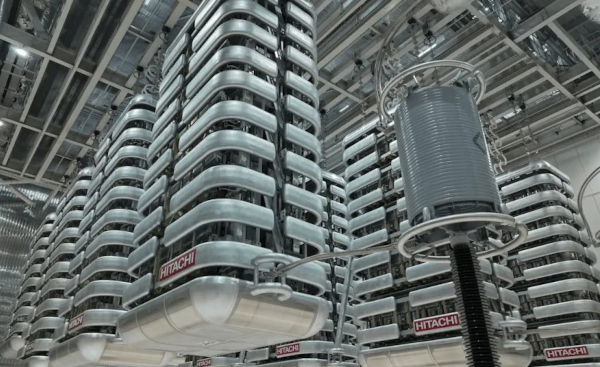
India’s power sector is entering a new phase of expansion, and Hitachi Energy’s ₹2,000 crore investment in a new large power transformer facility at Karjan, Vadodara, comes at a crucial moment. The project strengthens India’s domestic manufacturing base for critical grid equipment and supports the country’s long-term energy transition, industrial growth and electrification plans.
The new facility will manufacture Large Power Transformers, one of the most important components in a modern electricity network. Transformers are the silent backbone of the power grid. They step up voltage for long-distance transmission, step it down for distribution, support renewable energy evacuation, enable industrial power supply and keep high-voltage networks stable. A country expanding its renewable capacity, data centres, rail systems, industries and transmission corridors needs a strong transformer manufacturing ecosystem.
Hitachi Energy India Limited has announced that the new factory will be located in Karjan, Vadodara, Gujarat. The investment is estimated at around ₹2,000 crore and the facility is scheduled for completion by FY28. The plant will strengthen Hitachi Energy’s existing Indian manufacturing footprint and add new capacity for large transformers used in high-voltage transmission, HVDC systems, power generation, AI data centres and large industrial applications.
This is a strategic investment because India’s electricity demand is rising across every sector. Homes need reliable power. Industries need quality power. Railways and metro systems need electrification support. Renewable energy parks need evacuation infrastructure. Data centres require uninterrupted high-capacity supply. Green hydrogen, electric mobility and manufacturing clusters will add new pressure on the grid. Large power transformers sit at the centre of this entire transformation.
India’s grid expansion has become one of the biggest infrastructure stories of the coming decade. The Central Electricity Authority’s transmission blueprint for integrating over 900 GW of non-fossil fuel capacity by 2035-36 envisages 1,37,500 circuit kilometres of transmission lines, 8,27,600 MVA of substation capacity and an estimated investment of ₹7.93 lakh crore. This scale of expansion creates major demand for transformers, switchgear, control systems, HVDC equipment, automation and grid-management technologies.
Hitachi Energy’s new factory fits directly into this national requirement. India needs domestic capacity that can deliver large, reliable and advanced transformers at speed. Imported critical equipment can create delivery delays, cost pressure and supply-chain vulnerability. Local manufacturing improves availability, supports faster project execution and gives utilities and industries a stronger domestic supplier base.
Gujarat is a natural location for such an investment. The state already has a strong electrical equipment, engineering and industrial manufacturing ecosystem. Vadodara has long been associated with power equipment manufacturing. Hitachi Energy already has a presence in Gujarat, and the Karjan facility will complement its existing transformer-related footprint in the state, along with other facilities in Mysore and Halol.
The plant is planned as a modern digital manufacturing hub. Advanced automation, smart production systems and integrated digital processes are expected to improve manufacturing quality, speed and efficiency. Large transformers are complex machines. Their reliability depends on precision engineering, insulation quality, material handling, thermal design, testing systems and manufacturing discipline. Digital production can improve process control and reduce defects.
The sustainability angle is also important. Hitachi Energy has said the factory is planned as a LEED-certified facility, with emphasis on energy efficiency, responsible resource use and lower environmental impact. This matters because India’s energy transition needs clean power generation as well as cleaner industrial manufacturing. A grid-equipment plant built with efficiency and sustainability in mind aligns with the broader shift toward responsible infrastructure.
The project is also expected to create more than 1,000 direct and indirect jobs. These jobs will come through manufacturing, engineering, testing, maintenance, logistics, supply chains, project support and ancillary industries. A transformer factory of this size creates a wider ecosystem around it. Steel, copper, insulation materials, logistics providers, component makers, fabrication units, technical services and skilled workers all benefit from such an investment.
The new facility also supports Make in India in a practical way. Make in India becomes meaningful when global technology companies build deep local capacity, source from Indian suppliers, train Indian workers and serve both domestic and export markets from India. Transformer manufacturing is a high-value industrial sector. Strengthening it helps India move up the manufacturing chain from assembly toward advanced power-equipment production.
The timing of the investment is significant. India is expanding renewable energy capacity at record scale, and renewable projects require strong grid connections. Solar parks in Rajasthan and Gujarat, wind corridors in Tamil Nadu and Gujarat, pumped storage projects, battery systems and green industrial clusters will depend on transmission infrastructure. Large transformers are essential for moving this power from generation zones to demand centres.
HVDC transmission is another important area. High Voltage Direct Current systems are used for long-distance bulk power transfer, renewable integration and grid interconnection. India has already used HVDC for major power corridors. As renewable generation moves farther from demand centres, HVDC solutions can become even more important. A large transformer facility capable of supporting HVDC projects gives India a stronger base for future grid architecture.
Data centres are another major demand driver. India’s digital economy is growing quickly through cloud computing, artificial intelligence, fintech, e-commerce, telecom, digital payments and enterprise data services. Data centres need large, stable and high-quality power. They also need redundancy and grid reliability. Transformers are core equipment in this power chain. Hitachi Energy’s investment therefore connects directly with India’s digital infrastructure boom.
Industrial electrification adds another layer. As industries move toward cleaner processes, electric furnaces, automated plants, electrified transport and energy-efficient systems, demand for reliable power infrastructure will increase. Large factories, ports, metro systems, rail corridors and urban infrastructure projects need high-quality grid equipment. Transformer capacity becomes a national industrial requirement.
The investment also reflects confidence in India’s long-term growth. A ₹2,000 crore greenfield manufacturing decision is made with a view of future demand, policy continuity and market opportunity. Hitachi Energy’s India business has already reported strong order visibility, and the company’s board had approved this investment as part of its broader capital expenditure plan. The cumulative capex has been reported at around ₹4,000 crore when combined with earlier announcements.
This project also gives India an opportunity to strengthen supply-chain resilience. Global power equipment supply chains have seen pressure due to rising demand, raw material volatility and grid investment across many countries. If India can produce more critical equipment locally, it can reduce project delays and improve energy security. A strong domestic transformer base becomes a strategic asset.
The wider message is clear. India’s energy transition requires more than solar panels and wind turbines. It needs transmission lines, substations, transformers, HVDC corridors, grid automation, storage, control systems and skilled technical manpower. The grid is the foundation on which the energy future will stand. Every major investment in grid manufacturing therefore has national importance.
Hitachi Energy’s Karjan facility is a major step in this direction. It strengthens manufacturing in Gujarat, supports skilled employment, improves local transformer capacity, serves future HVDC and high-voltage demand, and aligns with India’s push for self-reliant infrastructure. The plant represents the industrial side of India’s clean-energy journey.
India is building a power system for a larger, more electrified and more digital economy. Large power transformers will play a decisive role in that transformation. Hitachi Energy’s ₹2,000 crore investment shows that the next chapter of India’s energy story will be built not only in solar parks and wind farms, but also in factories that make the equipment needed to move electricity across the nation.
The new transformer facility at Karjan is therefore more than a manufacturing project. It is a grid-modernisation investment, an energy-security investment, a Make in India investment and a signal of confidence in India’s long-term power demand.
You may also like
-
India to Track Challenges Faced by Women Entrepreneurs in New National Business Survey
-
India Updates Vehicle Rules to Strengthen E85 and E100 Flex-Fuel Technology
-
Adani Green Energy Expands Battery Storage to 6.63 GWh at Khavda, Strengthening India’s Renewable Power Infrastructure
-
India Monitors 1,853 Infrastructure Projects Worth ₹37.56 Lakh Crore, ₹17.73 Lakh Crore Already Spent
-
Manastu Space Secures ₹116 Crore Government Support to Develop Indigenous Green Propulsion Systems
