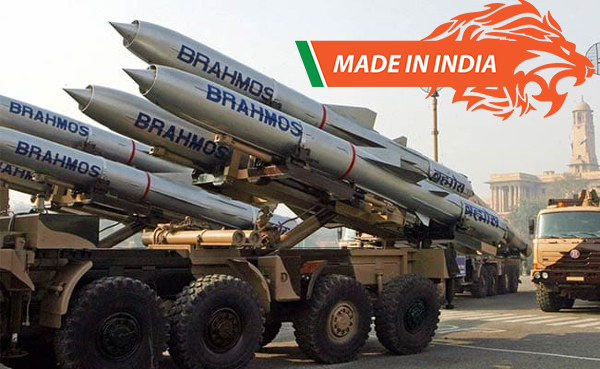
India and the Philippines are in advanced negotiations for a major expansion of their BrahMos supersonic cruise missile partnership, with a proposed agreement potentially worth up to $800 million. The Philippines is considering the acquisition of approximately five additional BrahMos missile systems comprising nearly 60 missiles, marking a significant development in India’s growing defence export relationship with the Southeast Asian country.
According to a Reuters report published on November 5, three sources with direct knowledge of the negotiations confirmed that discussions had reached their final stages. Two Indian sources indicated that the proposed agreement could be valued between $700 million and $800 million, considerably exceeding the $375 million contract signed by the Philippines in January 2022. The latest negotiations come as India approaches completion of deliveries under the original agreement, which established the Philippines as the first foreign customer for the BrahMos missile system.
Philippines Confirms Plans to Acquire Additional BrahMos Systems
Philippine Defence Secretary Gilberto Teodoro Jr. publicly confirmed Manila’s interest in procuring additional BrahMos missile systems during the Third Delhi Defence Dialogue on November 4, 2026. Participating virtually, Teodoro stated that the Philippines had communicated its requirements to Indian authorities and was seeking further acquisitions adapted to the country’s geographical and operational conditions.
The Philippine News Agency, the country’s official government news agency, reported his remarks on November 5, confirming that Manila intends to expand its existing BrahMos capabilities. The Defence Secretary highlighted the importance of India’s cooperation in providing advanced defensive systems and expressed appreciation for the trust demonstrated through the existing missile export partnership.
Teodoro also explained that the Philippines had submitted a list of requirements to Indian authorities to make the BrahMos system better suited to the country’s operational environment. This reflects the particular requirements of an archipelagic nation consisting of thousands of islands, where the deployment and movement of military equipment must account for geographical separation, transportation infrastructure and coastal defence requirements.
The Philippine government’s confirmation provides an official basis for the continuing procurement discussions. However, the precise number of additional systems and the proposed contract value have emerged through Reuters’ reporting rather than a formal announcement of a concluded agreement by either government.
Proposed Agreement Covers Five Systems and Nearly 60 Missiles
The proposed expansion involves approximately five BrahMos missile systems and nearly 60 missiles, according to Indian sources cited by Reuters. With a potential value of $700 million to $800 million, the procurement would represent a substantial increase over the Philippines’ initial BrahMos acquisition.
The original $375 million contract covered three shore-based anti-ship missile batteries, including associated equipment and support arrangements. The additional acquisition would expand the number of missile systems available to the Philippine Armed Forces, strengthening the country’s ability to deploy coastal defence capabilities across strategically important locations.
Shore-based anti-ship missile systems provide military forces with the ability to engage hostile surface vessels from land-based positions. They form an important component of coastal defence because they allow countries to protect maritime approaches, restrict the freedom of movement of potentially hostile naval forces and strengthen the security of strategically important waterways.
For the Philippines, additional BrahMos systems would support the development of a broader coastal defence network across its island territories. The acquisition would complement the country’s ongoing military modernisation programme, which places increasing emphasis on maritime surveillance, anti-ship capabilities and the protection of territorial waters.
The proposed agreement remains under negotiation, and neither India nor the Philippines has publicly announced a final contract covering the additional systems. The exact configuration, delivery schedule and associated support arrangements will become clear once the procurement process reaches a formal conclusion.
Building on India’s Landmark 2022 BrahMos Export Agreement
India’s defence relationship with the Philippines entered an important new phase on January 28, 2022, when BrahMos Aerospace signed a contract with the Philippine Department of National Defense for the supply of shore-based anti-ship missile systems. Valued at approximately $375 million, the agreement represented India’s first export contract for the BrahMos supersonic cruise missile system.
The contract covered three missile batteries intended to strengthen the Philippines’ coastal defence capabilities. It also demonstrated India’s growing ability to supply sophisticated military equipment to international customers through its domestic defence manufacturing ecosystem.
The Ministry of Defence described the agreement as an important development in India’s policy of promoting responsible defence exports. It established a framework for long-term cooperation involving missile systems, associated equipment, training and logistical support, while opening new opportunities for Indian defence technology in the international market.
Deliveries under the original agreement have progressed since the contract was signed, with Reuters reporting that India was nearing completion of its contractual commitments in November 2026. The Philippine government’s interest in additional systems reflects the continuation of this established defence relationship and the country’s intention to expand its missile capabilities.
A second agreement would also strengthen the long-term industrial relationship between BrahMos Aerospace and the Philippine defence establishment, creating opportunities for further cooperation in training, maintenance, technical support and future system requirements.
BrahMos Strengthens the Philippines’ Coastal Defence Capabilities
The BrahMos missile is a supersonic cruise missile developed through a joint venture between India and Russia. Designed for high-speed precision strikes, the weapon system can be deployed from land, sea and air platforms, providing operational flexibility across different military environments.
The missile travels at approximately Mach 2.8, making it significantly faster than conventional subsonic cruise missiles. Its speed, combined with precision-guidance capabilities, enables it to engage designated targets rapidly and presents challenges for defensive systems attempting to intercept incoming missiles.
For coastal defence operations, BrahMos provides a capability to engage hostile naval vessels operating within its effective range. Land-based missile batteries can be deployed at selected coastal locations, supporting maritime defence operations without requiring every engagement capability to be carried aboard naval vessels.
The Philippines’ geography makes shore-based anti-ship missile systems particularly relevant to its military planning. With an extensive coastline and numerous islands overlooking important maritime routes, the country is seeking to strengthen its ability to protect territorial waters and respond to potential maritime threats.
Additional BrahMos systems would support the Philippines’ efforts to develop a more distributed coastal defence architecture. The ability to position missile batteries across multiple locations could strengthen maritime security arrangements and provide greater flexibility in protecting strategically important areas.
Maritime Security Developments in the South China Sea
The proposed BrahMos acquisition comes amid continuing maritime tensions in the South China Sea, where the Philippines and China have overlapping territorial and maritime claims. The region contains important commercial shipping routes and fishing grounds, making maritime security a major concern for countries operating in its waters.
The Philippines has been expanding its military modernisation programme to strengthen coastal surveillance, maritime domain awareness and defensive capabilities. The acquisition of advanced anti-ship missile systems forms part of its broader efforts to protect maritime interests and improve the operational preparedness of its armed forces.
Recent tensions have reinforced Manila’s focus on developing capabilities that can support the protection of maritime approaches and strategically important locations. Shore-based missile systems contribute to this objective by providing a land-based means of responding to hostile naval activity.
India’s participation in strengthening Philippine defence capabilities reflects growing security cooperation between the two countries. Both nations have important interests in maintaining stable maritime trade routes, supporting regional security and promoting respect for international law in maritime affairs.
The BrahMos partnership provides a practical dimension to this relationship, combining defence technology exports with operational cooperation and a continuing institutional relationship between the two defence establishments.
Strengthening India’s Defence Export Industry
The proposed $800 million BrahMos agreement would represent another significant opportunity for India’s defence manufacturing sector. BrahMos Aerospace, the India-Russia joint venture responsible for the missile system, has emerged as an important participant in India’s efforts to expand exports of advanced military equipment.
Export contracts for sophisticated missile systems support domestic manufacturing activity across several specialised industrial sectors, including propulsion, precision engineering, electronic systems, guidance technology and defence equipment integration. They also generate demand for technical services associated with testing, maintenance, training and long-term logistical support.
The BrahMos programme involves an extensive industrial ecosystem that includes public sector organisations, private defence manufacturers and specialised component suppliers. International orders contribute to the development of manufacturing capabilities and provide opportunities for Indian industry to participate in the production and support of advanced missile technologies.
The proposed Philippine acquisition is particularly significant because it involves a repeat customer seeking to expand an existing operational capability. Such follow-on requirements can strengthen long-term industrial partnerships and create opportunities for continuing technical cooperation beyond the initial supply of equipment.
India’s broader defence export strategy places emphasis on increasing international sales of indigenously manufactured equipment while strengthening the competitiveness of the domestic defence industry. The BrahMos export programme has become an important example of this approach, demonstrating India’s ability to supply advanced weapons systems to foreign armed forces.
India-Philippines Defence Cooperation Expands Beyond Missile Exports
India and the Philippines have been expanding their defence relationship through military engagements, institutional dialogue and cooperation in maritime security. The BrahMos programme represents one of the most visible elements of this partnership, reflecting the growing importance of defence technology cooperation between the two countries.
During the Third Delhi Defence Dialogue, Philippine Defence Secretary Gilberto Teodoro also highlighted opportunities for cooperation in space technology. He indicated that Manila was interested in developing closer engagement with India in satellite-related capabilities and identified India as a potential partner in the Philippines’ proposed military satellite acquisition programme.
The discussions reflect a broader effort to strengthen cooperation across technologies relevant to national security, including maritime surveillance, military communications and space-based capabilities. Such areas are increasingly important as armed forces seek to integrate advanced sensors, communication networks and precision weapons into coordinated operational systems.
The expansion of India-Philippines defence cooperation also supports India’s wider engagement with Southeast Asia. The relationship combines defence exports with strategic dialogue and institutional exchanges, contributing to closer security partnerships across the Indo-Pacific region.
The proposed BrahMos acquisition would further strengthen these connections by expanding an established defence technology partnership and providing a foundation for continued military cooperation.
A Major Opportunity for India’s BrahMos Export Programme
The advanced negotiations for an additional BrahMos missile agreement underline the growing significance of India’s defence partnership with the Philippines. A potential contract valued between $700 million and $800 million would substantially expand the original 2022 agreement and reinforce the role of BrahMos as an important Indian defence export.
For the Philippines, the proposed acquisition would strengthen coastal defence capabilities and support ongoing efforts to modernise its armed forces. Additional missile systems would provide greater flexibility in protecting maritime approaches and contribute to the development of a more comprehensive national defence posture.
For India, the negotiations demonstrate the continued international interest in advanced defence equipment developed and manufactured through its industrial ecosystem. Follow-on exports can strengthen domestic manufacturing capabilities, support specialised engineering industries and expand India’s presence in the international defence market.
The Philippine government’s publicly confirmed interest, combined with Reuters’ reporting on the advanced stage of negotiations, establishes the proposed agreement as a significant development in bilateral defence relations. Its conclusion would mark another important milestone in India’s efforts to expand high-value defence exports while strengthening strategic partnerships across the Indo-Pacific.
You may also like
-
Sigma Advanced Systems Reports ₹2,315 Crore Defence Orders in Artillery and Anti-Drone Technologies
-
BEL Begins Production Preparations for ₹30,000 Crore Indigenous QRSAM Programme
-
Bharat Dynamics Strengthens India’s Indigenous Missile Manufacturing Capabilities Through Pralay Programme
-
Lakṣmaṇa’s Mission to Kiṣkindhā: Enforcing Alliance Commitments Without Breaking the Partnership
-
The BrahMos Arc: India’s Expanding Strategic Reach Across the Indo-Pacific
