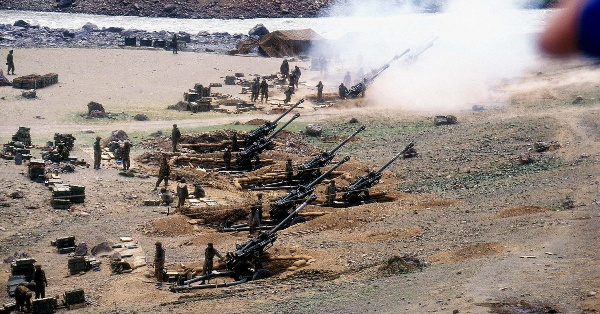
India is approaching a decisive stage in its plan to reorganise the Army, Navy and Air Force into integrated theatre commands, a transformation intended to place military operations across each strategic front under a unified command structure.
Chief of Defence Staff General N. S. Raja Subramani is understood to be preparing to present the proposed framework to Defence Minister Rajnath Singh. Following consideration by the Ministry of Defence, the proposal would require approval from the Cabinet Committee on Security before the new command architecture could be implemented. General Subramani assumed charge as India’s third Chief of Defence Staff in May 2026, succeeding General Anil Chauhan.
The proposed theatre-command system would represent one of the most extensive structural reforms undertaken by the Indian Armed Forces since Independence. It seeks to replace fragmented, service-specific operational arrangements with joint commands capable of employing land, air and maritime power as a single coordinated force.
One Commander for Each Strategic Theatre
Under the existing structure, the Army, Navy and Air Force maintain separate operational commands, each operating through its own headquarters, chain of command and planning system. Although the services coordinate during major operations, resources remain primarily controlled through their individual institutional structures.
The theatre-command model would organise military forces according to geography and operational responsibility. Army formations, fighter aircraft, helicopters, surveillance systems, naval platforms, missile units, logistics assets and supporting personnel assigned to a particular theatre would function under one operational commander.
This commander would be responsible for preparing and executing joint campaigns across the theatre. The arrangement is designed to create greater unity of command, shorten decision-making cycles and ensure that military resources are allocated according to the needs of the battlefield rather than the boundaries of individual services.
India’s Department of Military Affairs was created in 2020 with the Chief of Defence Staff as its Secretary to promote jointness, restructure military commands and improve the utilisation of defence resources. Theatre commands have remained one of the central objectives of this reform process.
Three Major Commands Envisaged
The proposed framework is expected to establish three primary theatre commands covering India’s principal security responsibilities.
A Western Theatre Command would concentrate on the Pakistan front, including the international border, the Line of Control and the associated air and land operational environment.
A Northern Theatre Command would be responsible for the border with China, including the Line of Actual Control stretching across the high-altitude sectors of Ladakh, Uttarakhand, Himachal Pradesh, Sikkim and Arunachal Pradesh.
A Maritime Theatre Command would oversee India’s maritime security, island territories, sea lanes and wider strategic interests across the Indian Ocean Region.
The Western Theatre Command is expected to be led by an Indian Air Force officer, reflecting the importance of air power in fast-moving operations along the western front. The Northern Theatre Command would likely be headed by an Army officer because of the scale of land deployments and the complex high-altitude environment along the China border. The Maritime Theatre Command would be led by a senior naval officer.
These appointments remain part of the proposed structure and will acquire formal status only after the government approves the final plan.
Four-Star Theatre Commanders
One of the most consequential elements under consideration is the appointment of four-star theatre commanders. These officers would hold ranks equivalent to the Army, Navy and Air Force chiefs and exercise operational authority over forces allocated to their respective theatres.
The proposed hierarchy would mark a major redistribution of responsibilities within India’s military leadership.
Theatre commanders would concentrate on operational planning, preparedness and the employment of forces during conflict. The three service chiefs would retain responsibility for raising, training, sustaining and modernising their respective services. They would ensure that formations are properly equipped, staffed and prepared before being assigned to theatre commands.
This separation between force generation and force employment is central to the theatre-command concept. It would allow service headquarters to focus on capability development while operational commanders concentrate on preparing for and conducting joint campaigns.
A Vice Chief of Defence Staff position is also reportedly included in the proposed framework. The officer holding this post could assist in coordinating theatre-level operations and managing joint military responsibilities beneath the Chief of Defence Staff.
Each theatre command may additionally have deputy commanders drawn from services other than the one represented by the theatre commander. Such cross-service appointments would ensure that Army, Navy and Air Force perspectives remain embedded within every command headquarters.
Managing India’s Air Power
The allocation of Indian Air Force assets has remained one of the most complex questions in the theatre-command discussions.
Ground and naval formations are usually tied to identifiable geographical areas. Air power possesses the speed and range to move between fronts within a short period, allowing aircraft based in one region to influence operations elsewhere.
India operates a limited number of specialised airborne early-warning aircraft, aerial-refuelling tankers, electronic-warfare platforms and strategic transport aircraft. Dividing such assets permanently among regional commands could restrict their flexibility during a rapidly changing conflict.
The proposed arrangement may therefore place a portion of the Air Force’s operational assets under theatre commanders while keeping strategic and scarce capabilities under central control. These centrally managed platforms could then be deployed across theatres according to national priorities and battlefield requirements.
A balanced distribution will be essential for preserving the ability of the Air Force to concentrate combat power rapidly while providing theatre commanders with the aircraft required for their operational plans.
From Coordination to Permanent Integration
India’s armed forces have already introduced several measures to strengthen joint operations before the formal establishment of theatre commands.
Rules under the Inter-Services Organisations (Command, Control and Discipline) Act came into effect in May 2025. They provide commanders of inter-service organisations with greater authority over personnel drawn from different branches, creating a legal foundation for more effective joint command and discipline.
The Joint Commanders’ Conference held in Jaipur in May 2026 examined future military transformation, integrated operational preparedness, intelligence fusion, information management and joint planning. The conference reflected the expanding effort to align the three services around common operational structures.
Large-scale exercises have also tested the ability of the services to function together across land, air and sea. Exercise Trishul, conducted in November 2025, brought together the Western Naval Command, the Army’s Southern Command and the Air Force’s South Western Air Command for operations across Rajasthan, Gujarat and the northern Arabian Sea. The exercise included amphibious operations, joint deployments and participation by additional security agencies.
India has similarly conducted integrated exercises in the Himalayan region. Exercise Prachand Prahar involved coordinated multi-domain operations by the Army, Navy and Air Force in the high-altitude terrain of Arunachal Pradesh, demonstrating how forces from different services could be combined along the northern borders.
Lessons from Operation Sindoor
Operation Sindoor in May 2025 demonstrated the operational value of intelligence sharing, coordinated planning and tri-service action.
The campaign involved integrated activity by the Army, Navy and Air Force, supported by multi-agency intelligence and real-time command systems. The Ministry of Defence later highlighted the combined functioning of the Air Force’s Integrated Air Command and Control System, the Army’s Akashteer network and the Navy’s Trigun system in creating a unified operational picture.
This integration allowed commanders to receive information from several domains, improve situational awareness and make timely operational decisions. Such experiences have strengthened the case for permanent joint structures capable of functioning continuously during peace, crisis and war.
Theatre commands would institutionalise this type of cooperation. Joint planning would begin long before a conflict, allowing forces to develop common doctrines, communication systems, targeting procedures and logistics arrangements.
Preparing for Multi-Domain Warfare
Future conflicts will extend beyond traditional land, air and maritime operations. Space-based surveillance, cyber warfare, electronic attack, drones, precision missiles, artificial intelligence and information operations will influence events across every military theatre.
An integrated commander must therefore be capable of combining conventional forces with cyber, space, electronic-warfare and intelligence capabilities.
The theatre structure could support this requirement by bringing information from different services into a common command network. A commander facing a threat along the northern border could simultaneously employ satellite intelligence, long-range artillery, combat aircraft, drones, electronic-warfare systems, special forces and cyber capabilities as parts of one operational plan.
Joint logistics would also become increasingly important. Common maintenance facilities, ammunition networks, transportation systems, communications infrastructure and medical support could reduce duplication and improve the speed at which forces are sustained during extended operations.
A Historic Transformation of India’s Military
The proposed theatre commands seek to transform the three armed services from forces that cooperate during operations into components of a permanently integrated military structure.
The reform carries considerable organisational complexity. Questions involving command authority, allocation of assets, service representation, rank equivalence, logistics and operational control require precise solutions. The final architecture must preserve specialist expertise while establishing an unmistakable chain of command.
Once approved, implementation is likely to proceed in phases. Headquarters will require staffing, communication networks, operational doctrines and clearly defined relationships with the service headquarters, Department of Military Affairs and national security leadership.
The creation of commands dedicated to the China front, Pakistan front and maritime domain would provide India with an operational structure aligned with its principal security challenges. It would allow land, air and naval capabilities to be planned and employed through a single command for each theatre.
The proposal now approaching the government represents the culmination of years of consultations, exercises, legislative preparation and doctrinal development. Its approval would begin a new chapter in Indian military organisation, placing jointness at the centre of national defence planning and preparing the armed forces for faster, integrated and technology-driven warfare.
References
- Press Information Bureau, Ministry of Defence. “General NS Raja Subramani Assumes Charge as Chief of Defence Staff and Secretary, Department of Military Affairs.” May 31, 2026.
https://www.pib.gov.in/PressReleasePage.aspx?PRID=2267339 - Press Information Bureau, Ministry of Defence. “Raksha Mantri Addresses the Joint Commanders’ Conference in Jaipur.” May 8, 2026.
https://www.pib.gov.in/PressReleasePage.aspx?PRID=2259060 - Press Information Bureau, Ministry of Defence. “Government Notifies Rules under the Inter-Services Organisations (Command, Control and Discipline) Act, 2023.” May 28, 2025.
https://www.pib.gov.in/PressReleasePage.aspx?PRID=2131856 - Press Information Bureau, Government of India. “Operation SINDOOR: Forging One Force.” May 18, 2025.
https://www.pib.gov.in/PressReleasePage.aspx?PRID=2129453 - India Today. “India Nears Rollout of Single-Command Military for China, Pakistan Borders.” July 14, 2026.
https://www.indiatoday.in/india/story/integrated-theatre-commands-india-cds-seeks-defence-ministry-approval-2947941-2026-07-14
You may also like
-
Exercise Tarang Shakti 2026 Concludes in Jodhpur, Showcasing India’s Air Power, Indigenous Defence Technology
-
Indian Navy Vice Chief Inspects Japan’s Mogami-Class Stealth Frigate as India-Japan Shipbuilding Cooperation Expands
-
Philippine Marine Wargames Reportedly Show BrahMos Can Penetrate Chinese Destroyer Air Defences
-
Safran Signs 18 Agreements with Indian Aerospace Suppliers, Expanding Make in India Manufacturing Partnerships
-
Indian Army’s Vajra Corps Certifies First Batch of Drone Operators, Strengthens Battlefield Surveillance
