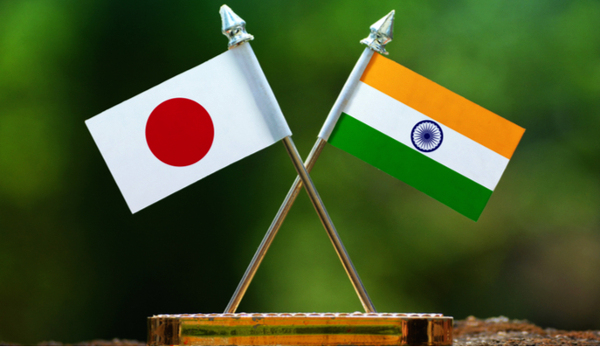
India and Japan have opened a new chapter in their Special Strategic and Global Partnership as Prime Minister Narendra Modi held Annual Summit-level talks with Japanese Prime Minister Sanae Takaichi in New Delhi. The 16th India-Japan Annual Summit comes at a significant moment for both countries, bringing together diplomacy, investment, technology, economic security and regional cooperation under one forward-looking framework. Prime Minister Takaichi’s visit from July 1 to 3, 2026, marks her first official visit to India and reflects the growing momentum in high-level engagement between New Delhi and Tokyo.
The summit gained added importance with Japanese companies expected to announce nearly $12.5 billion, or around 2 trillion yen, in investments across about 120 cooperation agreements. This large-scale investment push signals Japan’s growing confidence in India’s economic rise and its long-term potential as a manufacturing, technology and innovation hub. More than 150 Japanese companies are also participating in the Japan-India Economic Forum, giving the summit a strong business and industry dimension.
The proposed investments are expected to cover key sectors such as semiconductors, artificial intelligence, clean energy, mobility, manufacturing and infrastructure. These are the same sectors that are shaping the next phase of global economic competition and industrial transformation. For India, Japanese investment brings advanced technology, capital, precision manufacturing and long-term industrial partnerships. For Japan, India offers scale, talent, market depth, democratic stability and a fast-expanding economic base.
The ceremonial welcome accorded to Prime Minister Takaichi at Rashtrapati Bhavan reflected the warmth and importance of the relationship. Prime Minister Modi’s presence at the welcome ceremony underlined the personal and political attention being given to the partnership. The summit-level talks are expected to review the full spectrum of bilateral cooperation and create fresh momentum through several MoUs and cooperation documents.
Economic security has now become one of the strongest pillars of India-Japan cooperation. During the first Economic Security Dialogue held in Tokyo in November 2024, the two sides identified priority areas such as semiconductors, critical minerals, pharmaceuticals, clean energy and information and communication technology for strategic collaboration. These areas are central to resilient supply chains, advanced manufacturing, digital infrastructure and future-ready industries.
Japan’s investment plans also fit into the larger target of expanding Japanese private investment in India over the coming decade. During the 2025 summit, both sides had set a target of 10 trillion yen in Japanese private investment in India over ten years, along with initiatives in economic security, next-generation mobility and artificial intelligence. The latest investment push shows that this vision is moving from diplomatic commitment to concrete business action.
The relationship is also expanding in defence, maritime security and regional stability. India and Japan share a strong interest in a free, open and stable Indo-Pacific, supported by secure sea lanes, trusted supply chains and technological cooperation. Defence dialogue, maritime cooperation and economic security are increasingly moving together, making the partnership more comprehensive and strategically relevant.
Clean energy is another major area of cooperation. With both nations focusing on energy transition, green technology and sustainable industrial growth, Japanese expertise in clean systems and India’s large energy market can create a powerful partnership. Cooperation in mobility, biogas, LNG security, green infrastructure and industrial decarbonisation can support India’s development goals while opening new opportunities for Japanese industry.
The summit also highlights the importance of innovation-led cooperation. Artificial intelligence, semiconductors, digital infrastructure and advanced manufacturing are now central to the India-Japan growth story. Collaboration between Japanese and Indian companies, including startups and technology firms, can help create new products, strengthen supply chains and support the next generation of high-tech industry.
India and Japan have built their partnership on trust, continuity and shared strategic interests. From infrastructure and high-speed rail to defence, clean energy, critical minerals and digital technology, the relationship has steadily grown into one of Asia’s most important bilateral partnerships. The 16th Annual Summit adds fresh economic strength to this foundation.
With $12.5 billion in proposed investments, around 120 cooperation agreements and renewed summit-level engagement, India and Japan are positioning their partnership for the future. The New Delhi summit shows that both countries are ready to move beyond traditional cooperation and build a wider architecture of technology, industry, security and sustainable growth. It is a partnership shaped by trust, powered by investment and guided by a shared vision for stability and prosperity in the Indo-Pacific.
You may also like
-
India and Qatar Discuss Wider UPI Rollout, Investment Treaty and $10 Billion Investment Commitment
-
India Sends Three Tonnes of Anti-Tuberculosis Medicines to Sri Lanka Aboard IAF C-130J
-
India and Poland Move to Operationalise 2024–2028 Strategic Partnership Action Plan Through Defence Talks
-
India and Fiji Expand Defence and Maritime Cooperation at Second Joint Working Group Meeting
-
India and Ethiopia Expand Defence Cooperation at Second Joint Defence Cooperation Meeting
