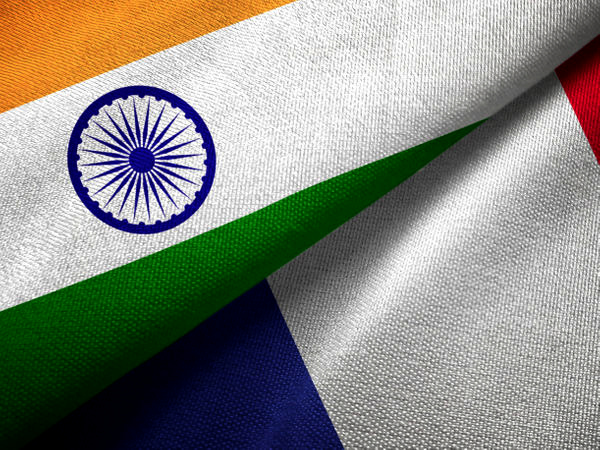
India is seeking to move a larger share of its textile exports into premium, design-led and luxury markets through a new partnership between the Bharat Tex Trade Federation (BTTF) and France-based Première Vision SA, one of the world’s leading fashion and textile sourcing platforms.
The two organisations signed a multi-year Memorandum of Understanding at the Première Vision Paris exhibition on September 2, 2026, establishing cooperation across international sourcing, export promotion, design intelligence, sustainability and traditional craftsmanship. The agreement was signed by Dr A. Sakthivel of BTTF, who also chairs the Apparel Export Promotion Council, and Florence Rousson, CEO of Première Vision’s Fashion Division. Senior Ministry of Textiles officials, including Textiles Secretary Neelam Shami Rao and Development Commissioner for Handlooms Dr M. Beena, were present.
The agreement turns an earlier understanding reached at Bharat Tex 2026 in New Delhi on July 14 into a longer-term institutional relationship. During Bharat Tex, the two organisations had exchanged a Letter of Intent covering greater cooperation in market access, sustainable sourcing, design intelligence and engagement with international buyers.
The importance of the new arrangement lies in the market Première Vision serves. For more than five decades, its exhibitions and industry platforms have connected textile producers with fashion houses, designers, luxury brands and specialist sourcing companies. Through the partnership, Indian manufacturers, exporters, designers and artisans will have greater opportunities to engage with this premium international ecosystem.
For India, the objective goes beyond increasing export volumes. The Ministry of Textiles says one of the central goals is to help Indian companies shift towards higher-value, design-led products, where quality, sustainability, traceability, craftsmanship and fashion trends play a greater role in purchasing decisions. Première Vision’s trend-intelligence capabilities are expected to help Indian businesses understand changing global demand and position their products more effectively before international buyers.
This could be particularly important for India’s handloom and traditional-textile industries. India possesses an enormous range of weaving, embroidery, dyeing and craft traditions, but many of these products compete in international markets without consistently capturing the premium associated with their craftsmanship. Connecting artisans and designers directly with luxury and creative-fashion networks could help move some of these products further up the global value chain.
The partnership comes as India prepares for potentially much greater access to the European market following the conclusion of India-EU Free Trade Agreement negotiations in January 2026. According to the Ministry of Textiles, the proposed arrangement provides preferential market access on 96.8 per cent of tariff lines covering 99.5 per cent of India’s exports, while 90.7 per cent of exports by value are expected to become duty-free when the agreement comes into force.
Textiles stand to be one of the major beneficiaries. The European Union imported approximately $292.8 billion worth of textiles and apparel in 2025, while India’s textile and apparel exports to the EU currently amount to around $10.4 billion. Proposed zero-duty treatment across textile and clothing tariff lines could improve India’s competitiveness in garments, yarn, fabrics and home textiles.
The BTTF-Première Vision partnership could therefore complement tariff advantages with something equally important: access to the buyers, designers and sourcing networks that determine which products reach premium European markets.
The MoU will be implemented through a Joint Steering Committee. Both organisations plan reciprocal participation by exhibitors, experts and delegations at their respective trade events, along with buyer-seller meetings, reverse buyer-seller meetings and the exchange of market intelligence. They will also cooperate on circularity, traceability and responsible manufacturing practices.
A particularly distinctive component will focus on traditional craftsmanship. The two sides plan an Eternal Crafts Collaboration presenting Indian and French textile heritage to the international luxury and creative-fashion industry. This will include an initiative titled “A Living Thread” in January 2027, bringing together Indian hand embroidery, handloom and related heritage techniques with French textile traditions.
The initiative could give Indian artisans and smaller manufacturers exposure to markets where provenance, handmade production and cultural identity command substantially higher value than mass-produced textiles.
India is already one of the world’s largest textile and apparel producers, with strengths ranging from cotton, yarn and fabric manufacturing to garments, home textiles, handlooms and handicrafts. The next stage of its export strategy increasingly involves moving beyond being primarily a large-scale manufacturing destination and becoming a source of premium materials, sustainable textiles, design innovation and luxury craftsmanship.
The Première Vision partnership fits directly into that transition. It combines India’s manufacturing scale and traditional skills with a platform that sits close to the world’s high-end fashion and sourcing industry.
If the collaboration succeeds in converting greater visibility into long-term sourcing relationships, its significance could extend far beyond trade exhibitions. It could help Indian manufacturers and artisans capture a larger share of the value created from Indian textiles — not simply by producing more, but by selling increasingly sophisticated, branded and premium products to the world’s leading fashion markets.
Official Reference
Ministry of Textiles, Government of India / Press Information Bureau
Bharat Tex Trade Federation and Première Vision SA Sign Strategic MoU to Strengthen India-France Textile and Fashion Collaboration
Published: September 3, 2026
MoU signed: September 2, 2026, Première Vision Paris
You may also like
-
Koraput Kalajeera Rice: Odisha’s Fragrant ‘Prince of Rice’ Preserved by Generations of Tribal Farmers
-
Mormugao Port Becomes India’s First Major Port to Secure Private 5G Network Authorisation
-
PM Modi Inaugurates ₹3,350 Crore Development Projects in Ladakh
-
AXISCADES Expands Global Technology Footprint with US Acquisition Plan and Swiss Company Takeover
-
Skyroot Aerospace Secures Two Satellite Launch Contracts from US Space Company Reflect Orbital
