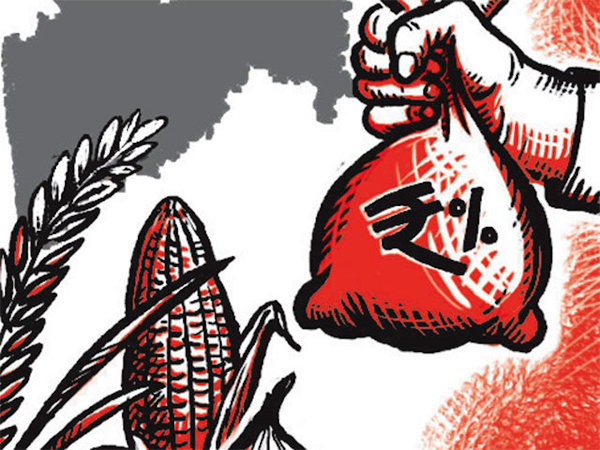
India has begun translating agricultural carbon credits into direct income for farmers, with more than 2,500 farmers in Punjab and Haryana set to receive over ₹2.9 crore for adopting regenerative agricultural practices that reduce greenhouse-gas emissions and increase carbon stored in soil.
The first payments were initiated at Punjab Agricultural University in Ludhiana on September 17. Dr M. L. Jat, Secretary of the Department of Agricultural Research and Education and Director General of the Indian Council of Agricultural Research, initiated the Direct Benefit Transfer to 2,550 participating farmers.
The development marks an important stage in India’s emerging agricultural carbon market. Instead of environmental improvements remaining only measurable climate outcomes, verified reductions in emissions and increases in soil carbon are being converted into carbon credits from which participating farmers can receive financial returns.
Farmers Earn From Carbon Stored in Their Fields
The payments originate from Aadi, a farmer carbon programme launched by Grow Indigo in 2019 with technical guidance from ICAR.
Participating farmers adopted regenerative practices including Direct Seeded Rice, reduced tillage and improved crop-residue management. Changes achieved between 2019 and 2022 were measured and independently verified before the corresponding agricultural carbon credits were issued.
Grow Indigo’s wider programme now covers more than two million acres and over 100,000 farmers across seven states. Carbon credits have been issued using Verra’s VM0042 methodology for improved agricultural land management.
The first issuance covered approximately 30,000 acres and generated more than 50,000 carbon credits.
Individual farmers participating in the first payment cycle are receiving approximately ₹3,000 to ₹15,000, depending on their share of the carbon credits generated from enrolled fields.
Farmers Can Choose How They Receive Carbon Revenue
An important feature of the programme is the mechanism through which revenue reaches farmers.
Grow Indigo has released the initial payments from its own funds rather than requiring farmers to wait until all the associated carbon credits have been sold. Participating farmers can choose between an assured upfront payment or receiving 75% of the net carbon revenue after the credits are sold.
Farmers who entered the programme after 2022 are included in subsequent monitoring cycles and are expected to become eligible for payments as their environmental outcomes are verified and corresponding credits are issued.
This structure creates a direct economic connection between changes in agricultural practices and independently measured environmental outcomes.
Measuring Carbon Before Paying Farmers
Creating an agricultural carbon credit involves considerably more than simply recording that a farmer has adopted a particular farming technique.
The programme requires measurement and verification to establish whether eligible changes in agricultural practices have resulted in quantifiable reductions in greenhouse-gas emissions or increases in soil carbon.
ICAR institutions have contributed expertise in greenhouse-gas accounting, soil-sampling protocols, crop-simulation modelling, field-team training, device validation, satellite observations and remote sensing.
ICAR’s Indian Agricultural Research Institute in New Delhi has participated in the scientific work, while Grow Indigo is also working with ICAR’s Agricultural Technology Application Research Institute, Zone 1, to promote regenerative farming practices.
The scientific framework is particularly important for carbon markets because the environmental outcome represented by a credit must be quantified before it can become a tradable asset.
Direct Seeded Rice Can Save Water
Several practices generating carbon benefits can simultaneously address other agricultural and environmental problems.
Direct Seeded Rice, for example, establishes rice without the conventional process of raising seedlings in nurseries and transplanting them into continuously puddled fields. Under suitable conditions and management, the approach can reduce irrigation requirements compared with conventional transplanted rice.
Residue-management practices can similarly provide benefits beyond carbon accounting by reducing the need to burn crop residues after harvesting.
For fields enrolled between 2019 and 2022, the programme estimates that participating practices resulted in savings of approximately 45 billion litres of water.
It also estimates that more than 200,000 tonnes of crop residue were kept out of fires, avoiding around 1,000 tonnes of PM2.5 emissions.
These figures illustrate why regenerative agriculture is increasingly being examined not only through the lens of carbon emissions but also in relation to water conservation, soil health and air quality.
Carbon Becomes an Additional Farm Output
The concept underlying the programme introduces an unusual addition to the economics of agriculture.
Traditionally, farmers generate income primarily from the crops they harvest. Under a functioning agricultural carbon market, verified improvements in land management can potentially generate another economic asset alongside agricultural production.
A farmer who reduces emissions or increases carbon stored in agricultural soil does not simply produce an environmental benefit. Once that outcome is measured, independently verified and converted into an eligible carbon credit, it can acquire monetary value.
The Ludhiana payments therefore provide an early demonstration of how environmental services generated on farms could become a supplementary source of agricultural income.
Dr Usha Barwale Zehr, Executive Director of Grow Indigo, described the disbursement as the first instance in India of farmers receiving payments for carbon stored in their soil.
Regenerative Agriculture Expands Beyond Carbon
The programme forms part of a wider shift towards farming practices intended to maintain agricultural productivity while reducing pressure on soil and water resources.
Approaches being promoted through ICAR institutions, agricultural universities, Krishi Vigyan Kendras and state organisations include residue retention, reduced soil disturbance, Direct Seeded Rice, crop diversification, improvements in soil biology and more efficient water use.
Punjab and Haryana are particularly important testing grounds because intensive rice-wheat cultivation has generated concerns over groundwater depletion, soil health and crop-residue burning.
Punjab has also recorded a sharp decline in monitored farm fires. Government figures cited in the programme announcement show that the state recorded 5,114 farm-fire incidents during the 2025 paddy harvesting season, representing a 93% reduction from 2021 and a 90% reduction from 2022.
The village of Ransinh Kalan in Moga provides another example. It maintained a residue-burning-free system across approximately 1,310 acres for six consecutive years, demonstrating how coordinated residue management can operate at village scale.
India Links Regenerative Agriculture With Wider International Cooperation
India is also placing regenerative agriculture within its international agricultural cooperation.
At the 16th BRICS Agriculture Ministers’ Meeting in Indore in June 2026, participating countries agreed to establish a BRICS Network of Centres of Excellence on Agroecology and Regenerative Agriculture for Climate Resilience and Productivity.
Initial coordination of the network is being undertaken by the ICAR-Indian Institute of Farming System Research at Modipuram. The initiative subsequently received recognition in the BRICS New Delhi Declaration adopted in September.
Such cooperation could allow India’s experience with Direct Seeded Rice, residue management, soil-carbon measurement and other regenerative practices to contribute to a wider exchange of agricultural technologies and farming models.
From Climate Policy to Farmers’ Bank Accounts
The significance of the Ludhiana programme ultimately lies in converting an abstract concept — agricultural carbon sequestration — into a measurable financial transaction at farm level.
More than ₹2.9 crore is being disbursed to 2,550 farmers, with approximately 70% of participants in the first payment cycle reportedly being smallholders. The carbon credits behind those payments were generated only after several years of changes in farming practices, measurement and independent verification.
Whether agricultural carbon markets eventually become a substantial supplementary income source for Indian farmers will depend on factors including verification costs, carbon-credit prices, market demand and the ability to scale measurement reliably across millions of small farms.
The first payments nevertheless establish an important precedent. Carbon retained in agricultural soil and emissions avoided through better farming practices can now produce not only an environmental benefit, but a directly measurable financial return for Indian farmers.
Reference: https://www.pib.gov.in/PressReleaseDetail.aspx?PRID=2311218®=48&lang=1
You may also like
-
Katarni Rice — Bihar’s Fragrant Ceremonial Grain from the Gangetic Plains
-
Nayan Technologies Selected by JSW MG Motor to Advance AI-Based Road Monitoring and Smart Mobility
-
From ‘We Will Coup Whoever We Want’ to Starlink in India: Elon Musk, Corporate Pressure and National Sovereignty
-
Starlink-Ukraine, Myanmar and Drug Smuggling: Why India Must Regulate Satellite Internet for National Security
-
Four ICAR-Developed Potato Varieties Account for Nearly 75% of India’s Cultivation Area
