India has taken a major step towards building an indigenous advanced air mobility industry, with the Technology Development Board under the Department of Science and Technology approving ₹285 crore in financial support to Chennai-based Ubifly Technologies Private Limited for the development of its ePlane electric aircraft programme.
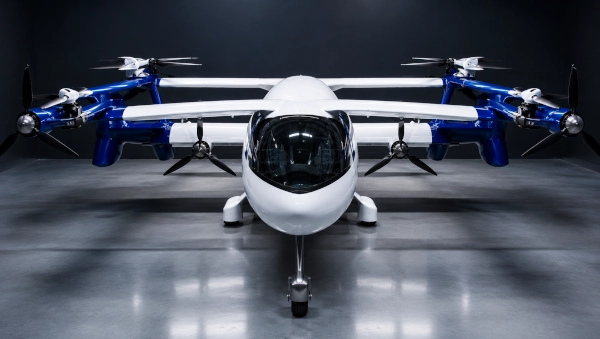
The assistance has been approved under the Government of India’s ₹1 lakh crore Research, Development and Innovation Fund and will support the development of the e200X, a three-seat electric vertical take-off and landing aircraft intended for short-distance passenger transport, emergency medical services and other advanced air mobility applications.
The overall approved project cost is ₹570 crore. The ₹285 crore commitment from the Technology Development Board therefore represents half of the project cost and will be provided through Optionally Convertible Debentures rather than as a conventional government grant. The financing is intended to help move the aircraft from Technology Readiness Level 6 to Technology Readiness Level 9, taking it from an advanced development stage towards a fully demonstrated operational platform.
From Prototype Technology to an Operational Aircraft
The transition from TRL-6 to TRL-9 represents one of the most difficult phases in the development of any new aircraft. A prototype may demonstrate that its basic aerodynamic, propulsion and control concepts work, but a commercially deployable aircraft must undergo substantially more extensive engineering, validation, testing and certification.
Under the project supported by the Technology Development Board, the e200X will undergo further technology maturation, system integration, testing and validation. The programme will also have to demonstrate that its propulsion, batteries, structures, flight controls and supporting systems can operate reliably under conditions approaching those expected in commercial service.
Moving to TRL-9 would signify that the complete system has been demonstrated under operational conditions. For Ubifly Technologies, this represents the transition from proving an aircraft concept to building a platform capable of entering an actual advanced air mobility market.
e200X Designed for Short-Distance Electric Aviation
The e200X is being developed as a three-seat aircraft carrying one pilot and two passengers. The aircraft has a targeted operating range of approximately 110 kilometres and a planned cruise speed of around 160 kilometres per hour.
Its operating profile is designed primarily for short urban and regional journeys rather than conventional long-distance aviation. Such aircraft could potentially connect city centres, airports, hospitals, business districts and nearby urban centres without requiring traditional airport infrastructure for every flight.
The aircraft uses an electric vertical take-off and landing configuration, allowing it to rise vertically before transitioning into forward flight. This enables operations from compact landing areas rather than conventional runways.
ePlane has designed the aircraft around what it calls its Synergistic Lift architecture. The system separates the aircraft’s vertical-lift propulsion from its forward-flight propulsion rather than relying on mechanically tilting motors.
Six dedicated vertical rotors are used for take-off and landing, while four separate forward propellers provide propulsion during horizontal flight. This gives the e200X ten independent propulsion units distributed across its lift and cruise systems.
Major Aircraft Technologies Developed in India
A particularly important aspect of the programme is the extent to which key technologies are being designed and developed domestically.
According to the Technology Development Board, the e200X brings together indigenous vertical rotors, forward propellers, proprietary flight-control algorithms, power-distribution controllers and battery-pack modules incorporating integrated cooling systems.
The complete aircraft structure, including the fuselage, wings and booms, has also been designed in-house. ePlane says its principal composite structures and associated tooling have been developed internally as the company works towards building a vertically integrated aircraft development capability.
The company is also developing its own flight-control software, autonomy algorithms and sensor-fusion architecture. These systems are intended to combine information from technologies including radar, LiDAR and cameras for navigation, landing assistance and obstacle awareness.
Developing these technologies within India gives the programme significance beyond a single aircraft. Electric motors, propulsion controllers, battery-management systems, lightweight composite structures, flight computers, autonomous navigation systems and high-power electrical architecture could contribute to several future Indian aerospace and unmanned aviation programmes.
Compact Aircraft Designed Around Existing Urban Infrastructure
One of the major challenges facing urban air mobility is finding suitable areas from which aircraft can operate.
Traditional airports require large areas of land, while even helicopter operations generally depend on dedicated helipads and supporting infrastructure. The e200X has therefore been designed with a compact operating footprint measuring approximately eight metres by eleven metres.
The company believes this footprint could allow the aircraft to use many existing helipads, including those located on hospital buildings, commercial campuses and other urban facilities.
Its vertical take-off capability removes the requirement for a conventional runway, while the landing gear has been designed to support both vertical and conventional landing configurations. This gives the aircraft additional operational flexibility during testing and future service.
The compact configuration is particularly relevant in Indian metropolitan areas where land availability is limited and road congestion can significantly increase travel times.
Up to Three Short Urban Flights From a Single Charge
The e200X is being designed around a maximum targeted range of approximately 110 kilometres on a single charge. The company says this could allow the aircraft to undertake up to three short intra-city missions of around 30 kilometres each without requiring intermediate charging.
The targeted cruise speed of 160 kmph could allow the aircraft to cover journeys that may take well over an hour by road within a fraction of that time, depending on the route and operational conditions.
Electric propulsion could also reduce local emissions and mechanical complexity compared with conventional turbine-powered helicopters, although actual operating economics will depend on battery life, utilisation rates, maintenance requirements, infrastructure costs and regulatory conditions.
The commercial viability of advanced air mobility will therefore depend not simply on whether an aircraft can fly successfully, but whether it can operate frequently, safely and economically enough to justify regular passenger or specialist services.
One Airframe Being Developed for Several Missions
Ubifly Technologies is developing the e200X as more than an urban air-taxi platform.
A modular approach is being pursued that could allow the same basic aircraft to support passenger transport, medical evacuation and cargo operations. This strategy would allow the company to spread aircraft-development costs across several potential markets instead of depending entirely on premium passenger mobility.
The medical application has already become an important part of the programme. In August 2026, ePlane and Apollo Hospitals announced a partnership aimed at exploring electric air ambulances and medical-delivery aircraft within Apollo’s healthcare network.
The proposed medical configuration would accommodate a pilot, patient and medical attendant, together with a hospital-standard stretcher and essential medical equipment. The aircraft could also potentially transport blood, organs and other critical medical supplies.
Such applications could give electric vertical-lift aircraft a particularly practical role in India. Moving emergency patients through congested metropolitan areas or connecting remote locations with specialised hospitals could create operational use cases where reduced travel time has direct medical value.
DGCA Certification Is Central to Commercial Deployment
Building an aircraft capable of flying is only one stage in developing a commercial aviation platform. Passenger operations require regulatory certification demonstrating that the aircraft meets prescribed standards of safety, reliability and airworthiness.
The e200X certification process with the Directorate General of Civil Aviation is already underway. According to The ePlane Company, its type-certification programme has been in progress since December 2024.
The company also states that it became the first private Indian organisation to receive Design Organisation Approval from the DGCA for an electric aircraft.
Design Organisation Approval establishes that an organisation possesses approved systems, personnel and processes for carrying out aircraft design activities under the regulatory framework. It is therefore an important institutional milestone in addition to the technical development of the aircraft itself.
The e200X type-certification process will ultimately determine whether the platform can progress from experimental and developmental flying into regulated passenger operations.
An Aircraft Programme Born at IIT Madras
Ubifly Technologies was incorporated in 2019 within the IIT Madras innovation ecosystem and operates commercially as The ePlane Company.
The programme was founded by Professor Satya Chakravarthy, whose work at IIT Madras has focused extensively on aerospace engineering, propulsion and electric aviation.
The company began by developing smaller technology demonstrators before gradually increasing the scale and complexity of its aircraft. Earlier platforms were used to test aerodynamic behaviour, vertical take-off, transition flight and other elements required for the larger e200X programme.
The e50, a scaled technology demonstrator, completed flight testing intended to validate vertical take-off, transition into forward flight and vertical landing. These tests helped support development of the architecture being carried into the full-scale aircraft.
The company subsequently unveiled the e200X airframe configuration and began building the full-scale programme around certification, manufacturing and commercial deployment.
₹1 Lakh Crore RDI Fund Targets India’s Deep-Tech Financing Gap
The financial structure supporting ePlane is part of a much larger government effort to strengthen private-sector research and development.
India has traditionally produced considerable scientific research and engineering talent, but commercialising advanced technology has often been constrained by the difficulty of obtaining capital during the long period between laboratory development and revenue-generating production.
Deep-tech companies face a particularly difficult financing environment because their development cycles can stretch across many years. Aerospace systems, semiconductor manufacturing, biotechnology, advanced materials and space technologies require sustained investment before a commercially viable product emerges.
The ₹1 lakh crore Research, Development and Innovation Fund was established to address this gap by providing long-term capital for high-risk and strategically important technologies.
Rather than relying exclusively on traditional grants, the programme can deploy structured financial instruments including debt and equity-linked support. This allows public capital to help promising technologies through expensive development stages while maintaining greater financial discipline than a simple subsidy model.
TDB Emerging as a Major RDI Financing Channel
The Technology Development Board is one of the principal institutions being used to channel financing under the RDI programme.
TDB has historically supported Indian companies attempting to commercialise indigenous technologies, but the new fund significantly increases the scale at which such financing can be deployed.
The Ubifly Technologies commitment is particularly notable because ₹285 crore is being directed towards a single private-sector aerospace development programme. It reflects the amount of capital required to move a complex aviation platform from prototype maturity towards operational readiness.
The use of Optionally Convertible Debentures also distinguishes the investment from a traditional research grant. The structure gives the government-backed funding mechanism the possibility of conversion under specified circumstances while providing the company with capital required for engineering and commercialisation.
The arrangement also means that the government is not financing the entire programme. With an approved project cost of ₹570 crore, Ubifly Technologies and its financing partners must support the remaining portion of the development expenditure.
Advanced Air Mobility Could Create a New Indian Aerospace Supply Chain
The significance of an indigenous eVTOL industry extends well beyond future air-taxi services.
A commercial electric aircraft requires high-performance electric motors, power electronics, lightweight structural materials, batteries, thermal-management systems, flight computers, avionics, sensors, propellers, charging infrastructure and sophisticated manufacturing processes.
Building these systems domestically could create an entirely new aerospace supply chain serving both civilian and defence markets.
Electric propulsion technology could eventually contribute to unmanned aircraft, regional electric aviation and specialised logistics platforms. Advanced battery-management and power-distribution technologies can similarly migrate into other sectors requiring high-reliability electrical systems.
Composite manufacturing, flight-control software and autonomous navigation systems developed for an eVTOL programme could also strengthen India’s wider aerospace technology base.
The value of the e200X programme therefore lies not only in whether a particular air-taxi route eventually becomes commercially successful. The engineering capabilities created while developing and certifying the aircraft may have applications across several emerging industries.
India Is Entering Advanced Air Mobility as a Technology Developer
Advanced air mobility is still developing globally. Several international companies are working on electric vertical-lift aircraft, but commercial passenger services have yet to become a mature global industry.
This gives India an opportunity to enter the sector while the underlying technology and operating models are still being established.
Historically, India has often entered emerging aviation markets primarily as a purchaser of foreign platforms and systems. Indigenous programmes such as the e200X represent an effort to participate much earlier in the technology-development cycle.
If Indian companies can successfully design, certify and manufacture electric aircraft domestically, the country could participate in the advanced air mobility market not simply as an operator but as an aerospace technology producer.
Government support during the difficult transition from prototype development to certification could prove decisive in determining whether Indian companies are able to remain in this technological race.
From TRL-6 to TRL-9 Will Be the Real Test
The ₹285 crore commitment gives Ubifly Technologies substantially greater financial capacity to mature the e200X, but the most demanding stage of the programme still lies ahead.
The aircraft must progress through detailed engineering, ground testing, systems validation and increasingly complex flight trials. Propulsion systems and batteries must demonstrate reliability. Structural components must satisfy safety requirements, while flight-control systems have to perform consistently across different operating conditions.
The manufacturing process must also become repeatable enough to produce aircraft that conform to an approved design rather than individually assembled prototypes.
All of this has to occur alongside a demanding certification process in which the manufacturer must demonstrate compliance with aviation safety standards.
Success at TRL-9 would therefore represent far more than another prototype flight. It would indicate that the indigenous platform had matured into an operationally demonstrated aircraft.
For India, that would represent an important achievement in a rapidly emerging segment of global aviation.
The ₹285 crore RDI commitment consequently represents more than financial assistance to one Chennai startup. It is an attempt to carry Indian aerospace innovation across the difficult divide between technological demonstration and commercial deployment.
If the e200X completes that transition successfully, India could emerge with an indigenous passenger eVTOL built around domestically developed propulsion, structures, software, power electronics and flight-control technologies.
That would place the country inside the development of the next generation of aviation rather than waiting for that generation of aircraft to arrive from abroad.
References
Press Information Bureau, Ministry of Science & Technology — “TDB-DST backs India’s next-generation air mobility ambitions with ₹285 crore RDI support to Ubifly Technologies,” September 23, 2026.
Technology Development Board, Department of Science & Technology, Government of India — Research, Development and Innovation Fund programme information.
Department of Science & Technology, Government of India — Research Development and Innovation Scheme documentation.
The ePlane Company — e200X technical specifications and Advanced Air Mobility programme information.
The ePlane Company — Company history, Synergistic Lift architecture and aircraft development programme.
The ePlane Company — DGCA Design Organisation Approval and e200X Type Certification programme information.
The ePlane Company — e200X air ambulance configuration and technical architecture.
The ePlane Company and Apollo Hospitals — Electric air ambulance collaboration announcement, August 2026.
Directorate General of Civil Aviation — Aircraft design and certification regulatory framework.
You may also like
-
ideaForge Secures ₹151 Crore Government Support to Develop YETI Heavy-Lift Autonomous Logistics Drone
-
JSR Dynamics Advances Indigenous Jet-Powered Weapons and Guided Rockets
-
Pune Startup Hyperonic Engineering Develops Indigenous Hydrogen Refuelling Systems for Clean Transportation
-
IIT Madras Startup Folium Sensing Develops Fibre-Optic Technology to Monitor Railways, Pipelines and Border Security
-
IIT Roorkee Startup Metastable Materials Develops Indigenous Technology to Recover Critical Battery Metals
