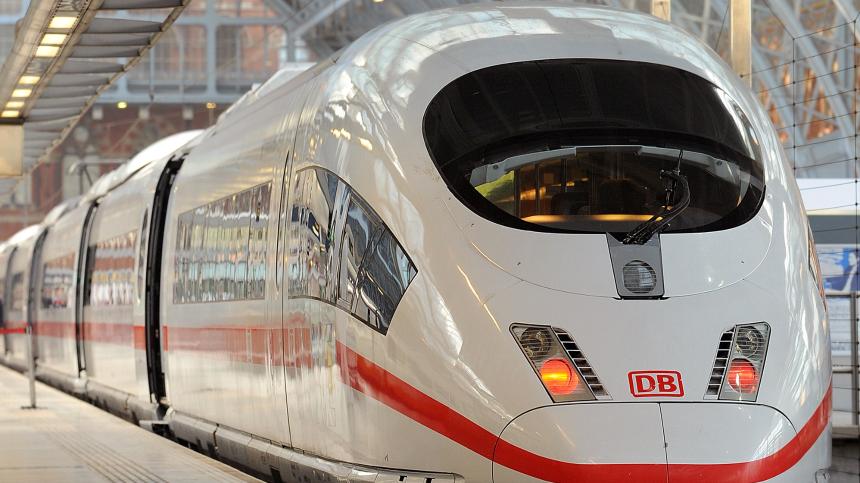
India’s high-speed rail programme is beginning to move beyond infrastructure construction into the development of indigenous trains, signalling a major change in the country’s railway technology ambitions. BEML is already manufacturing India’s first domestically designed 280 kmph high-speed train platform, while work has also begun on the next technological step—a train designed for speeds of around 350 kmph.
The immediate programme centres on the B28, India’s first indigenous high-speed train platform. Its name reflects its 280 kmph design-speed category. The train is being developed through the Integral Coach Factory and BEML, with manufacturing taking place at BEML’s Bengaluru facility.
The first train is expected to emerge from production ahead of an extensive programme of testing and certification during 2027. Beyond the B28, BEML has now confirmed that preliminary work has already begun on a 350 kmph high-speed platform that could eventually provide indigenous rolling stock for India’s much larger future high-speed rail network.
Together, the programmes represent an attempt to create within India not merely the ability to assemble high-speed trains, but the engineering, intellectual property, propulsion technology, manufacturing infrastructure and testing capabilities required to design succeeding generations of high-speed rolling stock.
B28 Is India’s First Indigenous High-Speed Train Platform
The B28 is being developed as India’s first domestically designed train capable of operating within the internationally recognised high-speed rail category.
It has a design speed of 280 kmph and an intended operating speed of approximately 250 kmph. This places it significantly above the speed range of India’s existing Vande Bharat trains and requires a very different level of engineering in areas including aerodynamics, braking, propulsion, suspension, structural strength, pressure sealing and train control.
Indian Railways has officially confirmed that Integral Coach Factory, in collaboration with BEML, is designing and manufacturing indigenous 280 kmph high-speed trainsets. The associated tooling, testing facilities and production infrastructure are also being developed in India so that they can support subsequent high-speed rail programmes.
This is important because building high-speed rolling stock requires much more than producing a faster version of a conventional train. As speeds approach and exceed 250 kmph, aerodynamic drag rises sharply, braking distances increase, pressure changes become more significant, vibration tolerances narrow and the relationship between wheels, track, suspension and vehicle stability becomes increasingly demanding.
The B28 programme is therefore creating an entirely new industrial capability within India’s railway manufacturing system.
Two Trainsets Are Currently Mandated, Not 47
Some recent reports have suggested that BEML has already received orders for 47 indigenous high-speed trains. The latest statement from BEML itself does not support that figure.
BEML Chairman and Managing Director Shantanu Roy has confirmed that the company is presently mandated to manufacture two 280 kmph high-speed trainsets. BEML has additionally submitted an offer for 16 trainsets connected with the Mumbai–Ahmedabad high-speed rail programme, but a final order for those additional trains has not yet been confirmed.
This distinction is important because the two initial trainsets form the development and validation phase of India’s indigenous high-speed rolling-stock programme. Their successful manufacture, testing and certification could determine the scale of subsequent orders.
The programme therefore remains at an important transition point. India has moved beyond the concept stage and into physical manufacturing, but large-scale fleet production will depend on successful completion of the initial trains and subsequent procurement decisions.
First B28 Train Taking Shape at Bengaluru
BEML began production of the first train during 2026 at its Bengaluru manufacturing complex.
According to the company’s latest management update, production has progressed from individual modules to the construction of the complete car-body shell. Because the train is based on a clean-sheet indigenous design, individual stages are being subjected to design validation, manufacturing checks and technical testing before assembly proceeds further.
BEML expects the first train to emerge from manufacturing before entering extensive depot and main-line testing.
Testing will take place at several levels. Individual cars must first be validated, after which four-car basic units will be tested before the complete trainset is subjected to system-level evaluation.
The programme will then have to demonstrate performance under increasingly demanding operating conditions before certification can be completed.
2027 Will Be Primarily a Testing and Certification Year
The B28 programme is expected to enter its decisive validation phase during 2027.
BEML management has indicated that extensive testing and certification will follow delivery of the first train. This will include static testing, subsystem verification, braking evaluation, propulsion trials, ride-quality measurements and progressively higher-speed running.
The train cannot move directly from factory completion to high-speed passenger service. Rail vehicles operating at around 250 kmph require extensive validation because even relatively small aerodynamic, structural or suspension issues can become significant at those speeds.
The testing programme will therefore be as important as the manufacturing milestone itself.
For this reason, reports suggesting that the B28 will automatically enter full commercial operation during 2027 should be treated cautiously until Indian Railways formally announces an operational schedule following successful trials and certification.
The Next Step Is Already 350 Kmph
Even before the B28 has completed its testing programme, Indian engineers are beginning work on the next speed category.
BEML’s chairman has confirmed that the company has already started working on a 350 kmph high-speed train platform. This represents the technological progression beyond the 280 kmph B28 and is expected to support the requirements of India’s future high-speed rail corridors.
The emerging platform has been widely referred to as the B35, following the same naming convention used for the B28.
A 350 kmph design represents a substantially greater engineering challenge. The additional 70 kmph cannot simply be achieved by installing more powerful traction motors. Aerodynamic resistance increases dramatically at higher speeds, while noise, stability, wheel–rail interaction, braking performance, pressure waves and energy consumption all become progressively more difficult engineering problems.
The B35 would therefore require significant advances over the B28 in aerodynamics, lightweight structures, propulsion, braking, bogie technology and train-control integration.
BEML Says the Intellectual Property Is Indian
One of the most significant disclosures from BEML concerns ownership of the technology.
The company’s chairman has stated that the indigenous high-speed train programme is based on Indian intellectual property and that the propulsion equipment is being sourced domestically.
This marks an important distinction between manufacturing foreign-designed trains under licence and developing an indigenous railway platform whose design knowledge remains within the country.
Domestic intellectual-property ownership allows future train generations to be modified without dependence on an overseas original equipment manufacturer. It also creates the possibility of developing different train configurations for Indian conditions and, eventually, offering high-speed railway technology in overseas markets.
The capability being established through the B28 programme therefore extends far beyond the initial two trainsets.
Aditya Complex Built Specifically for High-Speed Rail Manufacturing
India has also established specialised manufacturing infrastructure for the programme.
In April 2026, Railway Minister Ashwini Vaishnaw inaugurated the Aditya high-speed rail manufacturing complex at BEML’s Tippasandra campus in Bengaluru.
The facility has been created specifically for high-speed rolling-stock development and is currently configured for production of B28 coaches.
The specialised plant provides the manufacturing environment required for high-precision car bodies and high-speed train assembly. At such speeds, manufacturing tolerances become significantly tighter than those required for conventional passenger coaches because small dimensional variations can affect aerodynamic behaviour, ride quality and structural performance.
The facility is also part of a wider effort to establish tooling, jigs, testing systems and manufacturing processes that can be reused for subsequent Indian high-speed train programmes.
This makes the B28 more than a two-train manufacturing project. It is creating an industrial base upon which later platforms—including the proposed 350 kmph generation—can be built.
Why 350 Kmph Matters
A train designed for 350 kmph would place Indian rolling-stock engineering within the speed category occupied by some of the world’s leading high-speed railway systems.
The Mumbai–Ahmedabad High-Speed Rail corridor itself has been engineered around high-speed railway standards considerably beyond those of conventional Indian Railways.
Future corridors are expected to employ similarly advanced infrastructure, creating a requirement for large numbers of high-speed trainsets over the coming decades.
BEML believes the seven planned high-speed corridors could eventually create demand for hundreds of trainsets. The company’s management has estimated that the future market may require around 600 trains over a period extending roughly ten to fifteen years, although this is BEML’s commercial estimate rather than an official government procurement commitment.
The scale of the planned high-speed network means that domestic train manufacturing could become strategically important both economically and technologically.
Seven New High-Speed Corridors Will Transform the Scale of the Programme
India’s high-speed rail plans expanded considerably with the Union Budget 2026–27.
The Government announced seven new corridors intended to serve as high-speed growth connectors between major cities. Together, they cover nearly 4,000 kilometres and are expected to generate approximately ₹16 lakh crore in investment.
The proposed corridors are Mumbai–Pune, Pune–Hyderabad, Hyderabad–Bengaluru, Hyderabad–Chennai, Chennai–Bengaluru, Delhi–Varanasi and Varanasi–Siliguri.
The southern corridors would create a high-speed network linking some of India’s largest technology, manufacturing and commercial centres.
Chennai, Bengaluru and Hyderabad would form the core of what the Railway Ministry has described as a South High-Speed Triangle or Diamond. The wider network would also extend towards Pune and Mumbai while connecting several major economic centres across southern and western India.
In northern and eastern India, the Delhi–Varanasi and Varanasi–Siliguri corridors would create a high-speed axis extending from the National Capital Region towards Uttar Pradesh, Bihar and West Bengal.
Nearly 4,000 Km of New High-Speed Rail
The seven corridors collectively represent a network nearly eight times the length of the 508-km Mumbai–Ahmedabad High-Speed Rail corridor.
This dramatically changes the economics of indigenous train manufacturing.
A single high-speed corridor may justify importing specialised trains or relying heavily on foreign technology. A network extending across thousands of kilometres creates sufficient long-term demand to justify investment in domestic design, manufacturing, testing, component production and research.
This explains why the B28 programme is strategically important even before the train enters passenger service.
It provides India with the opportunity to establish a domestic high-speed rolling-stock industry before the larger network enters construction and operation.
Mumbai–Ahmedabad Remains India’s Technology Foundation
The 508-km Mumbai–Ahmedabad High-Speed Rail corridor remains the foundation of India’s high-speed railway programme.
The project is being implemented with Japanese technical and financial assistance and incorporates technologies associated with Japan’s Shinkansen system.
Its infrastructure is being designed to high-speed standards involving dedicated tracks, specialised signalling, continuous fencing, advanced bridges and viaducts, earthquake-detection systems and extensive safety provisions.
The experience gained from designing and constructing this corridor is now being used to establish common engineering principles for future Indian high-speed routes.
The Railway Ministry has stated that future corridors will adopt a replicable construction philosophy. Foundations will continue to be adapted to individual soil conditions, while elements including piers, viaducts, tracks, station structures, overhead electrification and signalling can increasingly follow standardised engineering designs.
Standardisation could significantly reduce construction time and engineering costs when multiple corridors are developed simultaneously.
Japan’s E10 and India’s Indigenous Train Programme Will Follow Different Paths
Japan is separately developing its next-generation E10 Shinkansen platform.
The E10 is intended to become a future generation of Japanese high-speed rolling stock and is expected to enter service in Japan during the next decade.
It remains relevant to the Mumbai–Ahmedabad programme because India and Japan continue to cooperate closely on high-speed rail technology. However, the development timeline for the E10 means India is simultaneously building its own high-speed rolling-stock capability rather than waiting exclusively for a future Japanese train platform.
The two programmes should therefore not be regarded simply as competitors.
Japan remains India’s principal technology partner for the Mumbai–Ahmedabad corridor, while indigenous platforms such as the B28 and future 350 kmph trainsets are intended to establish independent Indian engineering and manufacturing capability.
This dual approach allows India to absorb experience from one of the world’s most mature high-speed railway systems while simultaneously building a domestic technology base.
High-Speed Rail Requires Much More Than a Fast Train
The transition from 160–180 kmph railway technology towards 280–350 kmph operation changes almost every aspect of railway engineering.
A high-speed train requires a highly aerodynamic nose and body profile because air resistance becomes one of the dominant forces acting on the vehicle.
The passenger compartment must also cope with rapid pressure changes when trains enter tunnels or pass each other at high relative speeds. Doors and gangways require improved sealing, while windows, body structures and ventilation systems must be designed accordingly.
Bogies and suspension systems must maintain stability at speeds where relatively small track irregularities can generate considerable forces.
Braking systems must safely dissipate enormous amounts of kinetic energy, while propulsion equipment has to provide high power without excessive weight.
Noise becomes another engineering challenge, particularly from aerodynamic turbulence around pantographs, bogies and inter-car connections.
The development of the B28 consequently requires expertise across dozens of disciplines that Indian rolling-stock manufacturers have not previously needed at this scale.
A Domestic Component Ecosystem Is Emerging
The indigenous train programme is also intended to establish a broader Indian supply chain.
The Railway Ministry has said that specialised components, high-speed railway construction equipment and slab-track systems are increasingly being manufactured domestically.
BEML’s confirmation that the propulsion technology for its high-speed train is locally sourced is particularly significant because traction equipment represents one of the most technologically complex and valuable sections of a modern trainset.
Domestic development could create opportunities for Indian companies involved in motors, converters, transformers, braking equipment, train-control systems, electronics, composite materials, precision manufacturing and railway software.
The same industrial ecosystem could subsequently support metro trains, Vande Bharat platforms and export-oriented railway products.
From Train Assembly to Train Design
India’s railway manufacturing industry has already undergone a significant transition through the Vande Bharat programme.
The next stage is considerably more difficult.
Producing an indigenous 280 kmph train moves Indian industry from the semi-high-speed category into a technical domain where only a relatively small number of countries possess mature design and manufacturing capability.
Developing a subsequent 350 kmph platform would deepen that transition further.
The strategic objective is therefore not simply to manufacture coaches within India. It is to own the engineering knowledge required to design the train, calculate its aerodynamic behaviour, develop its propulsion system, engineer its structures, integrate its electronics and progressively improve subsequent generations.
That difference separates domestic manufacturing from genuine technological capability.
B28 Could Become the Foundation for a Much Larger Programme
The first two B28 trainsets will carry considerably more significance than their limited number suggests.
They will establish whether Indian manufacturers can design, build, test and certify a high-speed train to the precision and reliability demanded by dedicated high-speed rail.
Successful trials would validate the manufacturing processes and engineering tools developed at ICF and BEML while providing data for improving future trains.
The same industrial infrastructure could subsequently support additional B28 orders as well as progressively faster platforms.
BEML has already submitted an offer for 16 additional high-speed trainsets. A procurement decision will depend on the Railway Ministry and the requirements of the Mumbai–Ahmedabad corridor.
Beyond that, the proposed seven-corridor network could create a substantially larger market.
B35 Represents the Next Technological Threshold
The emergence of the 350 kmph programme shows that India is already planning beyond its first indigenous bullet train.
B28 establishes the initial design, manufacturing and certification ecosystem. A 350 kmph successor would require that ecosystem to mature further.
The progression mirrors the way established high-speed railway nations developed their own industries: successive generations improved speed, aerodynamics, energy efficiency, reliability and passenger comfort rather than attempting to master every capability in a single programme.
For India, the jump from existing railway technology to B28 is significant. The progression from B28 to a 350 kmph train could be even more important because it would demonstrate an ability to evolve an indigenous high-speed platform instead of developing only one specialised train.
With the B28 already under construction, the Aditya manufacturing complex operational and BEML confirming early work on a 350 kmph design, India’s high-speed rail ambitions are entering a new phase.
The country is no longer planning only the tracks on which bullet trains will run. It is beginning to build the technological capability to design and manufacture the trains themselves.
References
Press Information Bureau, Ministry of Railways — India’s High-Speed Rail Future: Building a Standardised Path for Expansion, July 2026.
Press Information Bureau, Ministry of Railways — Record CapEx of ₹2.93 Lakh Crore for Indian Railways; Seven New High-Speed Corridors Announced, February 1, 2026.
Press Information Bureau — Redefining Inter-City Mobility: High-Speed Rail Corridors in India, February 11, 2026.
Press Information Bureau, Bengaluru — Union Railway Minister Inaugurates BEML’s Aditya High-Speed Rail Manufacturing Complex, April 25, 2026.
BEML Limited — Q1 FY2026-27 management discussion and investor interaction on the 280 kmph indigenous high-speed train programme, manufacturing progress and development of a 350 kmph platform.
India Brand Equity Foundation — Indian Railways industry update covering indigenous 280 kmph high-speed train development by ICF and BEML.
You may also like
-
JSR Dynamics Advances Indigenous Jet-Powered Weapons and Guided Rockets
-
Pune Startup Hyperonic Engineering Develops Indigenous Hydrogen Refuelling Systems for Clean Transportation
-
IIT Madras Startup Folium Sensing Develops Fibre-Optic Technology to Monitor Railways, Pipelines and Border Security
-
IIT Roorkee Startup Metastable Materials Develops Indigenous Technology to Recover Critical Battery Metals
-
Chennai Startup Evoxia Develops Hydrogen Plasma Technology for Indigenous Silicon Manufacturing
