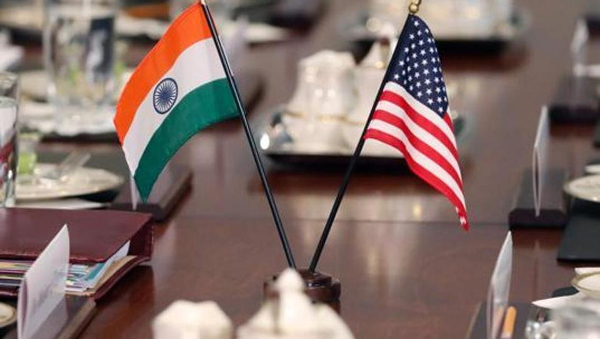
The Indian Navy and the United States Navy have begun a five-day specialised bilateral exercise focusing on Explosive Ordnance Disposal (EOD) at the Southern Naval Command in Kochi, adding another highly specialised dimension to the steadily expanding operational cooperation between the two navies.
The exercise, being conducted from August 10 to August 14, 2026, brings together specialist diving and Explosive Ordnance Disposal personnel from India and the United States. Unlike major naval exercises centred around destroyers, aircraft carriers, submarines and combat aircraft, the Kochi engagement concentrates on the less visible but critically important disciplines of detecting, handling and neutralising explosive threats in the maritime environment.
Training for Threats Beneath the Water
Explosive Ordnance Disposal teams perform some of the most dangerous tasks encountered by modern navies. Their responsibilities can include identifying and neutralising underwater mines, unexploded bombs, torpedoes, missiles and other explosive devices, clearing harbours and approaches to naval bases, examining damaged ships and making maritime areas safe for subsequent naval operations.
Underwater EOD becomes particularly demanding because personnel may have to locate an explosive device in poor visibility, determine its condition, assess the type of fuze or triggering mechanism involved and decide whether the device can be rendered safe, recovered or destroyed in situ.
Bringing Indian and American specialist diving teams together therefore allows both sides to compare procedures, equipment, underwater search techniques and approaches to explosive hazards while building familiarity with each other’s operating methods.
The central objective is interoperability — ensuring that specialist units from both countries can work together effectively should they ever be required to undertake a combined maritime security, salvage, mine-clearance or emergency-response operation.
India-US EOD Cooperation Has a Long History
The Kochi exercise is not the beginning of India-US cooperation in this specialised field.
According to India’s Ministry of Defence, the Indian Navy and US Navy have participated in joint salvage and Explosive Ordnance Disposal exercises since 2005.
One of the most significant manifestations of this cooperation has been SALVEX — the India-US Navy Salvage and Explosive Ordnance Disposal Exercise.
The seventh edition of SALVEX was held at Kochi between June 26 and July 6, 2023, involving the Indian Navy’s diving support and submarine-rescue vessel INS Nireekshak, the US Navy’s salvage ship USNS Salvor, and specialist diving and EOD teams from both countries.
During that exercise, Indian and American personnel trained together in maritime salvage as well as EOD operations on land and at sea. Training covered specialised areas including mine detection and neutralisation, wreck location and underwater salvage, while allowing both sides to exchange operational experience and best practices.
The 2026 engagement therefore represents the continuation of an established specialist relationship rather than an entirely new form of cooperation.
Why EOD Capability Matters to the Indian Navy
For India, maritime EOD capability has particular importance because of the country’s long coastline, major commercial ports, naval bases and dependence on sea lanes for energy and trade.
Naval mines and underwater explosives can create disproportionate disruption. A relatively inexpensive mine laid near the entrance to a harbour can potentially interfere with the movement of military or commercial vessels and force extensive mine-countermeasure operations before normal traffic can safely resume.
EOD personnel are therefore essential not merely during conventional naval warfare but also during counter-terrorism operations, harbour protection, salvage operations and maritime emergencies involving unexploded ordnance.
The capability is far from theoretical for the Indian Navy.
In June 2026, a specialist EOD team from the Southern Naval Command carried out a particularly difficult operation aboard the crude-oil tanker MT Olympic Life, which was travelling from Fujairah towards Kochi after suffering an explosion off Oman.
A projectile had penetrated the vessel and eventually become lodged inside a fuel tank. Indian Navy specialists identified and isolated the detonation mechanism before safely extracting the unexploded missile warhead and associated debris.
The operation demonstrated the practical importance of highly trained naval EOD teams in situations where an explosive device may threaten not only a ship but its crew, surrounding port infrastructure and potentially the marine environment.
Kochi Emerging as a Major Maritime Training Hub
The choice of the Southern Naval Command at Kochi is also significant.
Southern Naval Command is the Indian Navy’s principal training command and increasingly hosts complex bilateral and multinational maritime training programmes.
Only weeks before the India-US EOD engagement, Kochi hosted Operation Southern Readiness 26-2, conducted by the Indian Navy in partnership with the Combined Maritime Forces under the Indian Navy-led Combined Task Force 154.
That programme brought together hundreds of personnel from dozens of countries for training covering maritime security, asymmetric threats, maritime unmanned systems, force protection, damage control, firefighting, boarding operations and other specialised areas.
The Ministry of Defence has described the Southern Naval Command’s expanding international training role as strengthening India’s position as a preferred maritime security and training partner.
The new India-US EOD exercise reinforces that role by placing an especially technical form of naval warfare and maritime security training within Kochi’s growing international training ecosystem.
A Quiet but Important Element of India-US Defence Cooperation
India-US defence cooperation is often associated with high-profile exercises involving aircraft carriers, maritime patrol aircraft, fighter jets and major surface combatants. However, specialist exercises such as EOD training can be equally important from an operational standpoint.
They create familiarity at the working level between personnel who may someday have to carry out highly dangerous missions together.
EOD and diving operations demand extraordinary levels of technical competence and trust. Procedures must be understood precisely because mistakes while handling underwater explosives can have immediate and catastrophic consequences.
Repeated joint training therefore creates something that cannot be acquired simply by purchasing compatible military equipment — shared operational experience.
The five-day Kochi exercise consequently represents a small but strategically valuable component of the broader India-US maritime relationship. It strengthens specialist expertise, enables the exchange of best practices and improves the ability of the two navies to cooperate in missions ranging from mine clearance and underwater salvage to harbour security and unexploded-ordnance disposal.
As maritime security challenges in the Indian Ocean become increasingly complex, such specialist capabilities will remain an important part of India’s effort to ensure that its ports, naval bases, shipping routes and maritime forces can continue operating even in an environment threatened by mines and underwater explosives.
You may also like
-
India and Uzbekistan Strengthen Counter-Terrorism Cooperation, Focus on Terror Financing and Regional Security
-
India and Poland Target Doubling Bilateral Trade by 2030, Expand Defence and Technology Cooperation
-
Sigma Advanced Systems Secures ₹174 Crore Export Order for 155mm Artillery Ammunition Subsystems
-
Bharat Electronics Secures ₹1,011 Crore in New Defence Orders for Radar, Communication and Sonar Systems
-
India Calls for Legally Binding International Treaty to Prevent Weaponisation of Outer Space
