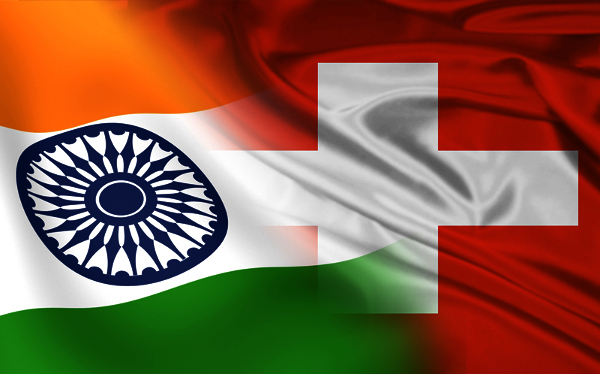
India and Switzerland have agreed on a broad expansion of bilateral cooperation covering trade, investment, mobility, transport infrastructure, scientific research, defence production and nuclear energy during talks between Prime Minister Narendra Modi and Swiss President Guy Parmelin in New Delhi on October 5, 2026.
The visit produced five formal cooperation instruments and a new push to translate the India-European Free Trade Association Trade and Economic Partnership Agreement into investment and commercial opportunities. Prime Minister Modi said the partnership was increasingly being built around innovation, advanced technology and infrastructure, alongside the two countries’ longstanding political and people-to-people ties.
India-EFTA Agreement Targets $100 Billion Investment
A central focus of the discussions was the India-EFTA Trade and Economic Partnership Agreement, or TEPA, which entered into force in October 2025. EFTA comprises Switzerland, Norway, Iceland and Liechtenstein.
Prime Minister Modi described TEPA as India’s first free trade agreement with a European economic bloc and an ambitious framework for investment, innovation, employment and shared prosperity. The agreement carries an objective of mobilising $100 billion in investment into India over 15 years and supporting the creation of one million direct jobs.
India and Switzerland also discussed measures to improve market access and make bilateral investment easier. The Prime Minister said these steps could support higher Indian exports of agricultural products, pharmaceuticals, textiles and engineering goods to Switzerland.
At the same time, India is seeking additional Swiss investment in biotechnology, life sciences, banking, insurance, food processing and sustainability. The wider objective is to develop dependable supply chains and technology partnerships that connect Indian manufacturing and services with Swiss capital, expertise and innovation.
Five Cooperation Instruments Announced
The State visit produced five instruments spanning migration, employment opportunities for young professionals, transport infrastructure, scientific research and startup development.
A Memorandum of Understanding on Migration and Mobility Partnership establishes a framework for legal and orderly movement between the two countries. It also includes cooperation against irregular migration, human exploitation and trafficking in accordance with national laws.
The arrangement provides for multiple-entry visas valid for up to five years, with stays of up to six months on each visit. It also provides for renewable one-year student permits.
India and Switzerland separately concluded an Agreement on the Exchange of Young Professionals, creating a structured route for young Indians and Swiss nationals to undertake temporary employment in the other country while developing professional and language skills.
The programme initially provides for 300 young professionals annually from each country, with the possibility of increasing the number to 500.
New Transport and Infrastructure Partnership
Transport infrastructure emerged as another major pillar of the visit.
India’s Ministry of Road Transport and Highways and Switzerland’s Federal Department of Economic Affairs, Education and Research concluded an MoU on transportation technologies, mobility systems and infrastructure.
The agreement covers areas including electric vehicles, ropeways, tunnels, circular-economy applications and other transport technologies. It is intended to combine Swiss engineering expertise with India’s rapidly expanding infrastructure requirements.
Prime Minister Modi pointed to the Varanasi ropeway, Noida International Airport at Jewar and railway and tunnelling projects in mountainous regions as examples of existing India-Switzerland infrastructure cooperation.
He invited Swiss companies to expand their presence in India not only as investors but also as partners in design, manufacturing and capacity building.
Science Cooperation Expands to Health, Clean Energy and Space
India and Switzerland also strengthened their scientific partnership through a Letter of Intent between India’s Department of Science and Technology and the Swiss National Science Foundation.
The arrangement will support exploratory research, create partnerships for future joint projects and establish a longer-term framework for collaboration in mutually identified fields.
Prime Minister Modi said new joint research programmes would soon be launched in areas including health, clean energy and space.
The two countries also announced the inaugural session of an Indo-Swiss Research Flagship initiative in collaboration with India’s Ministry of Science and Technology, giving the research partnership a broader institutional platform.
Indo-Swiss Programme to Support Indian Startups
A separate Implementation Arrangement between India’s Department of Science and Technology and the Zurich University of Applied Sciences will expand cooperation in innovation, technology transfer and entrepreneurship.
The arrangement will implement the Indo-Swiss Academia-Industry Training programme, known as AIT India, for early-stage startups.
Indian and Swiss participants will engage through bilateral exchanges, workshops, networking and capability-building programmes. The initiative is designed to connect emerging companies with research institutions, technology networks and potential industrial partners.
The programme adds a startup and commercialisation dimension to a bilateral science relationship that has traditionally focused heavily on academic research.
Defence Production and Military Exchanges Enter the Agenda
The two leaders also identified new possibilities for military exchanges and defence production cooperation.
Although no major defence agreement was announced during the visit, the inclusion of defence production marks a potentially important expansion of the relationship. Switzerland possesses advanced capabilities in precision manufacturing, electronics, engineering and specialised industrial systems that overlap with areas of interest to India’s growing defence manufacturing ecosystem.
Closer military exchanges could meanwhile create opportunities for professional interaction, training and institutional engagement between the armed forces of the two countries.
India and Switzerland to Deepen Nuclear Energy Cooperation
Nuclear energy also featured in the discussions, with both sides agreeing to deepen cooperation in the sector.
The announcement was broader than the specific agreements concluded during the visit, and no individual nuclear project was identified. However, its inclusion among the priority areas indicates an interest in expanding technical and institutional engagement in a field where Switzerland has decades of experience in nuclear power operations, regulation and safety.
For India, nuclear energy is becoming increasingly important as the country expands clean and reliable baseload electricity while pursuing long-term decarbonisation goals.
Mobility Agreements Create New Opportunities for Indians
The migration and young-professionals agreements give the visit a strong people-to-people dimension.
Prime Minister Modi said the new frameworks would create opportunities in Switzerland for Indian students, researchers, professionals and young people. Unlike a general visa liberalisation measure, the arrangements establish defined channels for mobility linked to education, research and employment.
For Indian professionals, the Young Professionals Scheme could provide experience in Swiss companies and institutions operating in fields such as engineering, pharmaceuticals, financial services, life sciences and advanced manufacturing.
The agreements also create mechanisms for managing migration more systematically while addressing irregular movement and exploitation.
Yoga and Ayurveda Gain a Place in Bilateral Cooperation
India and Switzerland discussed expanding cooperation in Yoga and Ayurveda, reflecting their growing popularity in Switzerland.
The inclusion of traditional Indian wellness systems alongside technology, infrastructure and science illustrates the widening scope of bilateral ties. Cooperation could eventually involve education, research, professional exchanges and greater institutional engagement, although no separate agreement on Ayurveda or Yoga was announced during the visit.
Prosperity Summit to Connect Indian and EFTA Businesses
President Parmelin travelled to India with a large business delegation, giving the visit a strong commercial focus.
A Prosperity Summit involving India and EFTA business leaders is scheduled for October 7, with the Swiss President expected to attend. Prime Minister Modi described the event as a platform for converting the promises contained in the trade and investment partnership into concrete commercial outcomes.
The summit assumes particular importance because TEPA’s success will ultimately be measured by actual investment, employment creation, trade flows and industrial partnerships rather than the agreement alone.
India and Switzerland Discuss AI and Global Governance
Artificial intelligence also formed part of the wider technology dialogue.
Prime Minister Modi referred to the AI summit hosted by India in February 2026 and welcomed Switzerland’s plans to host the Geneva AI Summit in 2027. He said the two countries would continue working towards artificial intelligence that is responsible, inclusive and human-centric.
On international affairs, India and Switzerland reaffirmed support for democratic values, the rule of law, dialogue and diplomacy. Modi reiterated India’s support for meaningful peace efforts relating to Ukraine and West Asia, while both countries agreed on the need to reform global institutions to respond more effectively to contemporary challenges.
India-Switzerland Partnership Moves Beyond Traditional Trade
The October 5 agreements show India-Switzerland relations expanding beyond their traditional foundations in trade, finance and pharmaceuticals.
Mobility arrangements will create structured opportunities for students and professionals. Infrastructure cooperation brings Swiss engineering into areas such as tunnels, ropeways and electric mobility. Research agreements connect universities, startups and scientific institutions, while defence production and nuclear energy open additional strategic avenues.
Above all, the $100 billion EFTA investment objective gives the relationship a measurable long-term economic target. The combination of TEPA, new mobility frameworks, advanced technology cooperation and stronger business engagement gives India and Switzerland a wider platform for building an innovation-led partnership over the coming decade.
References
Prime Minister’s Office, Government of India — PM’s Press Statement during Joint Press Statement with the President of Switzerland, October 5, 2026. PM India
https://www.pmindia.gov.in/en/news_updates/pms-press-statement-during-joint-press-statement-with-the-president-of-switzerland/
Prime Minister’s Office, Government of India — List of Outcomes: State Visit of President of the Swiss Confederation to India, October 5, 2026. PM India
https://www.pmindia.gov.in/en/news_updates/list-of-outcomes-state-visit-of-president-of-the-swiss-confederation-to-india/
Press Information Bureau, Prime Minister’s Office — Prime Minister’s Press Statement during Joint Press Statement with the President of Switzerland, October 5, 2026. pib.gov.in
https://www.pib.gov.in/PressReleseDetailm.aspx?PRID=2319086&lang=1®=3
You may also like
-
India and Italy Hold First Maritime Security Dialogue in Rome, Strengthen Strategic Maritime Cooperation
-
India and Azerbaijan Agree to Strengthen Security, Trade, Energy and Economic Cooperation
-
Jaishankar Meets Azerbaijan President Ilham Aliyev in Baku, Discusses Trade, Technology and Strategic Cooperation
-
Piyush Goyal Holds High-Level Talks in Berlin to Strengthen India–Germany Trade, Investment and Industrial Cooperation
-
Indian Navy to Host Indo-Pacific Regional Dialogue 2026 with Experts from 18 Countries on Maritime Science and Technology
