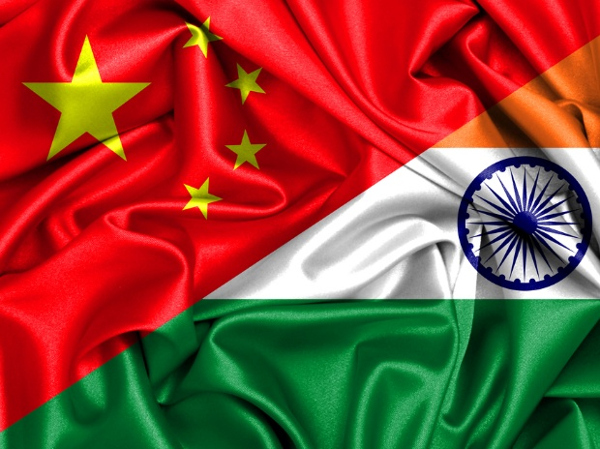
India and China have agreed on a new eight-point consensus aimed at improving management of the Line of Actual Control, accelerating discussions on boundary delimitation and strengthening mechanisms to prevent local incidents from escalating into wider military tensions.
The understanding emerged from the 25th round of Special Representatives’ talks in Beijing between National Security Adviser Ajit Doval and Chinese Foreign Minister Wang Yi. The discussions marked another step in the gradual rebuilding of bilateral engagement following the October 2024 understanding that helped ease the prolonged military standoff in eastern Ladakh.
A major outcome is the decision to advance discussions on an “Early and Substantial Harvest” of boundary delimitation. An expert group will examine areas where progress may be possible without waiting for a complete settlement of the entire boundary dispute. The approach could allow India and China to clarify or delimit selected stretches where differences are comparatively limited, creating practical gains even while the broader boundary question remains unresolved.
The two countries also agreed to strengthen military communication along the frontier by establishing two additional meeting points for senior military commanders and two new border military hotlines in the eastern and middle sectors. These mechanisms are intended to enable faster communication whenever patrols or troops encounter potentially sensitive situations on the ground.
Both sides agreed that emerging incidents should be handled promptly through existing diplomatic and military channels, including the Working Mechanism for Consultation and Coordination on India-China Border Affairs, local commander-level meetings and other established mechanisms. The objective is to reduce the risk of misunderstanding, miscalculation or unintended escalation along the LAC.
India and China will also explore ways to improve mutual understanding of the LAC in selected areas as part of wider efforts to strengthen border management. Differences in perception regarding the alignment of the LAC have historically contributed to patrol confrontations and local military tensions, making clearer operational understanding an important component of stability.
The Special Representatives further agreed to continue negotiations on a broader framework for resolving the boundary dispute in accordance with the 2005 Agreement on Political Parameters and Guiding Principles for the Settlement of the India-China Boundary Question. Both sides reiterated their commitment to pursuing a fair, reasonable and mutually acceptable settlement.
The talks also addressed cooperation on trans-border rivers. The next meeting of the India-China Expert-Level Mechanism on Trans-border Rivers will be held in September, with discussions expected to cover hydrological data sharing and renewal of relevant bilateral arrangements.
The issue has acquired greater strategic and environmental importance following China’s development of major hydropower infrastructure on the upper reaches of the Brahmaputra system. India has repeatedly emphasised the importance of transparency, hydrological information and consultation because downstream water flows have direct implications for communities and ecosystems in India’s northeast.
Border-related civilian exchanges also featured in the discussions. India welcomed China’s decision to increase the number of batches permitted for the Kailash Manasarovar Yatra, while both sides noted the reopening of three designated border trade points. They agreed to expand cooperation in border trade, pilgrimage and related cross-border exchanges.
The broader political message from the meeting was that peace along the frontier remains essential for stable bilateral relations. India has consistently maintained that normalisation in the wider relationship cannot be separated from peace and tranquillity along the border.
The latest consensus therefore attempts to combine long-term political negotiations with practical mechanisms that can reduce immediate risks on the ground. Faster military communication, additional commander-level meeting points, clearer management procedures and selective progress on delimitation could help create a more predictable environment along the disputed frontier.
India and China have also agreed that the 26th round of Special Representatives’ talks will be held in India in 2027, continuing the dialogue on one of the most complex and consequential issues in the bilateral relationship.
You may also like
-
India and Russia Explore New Defence Co-Production and Joint Technology Development Opportunities
-
India and Côte d’Ivoire Move to Strengthen Defence, Counterterrorism and Economic Cooperation
-
India and Ghana Expand Agricultural Partnership Through New ICAR–CSIR-CRI Agreement
-
India Hands Over Three Tonnes of Anti-Tuberculosis Medicines to Sri Lanka
-
India and Austria Move to Deepen Security and Strategic Cooperation
