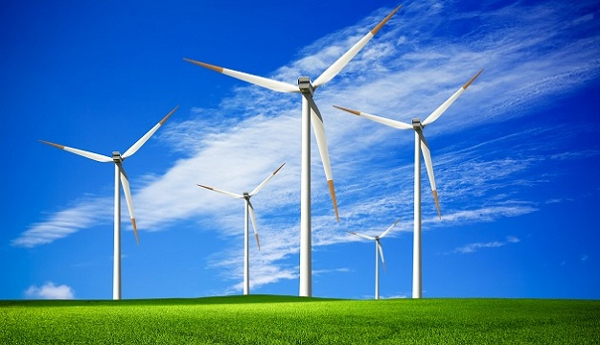
India registered its strongest-ever year for wind energy capacity addition in 2025–26, adding 6.1 GW and taking total installed wind capacity to over 56.1 GW, while another 28 GW is currently under implementation, Union Minister Pralhad Joshi said at the Foundation Day event of the Wind Independent Power Producers Association (WIPPA). He said India now ranks fourth globally in wind energy.
The minister said the country’s wind energy potential at 150-metre hub height is estimated at nearly 1,164 GW, and reiterated the government’s target of reaching 100 GW by 2030 and 156 GW by 2036. He linked that expansion to India’s longer-term net-zero by 2070 objective.
Joshi underlined wind power’s strategic value in balancing the electricity system, noting that it generates strongly during the evening and night hours, when demand is often high. According to the minister, nearly 45% of wind generation comes during peak demand periods, making it an important complement to solar power.
On the policy front, he said the government has introduced a dedicated wind component under Renewable Purchase Obligations, while also enforcing Late Payment Surcharge rules, transparent bidding norms, and the Approved List of Models and Manufacturers (ALMM) framework to support investor confidence and domestic manufacturing.
India has also built up a sizable industrial base for the sector, with annual domestic manufacturing capacity now exceeding 24 GW and indigenisation levels of around 70–80%, the minister said. He added that the supply chain has expanded across blades, towers, gearboxes, and other critical components, strengthening India’s ambition to emerge as a global wind manufacturing hub.
Addressing industry concerns, Joshi said the government is examining the release of additional wind tenders and is also pushing hybrid and round-the-clock (RTC) renewable projects to improve grid efficiency. He said issues such as Deviation Settlement Mechanism penalties, curtailment, and transmission delays are under active consideration, with efforts underway to find balanced solutions.
He also highlighted Green Energy Open Access rules to help industries procure renewable electricity directly, along with efforts to promote the repowering of old wind turbines and expand transmission infrastructure through the Green Energy Corridor. In financing, the government is working on low-cost, long-term funding options through blended finance and credit enhancement, while a recently launched 500 MW pilot under the Contracts for Difference (CfD) model is expected to improve revenue certainty and market stability.
Calling the global shift in supply chains an opportunity, Joshi said India can position itself as a trusted manufacturing and supply partner in the wind sector. He also praised WIPPA for contributing to policy dialogue and said the next phase of growth should increasingly focus on integrated systems combining wind, solar, and storage to deliver a more reliable clean-energy future.
Source: PIB
You may also like
-
India’s Economic Warfare Challenge: Strategic Autonomy, Energy Security and the Rise of a Global Power
-
India-US Trade Deal Stalemate: Why Washington’s Tariff Pressure Has Failed to Secure an Agreement
-
US Double Standards in Foreign Policy: 16 Recent Cases Involving India, Russia, China and Global Trade
-
India’s Arctic Energy Ambitions: Russian Oil, LNG and a New Sea Route to Indian Ports
-
India and Russia Explore Joint Icebreaker Construction as Maritime Industrial Cooperation Expands
