India’s semiconductor ambitions are often discussed in terms of fabrication plants, packaging facilities and chip manufacturing. However, another critical layer sits much earlier in the value chain: processor architecture and semiconductor intellectual property.
Bengaluru-based InCore Semiconductors is working in precisely this area. The company develops configurable processor cores based on the RISC-V instruction set. It also offers system-on-chip design tools, reference designs and supporting technologies for custom silicon development.
The approach gives Indian engineers a role in one of the most valuable parts of the semiconductor industry. Instead of only manufacturing chips designed elsewhere, companies such as InCore are building the technology that can sit inside the chips themselves.
From the SHAKTI Programme to Commercial Processor IP
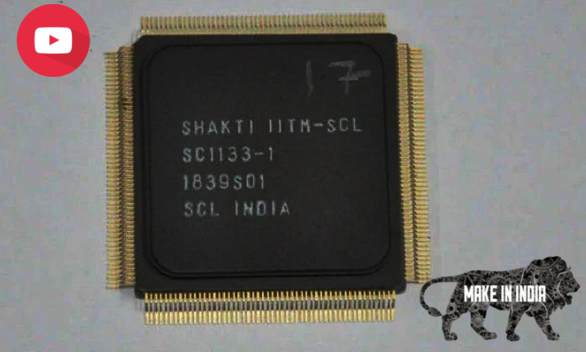
InCore was founded in 2018 and traces its technological roots to the team behind the SHAKTI processor programme at IIT Madras. SHAKTI helped establish an Indian engineering base around the RISC-V architecture and processor development. InCore represents an effort to take that experience into commercial semiconductor markets.
Academic processor projects can demonstrate architectural capability. Commercial semiconductor customers, however, need something more. They require validated intellectual property, development tools, documentation, software support, verification environments and the ability to adapt a processor for specific products.
InCore is building its business around providing these capabilities.
What Is RISC-V?
RISC-V is an open-standard instruction set architecture, or ISA. An ISA defines the basic instructions through which software communicates with a processor.
Unlike processor architectures controlled by a single commercial vendor, RISC-V provides an open and extensible foundation. Designers can therefore build processors suited to particular applications while retaining compatibility with the broader RISC-V ecosystem.
This does not mean every RISC-V processor is open-source.
Companies can develop proprietary or commercially licensed processor cores using the RISC-V ISA. InCore follows this model by creating processor intellectual property that customers can integrate into their own semiconductor designs.
That combination of an open ISA and commercially engineered processor IP creates significant scope for customisation.
Configurable Processor Cores Instead of One-Size-Fits-All Chips
A central part of InCore’s technology is its RISC-V Core-hub Generator.
Rather than offering only a fixed processor design, the platform gives semiconductor developers greater control over processor configuration at both the instruction-set and microarchitecture levels.
This matters because an industrial controller does not require the same processor as an AI device. A sensor node may prioritise low power consumption. An automotive controller may require safety and predictable operation. An intelligent camera may need greater computational capability.
Configurable processor technology allows designers to choose the balance between performance, power consumption, silicon area and functionality.
InCore’s portfolio includes its Azurite and Calcite RISC-V processor families. Azurite targets power- and resource-constrained applications, while Calcite provides greater processing capability and can support more sophisticated computing environments.
Such processors can form the computing heart of specialised chips.
Turning Processor IP Into Complete SoCs
Designing a processor is only one part of building a semiconductor.
Modern electronics generally use a system-on-chip, or SoC. An SoC can combine processor cores, memory interfaces, communications blocks, security functions, accelerators and peripheral controllers on a single piece of silicon.
Integrating these components can take considerable engineering effort.
InCore has therefore expanded beyond processor cores with its SoC Generator platform. The tool automates several stages involved in creating a RISC-V-based system-on-chip.
The platform can generate register-transfer-level hardware designs, integrate IP blocks and construct the chip’s interconnect architecture. It can also create software and verification components associated with the design.
RISC-V International reported in June 2025 that InCore demonstrated a workflow capable of taking a SoC concept to FPGA validation in under ten minutes. The platform generates RTL, integrates intellectual property, builds the interconnect and configures a bootable software stack.
Automation does not eliminate the complex engineering behind semiconductor development. Instead, it can reduce repetitive integration work and allow engineering teams to concentrate on product-specific design.
Silicon Validation Strengthens the Technology Case
Semiconductor design tools ultimately have to prove themselves in hardware.
InCore demonstrated its technology using a test chip containing six heterogeneous RISC-V cores. The chip incorporated a custom network-on-chip and supported real-time operating system bring-up. It was fabricated using TSMC’s 40-nanometre process.
The test chip used InCore’s Azurite and Calcite core technologies.
Silicon validation is a significant milestone for processor IP companies. A processor model operating inside simulation software is only the beginning. Commercial customers need confidence that the technology can move through implementation and operate on physical silicon.
This is especially important when processor IP will eventually become part of products manufactured in large volumes.
Building Chips Around Applications
InCore’s technology is aimed at applications where companies need specialised processors rather than generic computing platforms.
The company identifies markets including IoT, security, functional safety, automotive electronics, edge AI, storage and media applications.
Its configurable cores can also support products such as wearables, point-of-sale terminals, cameras and sensor-fusion systems.
The company is also developing custom SoC capabilities. Its portfolio combines RISC-V processors with accelerator technologies, partner IP, software stacks and FPGA-validated designs.
This allows the technology to move beyond standalone processor cores.
A future industrial product, autonomous system or intelligent electronic device may need a chip designed around one specific workload. A configurable architecture can make that possible without starting every semiconductor programme from zero.
Processor IP Is a Different Kind of Make in India
The semiconductor sector presents an unusual challenge for the idea of indigenous manufacturing.
The physical chip may pass through several countries before reaching the final product. Architecture may originate in one country. Design may happen in another. Fabrication can take place elsewhere, followed by packaging and testing in another facility.
Therefore, technological self-reliance cannot be measured only by the location of the factory.
Ownership of design capability and intellectual property also matters.
Processor cores are particularly important because they determine how a large part of the chip operates. Developing domestic expertise in this field helps India move deeper into the semiconductor value chain.
The Government of India’s semiconductor strategy also recognises semiconductor design as a separate strategic capability. The India Semiconductor Mission’s futureDESIGN programme supports domestic semiconductor design and specifically highlights RISC-V and the country’s DIR-V initiative.
InCore’s work fits into this wider emergence of an Indian RISC-V design ecosystem.
From Chip Consumer to Technology Supplier
India is already one of the world’s major markets for smartphones, automobiles, industrial electronics, telecommunications equipment and digital infrastructure.
All of these sectors require processors.
An indigenous processor-IP ecosystem creates another possibility: Indian companies can become suppliers of technologies used to create those processors.
That represents a different level of participation in the global semiconductor economy.
A company licensing an Indian-designed processor core to an electronics manufacturer is exporting engineering intellectual property. A company supplying SoC development technology is participating before the fabrication stage even begins.
The economic value is therefore concentrated in knowledge, architecture, verification and reusable IP.
A Platform That Can Grow With India’s Electronics Industry
RISC-V has opened an important technological window because its architecture allows greater freedom to develop specialised processors. InCore is attempting to turn that flexibility into commercially usable processor platforms.
Its combination of configurable RISC-V cores, SoC generation tools, reference designs, accelerator technology and custom silicon services creates a broader semiconductor-design platform rather than a single processor product.
The long-term opportunity is substantial.
Industrial automation will require increasingly intelligent controllers. Vehicles are becoming computing platforms on wheels. Edge devices are gaining AI capability. Robotics, drones, communications equipment and connected infrastructure all require specialised silicon.
Many of these applications do not simply need the fastest processor available. They need the right processor for a particular task.
That is precisely where configurable processor architectures can become valuable.
Make in India — Designing the Intelligence Inside the Chip
InCore Semiconductors represents an important evolution of India’s semiconductor story.
The country does not need to choose between semiconductor manufacturing and semiconductor design. It needs capability across the entire chain.
Fabrication creates manufacturing capacity. Packaging creates another industrial layer. Electronics manufacturing builds scale. However, processor architecture and semiconductor IP provide something equally important: control over the technology being manufactured.
InCore’s RISC-V processors illustrate how Indian semiconductor companies can compete through engineering rather than manufacturing scale alone.
If such platforms gain wider commercial adoption, India will not merely assemble electronic products or fabricate chips designed elsewhere. Indian companies could increasingly supply the processor technology, system architecture and intellectual property that determine how those chips work.
That is a deeper form of Make in India—one in which the intelligence inside the silicon can also be designed in India.
Sources
- InCore Semiconductors — Official Website: company, processor-core, SoC Generator and custom-SoC information.
- InCore Core-hub Documentation: Azurite and Calcite processor families and configurable RISC-V technology.
- RISC-V International: RISC-V architecture information and InCore’s SoC Generator silicon-validation announcement.
- India Semiconductor Mission: futureDESIGN semiconductor-design programme and RISC-V/DIR-V focus.
You may also like
-
India Targets 10% of Global 6G Patents and Standards, Pushes Indigenous Telecom Technologies
-
Chokuwa Rice of Assam — The Traditional “Soak-and-Eat” Grain of the Brahmaputra Valley
-
India’s Satellite Broadband Industry Nears Commercial Launch as Bharti OneWeb, Jio and Starlink Await Final Approvals
-
India’s Defence Electronics Industry Expands as BEL, Astra Microwave and Private Manufacturers Strengthen Indigenous Supply Chains
-
India’s Private Space Sector Creates New Opportunities for Young Engineers, Helps Reduce Brain Drain
