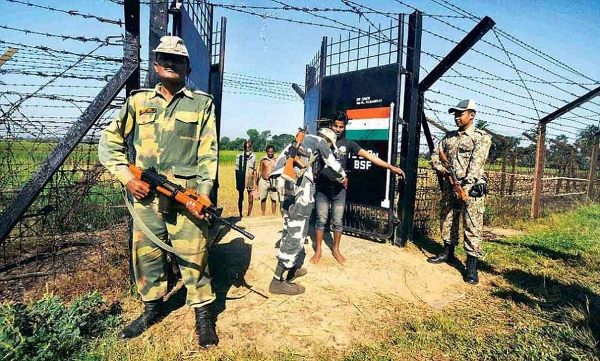
New Delhi: A senior Border Security Force (BSF) official on Tuesday claimed that a large number of illegal immigrants from Bangladesh have started to flee India to their native country in the wake of the Citizenship (Amendment) Act or CAA. Also, there is a drop in the number of immigrants crossing over to India from Bangladesh since the CAA was implemented on January 10 this year, added the official.
The BSF official further claimed that the majority of movement of illegal immigrants from India to Bangladesh is happening in the 24 Parganas district of southern West Bengal. He added that the security force has arrested 168 illegal immigrants while they were trying to return to Bangladesh in January alone.
The official revealed that the immigrants are using traditional routes to return to Bangladesh rather than opting for illegal routes. BSF South Bengal frontier Inspector General YB Khurniya confirmed that a significant increase in the number of illegal immigrants fleeing back was witnessed at the border areas of India adjoining Bangladesh.
Earlier this month, Bangladesh Prime Minister Sheikh Hasina had called the CAA unnecessary but she also stressed that the CAA and National Register of Citizens (NRC) are an internal matter of India.
“The government of India, on their part, has also repeatedly maintained that the NRC is an internal exercise of India, and Prime Minister Narendra Modi has in-person assured me of the same during my visit to New Delhi in October 2019,” she added.
Source:TNN
Image Courtesy: SentinelAssam
You may also like
-
India’s First Fleet Support Ship Set for Launch as Hindustan Shipyard Expands Capacity for 45,000-Tonne Vessels
-
HAL Koraput to Add ₹218-Crore Shakti Engine Production Line as India Marks 2,000th Aero-Engine Milestone
-
Indian Defence Production Delegation Visits Saab in Sweden as Defence Co-Manufacturing Talks Deepen
-
DRDO Expands Space-Based ELINT and RF Geolocation Technologies for Future Defence Surveillance
-
Indian Army Tests Apache 30 mm Cannon Against Aerial Target in Counter-Drone Validation
