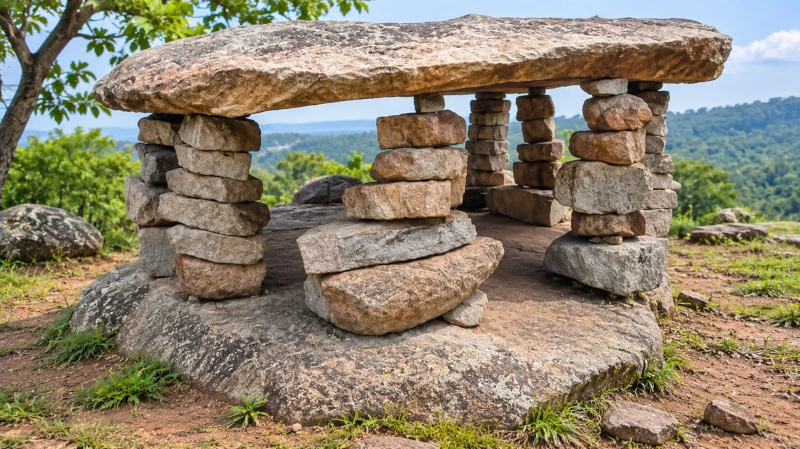
An extensive archaeological exploration at Rakasi Mitta hill in Telangana’s Bhadradri Kothagudem district has revealed more than 1,500 megalithic burial structures and over 100 human-shaped stone sculptures, including two rare figures believed to represent women. The findings, reported on November 17, 2026, have drawn attention to an important archaeological landscape that could provide new insights into the funerary traditions, artistic practices and social organisation of ancient communities in the eastern Deccan.
The archaeological remains were documented near Mamidigudem village in the Rallachelaka area of Palvancha mandal. The exploration was undertaken by heritage researcher Reddy Ratnakar Reddy, founder of the Matti Foundation, Sangu Venkat Reddy, a research scholar in the Department of History at Kakatiya University, and researcher Kunj Raj Kumar. Their field observations revealed an extensive concentration of stone-built burial monuments, anthropomorphic sculptures, unusual rock engravings and other features associated with prehistoric human activity.
The researchers have provisionally associated the megalithic structures with the period between 1200 BCE and 300 BCE, placing them within the broader Iron Age traditions of peninsular India. However, the proposed chronology has not yet been established through systematic excavation or scientific dating. If the reported number and distribution of monuments are confirmed through formal archaeological investigation, Rakasi Mitta could emerge as one of the most significant concentrations of megalithic burial remains documented in India.
Rakasi Mitta Hill Reveals an Extensive Ancient Burial Complex
Rakasi Mitta is located within the Kinnerasani River basin, part of the wider Godavari drainage system. The archaeological remains are spread across a sandstone hill surrounded by forested terrain, with the documented monuments situated at elevations ranging from approximately 253 to 260 metres above sea level. The gently sloping rocky landscape appears to have provided suitable conditions for the construction of large stone monuments using materials available in the surrounding area.
The field researchers identified more than 1,500 burial structures distributed across the hill. These include dolmens, dolmenoid cists and stone arrangements associated with ancient funerary practices. The density of monuments is particularly noteworthy because large megalithic complexes can represent prolonged use of specific locations by communities maintaining established burial traditions over several generations.
The extensive distribution of monuments suggests that Rakasi Mitta may have served as an important funerary landscape rather than an isolated burial ground. However, determining whether the structures were constructed continuously over several centuries or during distinct phases will require detailed archaeological documentation and chronological investigation. The site also presents an opportunity to examine relationships between burial architecture, natural terrain and the possible settlement patterns of the communities responsible for constructing the monuments.
Understanding the Megalithic Traditions of Ancient India
Megalithic monuments are ancient structures generally characterised by the use of large stones in burial, commemorative or ceremonial contexts. Across peninsular India, these structures are commonly associated with the Iron Age and Early Historic periods, although their chronology and cultural characteristics vary between regions.
Megalithic traditions include several types of monuments, such as dolmens, stone circles, cairns, cists and standing stones. Some were constructed above ground using large stone slabs, while others contained underground chambers or burial deposits enclosed within stone arrangements. Archaeological excavations at megalithic sites elsewhere in India have revealed pottery, iron implements, ornaments, beads and human remains, providing important evidence of ancient technologies and funerary practices.
The monuments also offer opportunities to investigate how prehistoric communities organised social relationships and commemorated their dead. Differences in monument size, construction techniques and associated burial objects can provide clues about cultural traditions and possible variations in social status. However, such interpretations require careful examination of archaeological contexts rather than conclusions based solely on the outward appearance of stone structures.
The large number of monuments reported at Rakasi Mitta makes the site particularly relevant to understanding the distribution and development of megalithic traditions across Telangana and the eastern Deccan.
Dolmens and Stone Cists Demonstrate Developed Burial Architecture
Among the important features documented at Rakasi Mitta are numerous dolmens and dolmenoid cists constructed using substantial stone slabs. Dolmens generally consist of large horizontal stones supported by upright slabs, while dolmenoid cists form more enclosed chambers that may incorporate similar structural features.
The researchers identified monuments containing circular stone arrangements surrounding burial chambers, carefully constructed entrances and openings that appear to have been designed for access to the interior. Some structures reportedly contain square openings that could be sealed using stone slabs, suggesting considerable planning in their construction.
Several burial chambers also contain multiple stone sarcophagi or coffin-like compartments. According to the field observations, some structures contain between two and four such features. Their presence raises questions about whether particular monuments were intended for multiple individuals or were used repeatedly over time.
The architectural complexity of the burial structures suggests that the communities responsible possessed developed knowledge of stone selection, transportation and construction. The placement of heavy capstones and supporting slabs would have required coordinated labour and familiarity with the mechanical properties of the materials being used.
Nevertheless, the exact function of individual chambers and their possible relationship with family or community burial traditions can only be established through archaeological excavation and analysis of associated remains.
More Than 100 Anthropomorphic Stone Sculptures Documented
One of the most remarkable aspects of the Rakasi Mitta findings is the reported presence of more than 100 anthropomorphic stone sculptures distributed across the burial landscape. Anthropomorphic sculptures are stone representations that resemble the human form, although their appearance may be highly stylised rather than anatomically realistic.
Many of the sculptures were reportedly found near the entrances or fronts of burial monuments. Their placement suggests a possible relationship with the funerary structures, although the precise nature of that association remains uncertain.
Human-shaped stone monuments have previously been documented at megalithic sites in southern India, including locations associated with the lower Godavari basin. Such figures are important because they provide evidence that ancient communities engaged in symbolic representation alongside the construction of burial chambers.
The unusually large number reported at Rakasi Mitta creates opportunities for examining patterns in their size, orientation, design and relationship with different categories of monuments. Systematic documentation may help determine whether particular sculptural forms were associated with specific burial practices or periods of construction.
The findings also contribute to the study of early stone-carving traditions in the Deccan, particularly the ways in which communities represented human forms through durable materials.
Two Rare Female Stone Figures Add to the Site’s Significance
Among the anthropomorphic sculptures identified at Rakasi Mitta, two have attracted particular archaeological interest because their physical characteristics suggest that they may represent female figures.
The first sculpture measures approximately 1.88 metres in height, 71 centimetres in width and 25 centimetres in thickness. The researchers identified raised formations on its chest that appear to represent female anatomical characteristics. The second sculpture measures approximately 1.60 metres in height, 66 centimetres in width and 23 centimetres in thickness and displays comparable features.
Female representations are considered relatively uncommon among the anthropomorphic megalithic sculptures documented in this region. An earlier example was identified at Padugonigudem, making the two newly reported figures important subjects for comparative archaeological research.
The sculptures raise interesting questions about the representation of gender, identity and symbolism within ancient funerary traditions. Their presence could contribute to a broader understanding of how communities expressed social or cultural ideas through stone monuments.
However, the meaning of the figures remains unknown. It would be premature to identify them as representations of deities, ancestors, priestesses or particular historical individuals without supporting archaeological evidence. Their importance lies in their rarity, their association with the burial landscape and the opportunities they create for further scientific investigation.
Rock Engravings and Grinding Features Suggest Additional Activities
The researchers also documented a trident-shaped engraving on a boulder at Rakasi Mitta. Such engravings, known as petroglyphs, are created by carving, pecking or otherwise removing material from rock surfaces to produce symbols or images.
Rock engravings can provide valuable evidence of symbolic expression and cultural practices, although their interpretation depends on archaeological context and scientific examination. The trident-like shape is visually distinctive, but its appearance alone cannot establish a specific religious meaning or a connection with later historical traditions.
Additional features recorded at the site include circular stone pedestals and grinding hollows. Grinding hollows are depressions that can develop through repeated pounding or grinding activities and may be associated with the processing of food, pigments or other materials.
The presence of these features suggests that the archaeological landscape may preserve evidence of activities beyond the construction of funerary monuments. Their functions, however, remain to be established through closer examination of the surrounding deposits and any associated artefacts.
Detailed recording of these features could help researchers understand whether the hill was used for different activities during the same period or whether the remains belong to separate phases of human occupation.
Microlithic Tools Raise Possibility of Earlier Human Activity
Another noteworthy aspect of the exploration is the reported discovery of microlithic stone tools within the wider archaeological landscape. Microliths are small, deliberately shaped stone implements that were used during several prehistoric periods and were often incorporated into composite tools for cutting, scraping and other activities.
Their presence raises the possibility that Rakasi Mitta or its surrounding area was visited or occupied before the construction of the megalithic burial structures. The researchers have tentatively suggested that some human activity in the landscape could extend as far back as 10,000 BCE.
However, the proposed age remains unverified. Microlithic technologies were used across different prehistoric periods, and the discovery of such tools does not independently establish when they were manufactured or deposited.
A reliable chronology would require examination of the artefacts within their archaeological context, supported by suitable scientific dating methods where appropriate materials are available.
If earlier human activity is eventually confirmed, Rakasi Mitta could provide evidence of changing patterns of landscape use across multiple prehistoric periods. Such findings would be valuable for understanding the long-term relationship between human communities and the Kinnerasani River basin.
Kinnerasani River Basin May Hold Evidence of Ancient Settlement Networks
The location of Rakasi Mitta within the Kinnerasani River basin provides an important geographical context for interpreting the archaeological remains. The basin forms part of the wider Godavari river system, which has supported human activity across different periods of Indian history.
River valleys and adjoining uplands often provided prehistoric communities with access to water, vegetation, wildlife and suitable materials for constructing tools and monuments. The combination of sandstone terrain, nearby watercourses and forest resources may have contributed to the selection of Rakasi Mitta as a location for repeated human activity.
The researchers identified a stream between Rakasi Mitta and a neighbouring hill, suggesting that water availability may have influenced the use of the landscape.
However, a burial complex does not necessarily indicate that the associated community lived immediately beside the monuments. Ancient settlements may have been located elsewhere within the surrounding region.
Future archaeological surveys could examine nearby slopes, riverbanks and open areas for evidence of habitation, including pottery fragments, hearths, tools and occupation deposits. Such investigations would help establish the relationship between the funerary landscape and the communities that constructed and maintained it.
A broader landscape study could also reveal whether Rakasi Mitta formed part of a network of related megalithic sites across the Kinnerasani and Godavari basins.
Telangana’s Megalithic Heritage Gains Greater Archaeological Importance
Telangana possesses an extensive archaeological heritage associated with prehistoric communities, Iron Age societies and megalithic burial traditions. Stone circles, dolmens, burial cists and anthropomorphic monuments have been documented at several locations across the state.
The Godavari basin and its adjoining landscapes contain numerous archaeological sites that provide evidence of early human settlement and funerary practices. The Janampet megalithic complex in Bhadradri Kothagudem district is among the important locations that have attracted archaeological attention.
The Rakasi Mitta findings add another potentially significant concentration of monuments to this wider archaeological landscape. The reported number of burial structures and anthropomorphic sculptures makes the site particularly interesting for comparative research.
Archaeologists may eventually be able to examine similarities and differences between Rakasi Mitta and other megalithic complexes through analysis of monument construction, burial arrangements, associated artefacts and chronological evidence.
Such studies could contribute to understanding whether the sites shared particular cultural practices or developed distinctive local traditions within the broader megalithic world of peninsular India.
The discoveries also demonstrate the importance of continued archaeological exploration in regions where extensive ancient remains may not yet have been systematically documented.
Scientific Excavation Essential to Establish the Site’s History
Although the field exploration has identified a potentially important archaeological complex, several fundamental questions remain unanswered. These include the precise age of the monuments, the duration of the site’s use, the relationship between different burial structures and the cultural significance of the anthropomorphic sculptures.
The proposed dating of 1200–300 BCE is currently based on preliminary archaeological interpretation. Establishing a reliable chronology would require systematic excavation and scientific analysis of suitable archaeological materials.
Where appropriate organic remains are recovered, radiocarbon dating could help determine the age of associated deposits. Other scientific techniques may also be relevant depending on the nature and preservation of the materials available.
Excavations could reveal pottery, metal objects, ornaments, human remains or other artefacts that provide information about the communities responsible for constructing the monuments. Detailed examination of burial deposits could also help determine whether individual structures were used once or reopened during later periods.
The anthropomorphic sculptures would benefit from precise measurements, photographic documentation, three-dimensional recording and comparison with examples from other archaeological sites.
Such investigations are necessary to distinguish between the preliminary observations made during exploration and conclusions supported by systematically recovered archaeological evidence.
Archaeological Researchers Call for Protection and Documentation
The researchers who documented the Rakasi Mitta remains have called for a comprehensive archaeological survey and conservation measures to protect the site.
Extensive megalithic landscapes can be vulnerable to disturbance, particularly when monuments are located in open terrain without established protection arrangements. Stone structures may be damaged through unauthorised excavation, removal of materials, vegetation growth or changes in land use.
Detailed mapping would help establish the precise distribution of burial monuments and identify areas requiring priority attention. Drone surveys, geographic information systems and three-dimensional documentation could provide valuable information about the organisation of the archaeological landscape.
Protective measures would also need to account for the surrounding forest environment and the interests of communities living near the site.
Local residents can contribute important knowledge about traditional place names, historical monuments and changes in the surrounding landscape. Their participation can therefore support archaeological documentation and responsible heritage management.
Collaboration between government archaeological departments, universities, research institutions and local heritage organisations would provide a foundation for systematic investigation and long-term preservation.
Discovery Opens New Opportunities for Studying Ancient Deccan Societies
The extensive concentration of megalithic structures at Rakasi Mitta creates opportunities to investigate the organisation and cultural traditions of ancient communities in the eastern Deccan.
The construction of large stone monuments required access to suitable materials, knowledge of construction methods and the coordination of labour. The reported architectural diversity suggests that different types of burial structures may have served particular functions or developed over time.
The anthropomorphic sculptures introduce an additional dimension involving artistic expression and symbolic representation. Their association with burial monuments raises questions about how ancient communities commemorated individuals and expressed cultural beliefs.
The presence of possible female representations is particularly noteworthy because it may provide additional evidence concerning the forms of human imagery used within megalithic traditions.
The rock engravings, grinding features and reported microlithic tools also suggest that the landscape could preserve evidence of activities extending beyond funerary practices.
Taken together, the findings identify Rakasi Mitta as a promising location for multidisciplinary archaeological research involving archaeology, geology, anthropology and heritage conservation.
An Important Discovery in India’s Ancient Archaeological Landscape
The reported identification of more than 1,500 megalithic burial structures and over 100 anthropomorphic sculptures at Rakasi Mitta hill represents an important development in the exploration of Telangana’s ancient heritage.
The two rare female stone figures, elaborate burial chambers, multiple stone sarcophagi and other archaeological features make the site particularly noteworthy. The possibility of earlier human activity, suggested by the reported microlithic tools, adds another dimension to its potential historical significance.
Although the chronology and interpretation of the remains require formal archaeological investigation, the field observations have identified a landscape deserving detailed scientific attention.
The discovery highlights the continuing importance of archaeological exploration in understanding the diverse communities and cultural traditions that existed across peninsular India during prehistoric and early historic periods.
Systematic excavation, scientific dating, careful documentation and effective conservation could help establish Rakasi Mitta’s place within the wider megalithic traditions of the Deccan.
By bringing together archaeological expertise, institutional support and community participation, Telangana has an opportunity to preserve an important part of India’s material heritage while expanding scientific knowledge of the region’s ancient past.
The Rakasi Mitta findings offer an encouraging reminder that India’s landscapes continue to preserve valuable evidence of early human ingenuity, artistic expression and cultural development, awaiting careful study and responsible preservation.
You may also like
-
Rāhu Infiltrates the Devas: Deception, Enemy Penetration and the Sudarśana Chakra
-
Mārīca’s Warning to Rāvaṇa: When Strategic Advice Is Ignored by Political Leadership
-
From Enemy Prince to Allied King: Vibhīṣaṇa and the Politics of Strategic Realignment
-
Mohinī and the Battle for Amṛta: Psychological Warfare and the Art of Strategic Deception
-
Vibhīṣaṇa’s Counsel to Rāvaṇa: The Importance of Dissent in Foreign Policy
