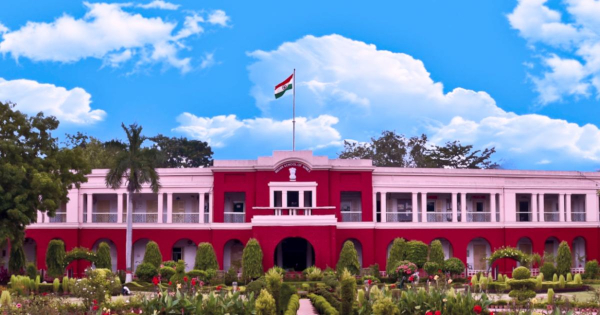
IIT-ISM Dhanbad has placed India firmly on the global map of mineral and mining education by securing the 21st rank worldwide in Mineral and Mining Engineering in the QS World University Rankings by Subject 2026. The institute has also retained its position as the top-ranked institution in India in this specialised field, confirming its long-standing leadership in mining, earth sciences and resource engineering.
This achievement carries special meaning because IIT-ISM Dhanbad is not a new entrant in the mining education space. Established in 1926, the institution has nearly a century of legacy in training engineers, researchers, geologists and technical experts for India’s mineral and energy sectors. Its journey from the Indian School of Mines to an IIT reflects the transformation of India’s mining education from colonial-era resource training to modern technology-driven research.
The 21st global rank is important for India at a time when minerals are becoming central to economic security. Modern industries depend on metals, rare earths, critical minerals, coal, petroleum, construction materials and advanced mineral processing. Electric vehicles, renewable energy systems, batteries, defence manufacturing, electronics and infrastructure all require reliable mineral supply chains. In this larger context, a globally recognised mining institute becomes a strategic national asset.
IIT-ISM Dhanbad’s strength comes from its deep connection with the real mining economy. The institute is located in one of India’s most important mining belts, close to coalfields, mineral industries and field-based research opportunities. This gives students and researchers exposure to practical challenges such as mine safety, underground operations, environmental protection, mineral processing, resource mapping and sustainable extraction.
The ranking also reflects India’s growing confidence in specialised technical education. General engineering institutions are important, but countries also need centres of excellence in focused sectors. Mining engineering is one such field where academic depth, field experience and industrial relevance must work together. IIT-ISM Dhanbad has built that combination over decades.
The institute’s performance was not limited to mining. In Petroleum Engineering, it ranked 4th in India and entered the 151–175 global rank band. This shows its continued relevance in energy studies, reservoir engineering, petroleum exploration and related technologies. Even as the world moves towards clean energy, petroleum engineering continues to matter for energy security, petrochemicals and transition planning.
Mechanical Engineering also made its debut in the 501–575 global rank band, adding another layer to the institute’s academic expansion. This shows that IIT-ISM Dhanbad is no longer seen only through the lens of mining. It is gradually strengthening its wider engineering profile while preserving its original domain excellence.
The institute also secured the 110th position in the QS World University Rankings Southern Asia 2026. This regional recognition adds to its global subject ranking and shows that IIT-ISM Dhanbad is growing as a broader research and engineering institution in South Asia.
Director Prof. Sukumar Mishra credited the achievement to the institute’s commitment to quality, research and innovation. That statement captures the direction in which modern technical institutions must move. Rankings are not only about reputation. They are linked to research output, academic quality, employer recognition, international visibility and subject strength.
For students, this achievement improves the value of studying at IIT-ISM Dhanbad. A strong global subject ranking can attract better applicants, strengthen placements, support international collaborations and encourage research partnerships. For faculty and researchers, it creates a stronger platform for global projects in mining technology, mineral exploration, automation, sustainability and energy systems.
For India, the rise of IIT-ISM Dhanbad is directly connected to national development. The country is expanding infrastructure, manufacturing, clean energy and advanced technology sectors. All of these require stronger mineral knowledge and better resource management. India needs skilled professionals who can mine efficiently, process intelligently, reduce environmental damage and support long-term resource security.
The achievement also strengthens India’s position in the global conversation on sustainable mining. The future of mining will depend on automation, digital mapping, mine safety, waste reduction, responsible extraction, recycling and environmental restoration. Institutions like IIT-ISM Dhanbad can help India build expertise in these areas and reduce dependence on imported knowledge systems.
IIT-ISM Dhanbad’s 21st global rank is therefore more than an academic milestone. It is a signal that India has the institutional strength to compete in one of the world’s most strategically important engineering fields. As minerals become the backbone of the next industrial age, India’s mining knowledge powerhouse is gaining the recognition it deserves.
You may also like
-
Indian Physicist Ashoke Sen Becomes First Indian to Receive Prestigious Oskar Klein Medal
-
Indian Army’s Northern Command Opens 75-Day Defence Technology Internship Programme for Young Innovators
-
Ayush Patent Filings Rise Eightfold as India Records 4,077 Applications and 711 Grants in 12 Years
-
DRDO Announces Paid Research Internships at Gwalior for Science and Engineering Students
-
PM-SETU: Government Approves ₹1,194.92 Crore to Modernise 25 ITIs Across Maharashtra, Odisha and Jammu & Kashmir
