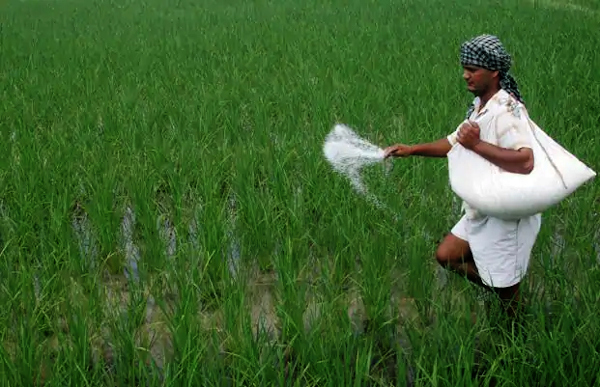
The Government of India has stepped up efforts to streamline fertilizer logistics and strengthen supply chain management to ensure timely availability of key farm inputs across states, especially during peak cropping seasons. In a written reply in the Rajya Sabha on Tuesday, Minister of State for Chemicals and Fertilizers Smt. Anupriya S. Patel said the Centre has put in place a comprehensive system for forecasting demand, planning supply and monitoring fertilizer movement to avoid shortages during crucial agricultural periods.
According to the minister, the Department of Agriculture and Farmers Welfare, in consultation with state governments, assesses state-wise and month-wise fertilizer requirements before every cropping season. Based on these estimates, the Department of Fertilizers issues monthly supply plans and keeps a close watch on availability across the country. The movement of subsidised fertilizers is being tracked through the online Integrated Fertilizer Management System, while states have been advised to coordinate with manufacturers and importers for timely placement of indents.
To ensure uninterrupted movement, the Centre is also holding regular coordination meetings with the Ministry of Railways for the availability of sufficient rakes and priority transportation of fertilizers. In cases where demand-supply gaps are anticipated, advance imports are undertaken to maintain adequate stocks. Distribution within states continues to be managed by the respective state governments.
The government said fertilizer availability has remained adequate across all states during the ongoing Rabi 2025–26 season, including for major nutrients such as urea, DAP, MOP and NPK. Under the Urea Subsidy Scheme, farmers continue to receive urea at the statutorily notified maximum retail price of ₹242 per 45-kg bag, excluding neem coating charges and applicable taxes. The difference between the delivered cost and the market realisation is reimbursed to manufacturers and importers as subsidy.
For phosphatic and potassic fertilizers, the government continues to operate the Nutrient Based Subsidy (NBS) Scheme, which has been in force since April 1, 2010. Under this policy, subsidy is provided to manufacturers and importers of notified P&K fertilizers based on nutrient content and actual point-of-sale transactions during the season. The Centre said it regularly monitors international prices of fertilizers and raw materials and adjusts NBS rates annually or bi-annually to keep these products affordable for farmers.
In addition, special support measures have been extended for both imported and domestic DAP and for imported TSP during the Kharif 2025 and Rabi 2025–26 seasons. These include an additional provision of ₹3,500 per metric tonne to cover “other costs”, including expenses from factory gate to farm gate, the impact of fluctuations in international prices, GST included in the MRP, and a reasonable return of 4 per cent of net MRP.
The government also reiterated its zero-tolerance approach towards the forced bundling or tagging of non-essential products with fertilizers. The minister noted that fertilizers are classified as essential commodities under the Essential Commodities Act, 1955, and are regulated under the Fertilizer Control Order, 1985. State governments have been empowered to take action against those involved in such malpractices under the provisions of these laws.
Any complaint received by the Department of Fertilizers regarding overpricing or tagging of fertilizers is forwarded to the concerned state government for appropriate action. The department has also issued clear directions to fertilizer companies not to indulge in bundling or tagging practices, while state governments have been advised to take strict action under existing rules to prevent such violations.
The measures, the government said, reflect its continued commitment to ensuring efficient fertilizer logistics, equitable availability and affordability for farmers, while protecting them from unfair trade practices during critical agricultural seasons.
Reference: PIB
You may also like
-
India’s Economic Warfare Challenge: Strategic Autonomy, Energy Security and the Rise of a Global Power
-
India-US Trade Deal Stalemate: Why Washington’s Tariff Pressure Has Failed to Secure an Agreement
-
US Double Standards in Foreign Policy: 16 Recent Cases Involving India, Russia, China and Global Trade
-
India’s Arctic Energy Ambitions: Russian Oil, LNG and a New Sea Route to Indian Ports
-
India and Russia Explore Joint Icebreaker Construction as Maritime Industrial Cooperation Expands
