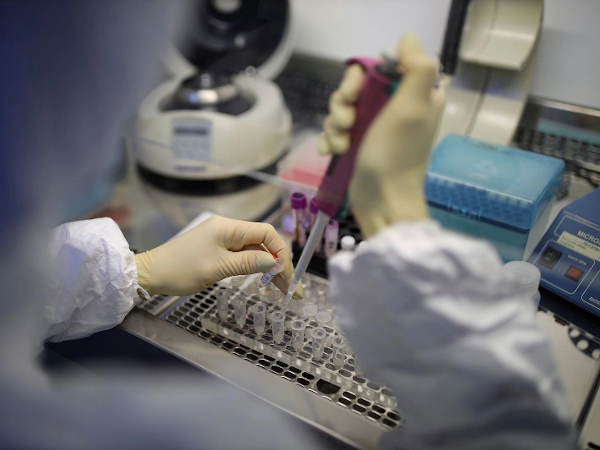
Researchers at Rajiv Gandhi Centre for Biotechnology (RGCB), Thiruvananthapuram are in the final stages of developing a kit that promises to help detect SARS CoVID-19 infection as early as four days post-infection of the virus.
The kit will be able to detect two types of antibodies – Immunoglobulin M (IgM) and Immunoglobulin G (IgG). IgM is the first antibody that appears in human body when it is exposed to a virus or any other antigen. Presence of IgG antibody in the body, in contrast, is indicative of an individual’s immune status to particular pathogens.
IgM is the first antibody that appears in human body when it is exposed to a virus or any other antigen.
Thus, if a person is found to have IgM antibodies even while being asymptomatic, it can be taken that he or she is infected. The person can then be isolated and sent for treatment. However, if someone is found to have IgG antibodies, it can be considered that the person has already had the infection and would be immune to new infections.
This kit is being developed in collaboration with uBIO technologies, which is a company incubated at RGCB’s BioNest facility at Kochi. The company has been producing diagnostic kits and other such devices for DRDO and other organisations and has been exporting its products to over 25 countries. India Science Wire
Source: Vigyan Prasar
You may also like
-
IIT Hyderabad Develops Lung-Derived Bioink for 3D Bioprinting and Regenerative Medicine
-
Indian Scientists Discover Molecular Switch That Can Regulate Cellular Autophagy
-
Scientists Map Earliest Glow of Hydrogen, Opening A New Window to the Universe
-
Indian Researchers Study RAD51 DNA-Repair Gene Variant in Prostate Cancer
-
TDB Backs Multi Nano Sense With ₹37.51 Crore to Build Indigenous Multi-Gas Sensor Platform
