India has reached a landmark moment in environmental conservation with the designation of Jai Prakash Narayan Bird Sanctuary, also known as Surha Tal, as the country’s 100th Ramsar site. Located in Ballia district of Uttar Pradesh, this wetland now joins the global list of Wetlands of International Importance, giving it a stronger place in India’s biodiversity and climate-resilience journey.
The recognition of Surha Tal carries importance beyond a numerical milestone. It shows how wetlands are becoming central to India’s ecological planning. These landscapes are often seen only as water bodies, but they function as living ecosystems. They support birds, fish, aquatic plants, local livelihoods, groundwater recharge, flood moderation and climate balance. When a wetland receives Ramsar recognition, its ecological value receives international attention and its conservation becomes a stronger national responsibility.
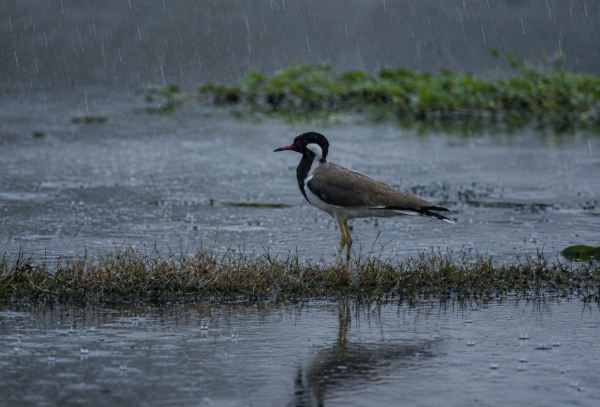
Surha Tal is especially important because of its avifaunal richness. The sanctuary attracts migratory birds as well as resident species, making it a valuable habitat in the Gangetic plains. Such wetlands serve as resting, feeding and breeding spaces for birds that move across long distances. They also support local biodiversity throughout the year. In a region shaped by agriculture, rivers, settlements and seasonal water movement, a protected wetland becomes a refuge for life.
The designation also strengthens Uttar Pradesh’s position in India’s wetland-conservation map. The state has seen growing recognition for its bird sanctuaries and wetland ecosystems. Surha Tal’s addition as India’s 100th Ramsar site gives the state a special place in the national conservation story. It also highlights the ecological value of eastern Uttar Pradesh, where river systems, floodplains and natural lakes form an important part of the landscape.
Wetlands are powerful climate buffers. They absorb excess water during heavy rainfall, support groundwater systems, store carbon and reduce ecological stress during dry periods. In an age of climate uncertainty, their importance is increasing. Protecting wetlands is therefore not only about birds and biodiversity. It is also about water security, disaster resilience and sustainable development.
The Ramsar tag can also support local awareness and responsible eco-tourism. Birdwatching, nature education, community-led conservation and wetland interpretation can create new opportunities for local people. Such benefits depend on careful management. Tourism must remain controlled, waste must be regulated, water quality must be protected and local communities must be treated as partners in conservation.
Surha Tal’s recognition also sends a wider message about India’s conservation direction. The country’s Ramsar network has expanded steadily, showing greater focus on natural ecosystems that were once overlooked. Wetlands connect environment, economy and society in a direct way. They support fishermen, farmers, birds, groundwater, seasonal flows and local culture. Their protection creates benefits that move across generations.
The challenge now is to preserve the ecological character of Surha Tal. A Ramsar designation is a beginning, not the end of conservation work. The wetland will need regular monitoring, habitat protection, pollution control, invasive-species management, community participation and scientific planning. The health of the lake must remain central to every future decision around the sanctuary.
India’s 100th Ramsar site is therefore a proud environmental milestone. Surha Tal represents the beauty of wetland life, the importance of bird habitats and the growing strength of India’s conservation policy. Its recognition reminds the country that development and ecology must move together. A nation that protects its wetlands protects its water, biodiversity, climate balance and future generations.
The century mark in Ramsar sites is a moment of celebration, but it is also a call for deeper responsibility. Surha Tal now stands as a symbol of India’s commitment to conserving living landscapes. Its waters, birds and surrounding communities together tell a larger story: India’s natural heritage remains one of its greatest national assets.
You may also like
-
IISc Scientists Show How Strong Magnetic Fields Could Allow White Dwarfs to Exceed Chandrasekhar Limit
-
IIT Madras to Launch Global Mission to Map 100 Human Brains in 3D
-
3,898 Indian Scientists Feature in 2026 Global Top 2% Research Database; IISc Leads Indian Institutions
-
New Metal-free Porous Material can Help Produce Affordable Clean Energy
-
A Decade of Cosmic Flickering Reveals New Clues About A Rare Giant Binary Black Hole System
