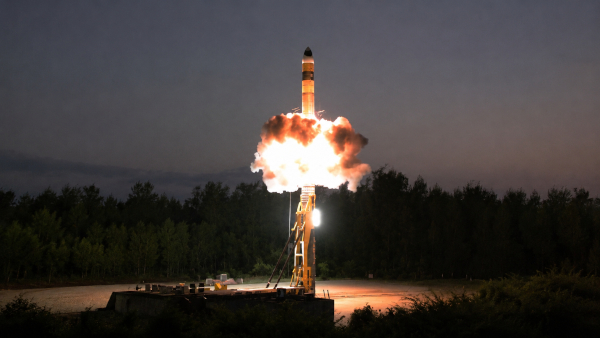
India’s nuclear posture has entered a new phase, according to the latest assessment by the Stockholm International Peace Research Institute. SIPRI’s 2026 report estimates that India now has around 190 nuclear warheads, with 12 of them classified as deployed. This marks the first time SIPRI has placed a portion of India’s nuclear arsenal in the deployed category, giving the development clear strategic significance.
The number itself is small when compared with the vast arsenals of the United States and Russia, or even the rapid expansion of China’s nuclear force. The meaning lies in readiness. A deployed warhead indicates that the weapon is placed with operational forces or fitted to a delivery system in a manner that allows faster response. For India, which has long been understood to keep warheads and delivery systems separated during peacetime, this suggests a gradual movement toward a more responsive deterrent structure.
India’s nuclear doctrine continues to rest on credible minimum deterrence and a No First Use posture. The purpose of the arsenal is retaliation after a nuclear attack, rather than first strike. This gives India’s nuclear strategy a defensive character. The country seeks to ensure that any adversary understands one central fact: a nuclear attack on India or Indian forces will invite unacceptable retaliation.
The reported deployment of 12 warheads should be read in this doctrinal frame. It is not a move toward reckless nuclear signalling. It is a readiness adjustment inside a changing security environment. India faces two nuclear-armed neighbours, Pakistan and China, with live border disputes, expanding missile inventories, and increasingly complex military technologies. A credible deterrent requires survivability, secure command, reliable delivery platforms and the ability to respond after absorbing a first strike.
The sea-based leg of India’s nuclear triad adds another layer to this picture. Ballistic missile submarines give a country a survivable second-strike option because they can remain hidden at sea. As India’s SSBN programme matures, deterrence patrols and submarine-launched ballistic missiles become central to strategic stability. A nuclear force that can survive an enemy’s first strike strengthens deterrence by making nuclear coercion less attractive.
The land-based missile force is also evolving. Canisterised missiles, longer-range systems and more mobile platforms allow faster deployment and better survivability. These systems support a deterrence structure suited to India’s geography and threat environment. The emphasis is shifting from symbolic possession to credible operational resilience.
This development also reflects the global nuclear climate. SIPRI has warned that the world is entering a more dangerous phase, with all nine nuclear-armed states modernising their arsenals. Arms control frameworks are weakening, new technologies are entering strategic forces, and major powers are increasing the role of nuclear weapons in national security planning. India’s reported adjustment comes inside this wider global hardening of nuclear postures.
The key point is balance. India does not need a huge arsenal to maintain deterrence. It needs a force that is credible, secure, survivable and politically controlled. The reported deployment of 12 warheads signals that New Delhi may be placing a small portion of its arsenal closer to operational readiness while keeping the broader doctrine intact.
For India, nuclear weapons remain instruments of deterrence, not battlefield tools. Their purpose is to prevent nuclear war by ensuring that no adversary can assume India is vulnerable to nuclear blackmail. In that sense, the reported SIPRI assessment points to a quiet but important transition: India is refining the credibility of its deterrent while staying within the larger framework of restraint, retaliation and strategic stability.
You may also like
-
India Moves Towards Five-Year Assured Orders for Defence Startups Under New Procurement Reforms
-
Zen Technologies Introduces Indigenous Hyper-Strike Falcon AI-Guided Counter-Drone Interceptor
-
L&T and Germany’s SCHOTTEL Expand Partnership for Controllable Pitch Propeller Systems in Indian Shipbuilding
-
India to Train 60,000 Civil Defence Volunteers Across 12 States and UTs with Indian Army Support
-
Indian Army’s Northern Command Opens 75-Day Defence Technology Internship Programme for Young Innovators
