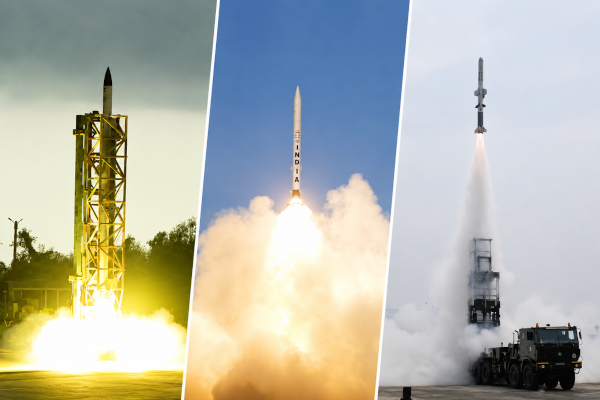
India’s defence technology ecosystem has crossed another major milestone with DRDO successfully demonstrating a new set of capabilities across ballistic missile defence and naval strike warfare. The Ministry of Defence announced that three consecutive flight tests were conducted on June 10 and 11, 2026, covering multi-layered defence against long-range ballistic missiles and medium-range anti-ship capability.
This is a major moment for India’s indigenous defence architecture. It brings together two different but equally important requirements of modern warfare: protection of the homeland from advanced missile threats and the ability to strike enemy warships at sea with precision. One system strengthens India’s shield. The other strengthens India’s maritime sword.
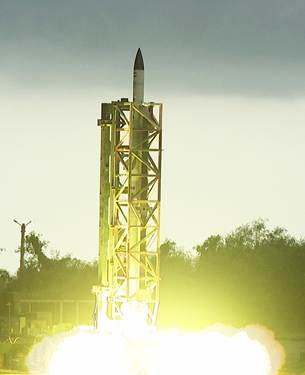
The first achievement is the demonstration of multi-layered Ballistic Missile Defence capability. Ballistic missile defence is among the most complex military technologies in the world. It requires long-range detection, accurate tracking, real-time command decision, reliable communication, interceptor launch, mid-course guidance and final target engagement. Every part of the chain has to work within seconds. A hostile ballistic missile travels at extreme speed, and the defending system gets only a narrow window to detect, calculate and destroy it.
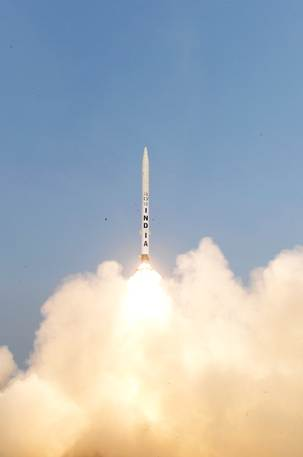
DRDO’s latest tests showed that Indian interceptors successfully engaged their respective targets. This is important because a missile defence system is judged by the complete kill chain. Radars must see the threat early. Command systems must classify the threat. Fire-control networks must select the interceptor. The interceptor must fly into the predicted engagement zone. Its guidance system must make final corrections. The target must be destroyed before it reaches its intended impact area.
The public statement from the Ministry of Defence says these systems are designed with latest technologies to address emerging missile threats. This means India is preparing for a battlefield where missile threats are becoming faster, longer-ranged, more accurate and more diverse. Ballistic missiles, cruise missiles, hypersonic glide vehicles, drone swarms and stand-off weapons are shaping future conflict. A country with layered air and missile defence gains strategic depth, political confidence and military resilience.
The significance of this test becomes greater because the release states that the capability places India among the elite group of nations with BMD systems able to engage threats up to the Intercontinental Ballistic Missile class. This is a powerful statement. ICBM-class threats represent the highest end of ballistic missile warfare. Building a defence architecture against such threats requires advanced sensors, high-speed interceptors, precise guidance, protected communication and strong command integration.
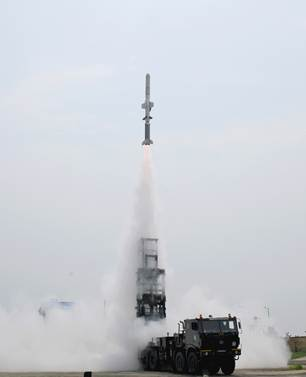
India’s BMD programme has been evolving for years through land-based sensors, interceptor systems and layered engagement concepts. Earlier tests of Phase-II Ballistic Missile Defence validated important parts of the system, including long-range sensors, low-latency communication, mission control systems and advanced interceptor missiles. The 2026 demonstration pushes this architecture further into a more mature operational envelope.
The second achievement is the maiden successful flight-test of the Naval Anti-Ship Missile–Medium Range, or NASM-MR. This weapon strengthens India’s maritime strike capability at a time when the Indian Ocean has become one of the world’s most important strategic spaces. Naval warfare today depends heavily on stand-off precision weapons. A warship, aircraft or coastal platform that can launch an anti-ship missile from a safer distance gains tactical reach and survivability.
NASM-MR is important because India needs a family of indigenous naval strike weapons across different ranges and platforms. BrahMos gives the Navy a heavy supersonic strike option. Short-range naval anti-ship missiles give helicopter-borne platforms the ability to hit smaller targets and surface threats. A medium-range anti-ship missile fills a crucial space between these categories. It can strengthen ship-launched, air-launched or future platform-based maritime attack options depending on user requirements and final configuration.
An indigenous NASM-MR also reduces dependence on foreign anti-ship missile supply chains. In a long crisis, access to imported weapons can become uncertain. Domestic development gives India greater freedom in production, upgrades, warhead design, seeker improvements, software control and integration with Indian platforms. This is the real meaning of Atmanirbhar Bharat in defence: the ability to design, test, modify, produce and deploy critical weapons according to national requirements.
The medium-range anti-ship role is especially relevant for the Indian Navy. The Arabian Sea, Bay of Bengal and wider Indian Ocean contain busy shipping lanes, chokepoints, island territories, offshore assets and naval operating zones. A hostile surface fleet can threaten trade, ports, energy routes and amphibious operations. A capable anti-ship missile gives Indian forces the ability to deter, disrupt and destroy hostile naval movement.
The combined timing of the BMD and NASM-MR tests shows the direction of Indian defence planning. India is building both defensive and offensive depth. The BMD system protects national assets, cities, command centres and strategic infrastructure. The anti-ship missile expands strike power at sea. Together, they show a defence doctrine that values layered protection and precise counter-force capability.
This also reflects the growing maturity of the DRDO-industry partnership. Modern missiles are not built by one laboratory alone. They require propulsion, seekers, guidance systems, warheads, avionics, actuators, control systems, launch hardware, telemetry, ground support equipment and production engineering. DRDO laboratories, public sector units, private industry, MSMEs and start-ups all play a part in turning a design into a deployable weapon.
The role of Indian industry is especially important. A successful test proves technology. A strong industrial base converts that technology into numbers. Armed forces need inventory, maintenance, upgrades, training rounds and production continuity. The Ministry of Defence statement specifically recognised the combined effort of DRDO and industry, showing that India’s missile ecosystem is moving from laboratory success toward production-scale defence capability.
The tests also show strong coordination between DRDO and the armed forces. A missile system becomes valuable only when the user service trusts its performance. Field trials, user evaluation, platform integration and operational feedback are essential. Senior officials of DRDO and the Defence Forces witnessed the tests, which indicates the importance of these demonstrations for future induction pathways.
For India’s strategic environment, this development carries a clear message. Missile threats around India are growing in range and sophistication. Naval competition in the Indian Ocean is increasing. Adversaries are investing in stand-off weapons, anti-access systems, drones and precision strike networks. India’s answer is to build indigenous systems across every layer: detection, defence, deterrence and deep strike.
The multi-layered BMD capability strengthens national deterrence because it complicates the enemy’s attack plan. An adversary planning a missile strike must account for interception. That changes the cost-benefit calculation. Defence systems also protect decision-making time during a crisis. If a country can absorb, intercept or reduce the effectiveness of missile attacks, its leadership gains more room to respond carefully and firmly.
NASM-MR strengthens sea denial. In naval strategy, sea denial means preventing the enemy from using a maritime zone freely. Anti-ship missiles are central to this idea. They allow aircraft, ships or shore-based systems to threaten hostile vessels from distance. A credible missile threat can push enemy ships away from sensitive waters, protect convoys and support island defence.
The deeper lesson from these tests is technological sovereignty. A nation that imports critical missile systems remains dependent on foreign design choices. A nation that builds its own systems controls the software, seeker logic, warhead design, propulsion improvements and platform integration. This matters in modern warfare because weapons are no longer simple hardware. They are software-defined, networked and constantly upgraded.
India’s missile journey has moved from early experiments to complex families of strategic, tactical, naval and air defence systems. The latest DRDO tests continue this national trajectory. They show confidence in indigenous research, confidence in test infrastructure and confidence in the ability of Indian engineers to solve high-end defence problems.
The successful demonstration of BMD and NASM-MR is therefore more than a test event. It is a statement of India’s future battlefield architecture. India is building a shield against long-range missile threats. India is building sharper weapons for maritime strike. India is building a domestic industrial chain that can support advanced systems. India is moving steadily toward a defence posture where technology, strategy and sovereignty reinforce each other.
DRDO’s three-test milestone shows the new direction of Indian defence power: layered, indigenous, networked and ready for the missile age.
Source: PIB
You may also like
-
Indian Army Special Forces Depart for Indonesia for Exercise Garuda Shakti 2026
-
India to Train 600 Nigerian Army Soldiers in Specialised Jungle and Mountain Warfare
-
India Moves Towards Five-Year Assured Orders for Defence Startups Under New Procurement Reforms
-
Zen Technologies Introduces Indigenous Hyper-Strike Falcon AI-Guided Counter-Drone Interceptor
-
L&T and Germany’s SCHOTTEL Expand Partnership for Controllable Pitch Propeller Systems in Indian Shipbuilding
