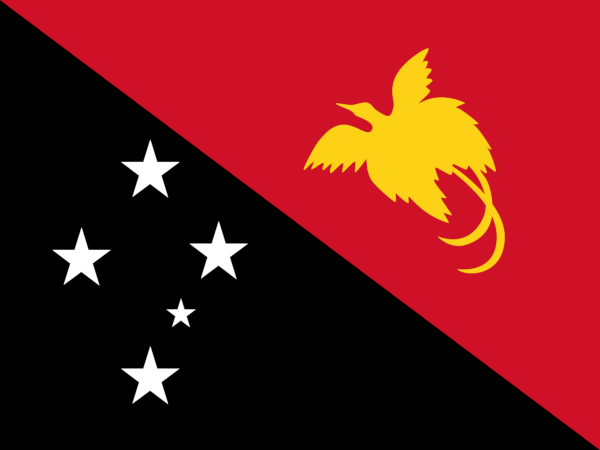
India and Papua New Guinea have taken another important step in strengthening their bilateral relationship through the second round of Foreign Office Consultations. The meeting, held virtually on June 12, brought together senior officials from both countries to review the full range of ties and discuss regional and global developments of mutual interest.
This consultation is significant because Papua New Guinea is one of the most important Pacific Island countries in India’s wider Indo-Pacific engagement. It is rich in natural resources, strategically located in the Pacific, and politically important within regional groupings. For India, deeper engagement with Papua New Guinea is part of a larger effort to build trusted partnerships across the Global South and the Indo-Pacific.
The Indian delegation was led by Vishwesh Negi, Joint Secretary for Oceania in the Ministry of External Affairs. The Papua New Guinea delegation was led by Elias Wohengu, Secretary of the Department of Foreign Affairs. The first round of Foreign Office Consultations had been held in Port Moresby in 2022, and the decision to continue the mechanism shows that both sides want regular diplomatic dialogue rather than occasional contact.
During the discussions, the two countries reviewed development partnership, political engagement, economic cooperation and cultural ties. They also discussed cooperation in multilateral forums, the Indo-Pacific, and wider regional and global developments. This gives the relationship a broad agenda. It is not limited to one sector. It includes diplomacy, trade, capacity building, culture, development cooperation and strategic coordination.
India and Papua New Guinea expressed satisfaction with the positive trajectory of their relationship and agreed to further strengthen cooperation across sectors. The next round of Foreign Office Consultations will be held in Port Moresby at a mutually convenient date. This is important because institutional dialogue creates continuity. It allows both governments to track progress, resolve gaps and identify new areas for cooperation.
India’s relationship with Papua New Guinea has old diplomatic foundations. India opened its High Commission in Port Moresby in April 1996. Before that, diplomatic relations with Papua New Guinea were handled from Suva and Kuala Lumpur. Papua New Guinea opened its resident diplomatic mission in New Delhi in October 2006. These steps gave both countries direct diplomatic channels and helped the relationship mature.
The two countries have also worked together in international forums such as the Commonwealth, the Non-Aligned Movement and the United Nations. This multilateral cooperation is valuable because both India and Papua New Guinea share many concerns as developing countries. Climate resilience, development finance, disaster response, food security, healthcare, digital access and respect for sovereignty are all important themes for the Global South.
Papua New Guinea is especially important in India’s Pacific outreach through the Forum for India-Pacific Islands Cooperation, or FIPIC. Prime Minister Narendra Modi visited Port Moresby in May 2023 to co-host the third FIPIC Summit with Papua New Guinea Prime Minister James Marape. The summit brought together leaders from 14 Pacific Island countries and gave India’s Pacific policy a major boost.
During that visit, Prime Minister Modi was conferred the Grand Companion of the Order of Logohu by the Governor-General of Papua New Guinea. This is the country’s highest civilian award. The honour reflected the warmth of India-Papua New Guinea ties and the growing recognition of India’s role as a development partner for Pacific Island nations.
The 2023 FIPIC Summit also showed that India’s Pacific engagement is built on practical cooperation. Pacific Island countries face serious challenges from climate change, rising sea levels, natural disasters, health needs, connectivity gaps and development finance limitations. India has positioned itself as a partner that brings capacity building, technology, health cooperation, scholarships, digital public infrastructure experience and affordable development solutions.
For Papua New Guinea, India offers strengths in areas such as education, health, pharmaceuticals, information technology, agriculture, small business, renewable energy, disaster management and training. For India, Papua New Guinea offers a gateway to deeper engagement with the Pacific and a partner with strong regional influence. The relationship is therefore mutually useful.
The economic side of the relationship has room for growth. Papua New Guinea has natural resources, energy potential, agriculture, fisheries and mining opportunities. India has demand, industrial capacity, pharmaceuticals, technology and a large market. Stronger business engagement can create value in both directions. The Foreign Office Consultation mechanism can help identify trade barriers, promote investment and connect companies.
Development partnership is another strong area. India’s development model in the Global South often focuses on capacity building, grants, training, scholarships, digital solutions and demand-driven projects. Papua New Guinea and other Pacific Island countries can benefit from Indian experience in low-cost healthcare, digital governance, solar energy, disaster-resilient infrastructure and human resource development.
The cultural connection also deserves attention. Indian communities have lived and worked in many Pacific countries, contributing to business, education, services and professional sectors. Cultural diplomacy through yoga, Ayurveda, traditional medicine, Indian cinema, festivals and educational exchanges can deepen people-to-people ties. Such links create goodwill beyond government-to-government dialogue.
The Indo-Pacific discussion in the consultations is especially important. The Indo-Pacific is no longer only a maritime phrase. It has become a framework for trade, security, connectivity, climate action, technology and development. Pacific Island countries are central to this geography. Their voices matter in debates on ocean governance, fisheries, marine resources, climate justice and strategic competition.
India’s approach to the Indo-Pacific is based on inclusiveness, respect for sovereignty, freedom of navigation, development partnership and rules-based cooperation. Papua New Guinea’s participation in this framework gives India a stronger Pacific connection and gives PNG a reliable partner beyond traditional power centres.
The meeting also comes at a time when major powers are paying closer attention to the Pacific. The region has become strategically sensitive due to maritime routes, natural resources, military access, undersea cables and geopolitical competition. In such an environment, India’s role can be valuable because it offers a partnership model rooted in development, capacity building and trust.
India’s outreach to Papua New Guinea is also part of a larger Global South diplomacy. India has repeatedly presented itself as a voice for developing countries, especially on issues such as climate finance, sustainable development, health equity, food security and technology access. Pacific Island countries have strong moral authority on climate issues because they face direct consequences from rising seas and extreme weather. Working with them strengthens India’s global development agenda.
The Foreign Office Consultations therefore should be seen as more than a routine diplomatic meeting. They are part of a long-term relationship-building process. Regular dialogue allows both sides to turn goodwill into projects, announcements into implementation and shared interests into practical cooperation.
For India, Papua New Guinea is a partner in the Pacific, a voice in multilateral forums and a bridge to wider island diplomacy. For Papua New Guinea, India is a large developing economy, a technology partner, a capacity-building partner and a country with growing global influence.
The second round of Foreign Office Consultations shows that both sides are ready to deepen this partnership. The relationship now has diplomatic continuity, high-level political momentum, development focus and Indo-Pacific relevance. The next stage should focus on stronger trade links, more training opportunities, healthcare cooperation, digital partnerships, climate resilience and direct people-to-people exchanges.
India and Papua New Guinea are separated by geography, but they are connected by the shared priorities of the Global South. Both countries understand the importance of development, sovereignty, cultural identity and a fair international order. Their growing partnership shows how India’s Indo-Pacific vision is expanding beyond major powers and reaching island nations whose voices are essential to the future of the region.
The June 12 consultations mark another step in this journey. They confirm that India and Papua New Guinea are building a relationship based on trust, development, diplomacy and shared responsibility in the Indo-Pacific.
You may also like
-
India Strengthens Trade Ties with Netherlands as Piyush Goyal Visits Port of Rotterdam
-
India to Train 600 Nigerian Army Soldiers in Specialised Jungle and Mountain Warfare
-
India and Russia Strengthen Parliamentary Diplomacy as Om Birla Meets State Duma Chairman Vyacheslav Volodin
-
India Seeks South Korean Shipbuilding Partnerships as Sarbananda Sonowal Begins Four-Day Visit to Busan
-
India and Italy Hold First Maritime Security Dialogue in Rome, Strengthen Strategic Maritime Cooperation
