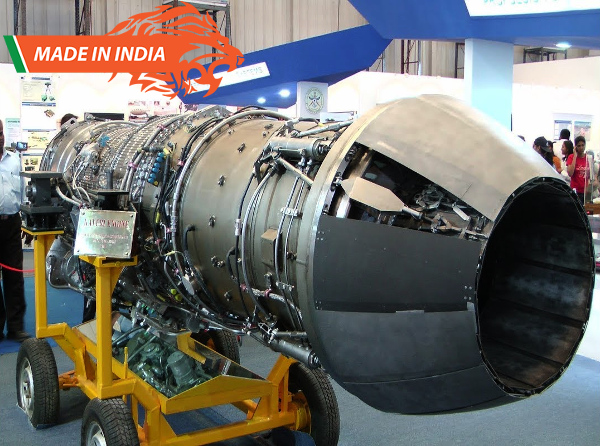
Cabinet Committee on Security (CCS) sanctioned Kaveri Engine project in 1989. The following milestones were achieved:
· 9 Full prototype engines and 4 core engines built
· 3217 hours of engine testing conducted
· Completed Altitude tests & Flying Test Bed (FTB) trials. This is the first time that an indigenously developed military gas turbine engine was flight tested
Kaveri engine project has achieved higher Technology Readiness Level (TRL) in many critical technology domains and those technologies are being used in the various engine development programmes of the country. Further the engines are used as test vehicles for validating next generation technologies.
Funds details are as follows:
| Funds allocated | Expenditure | Commitment |
| Rs. 2105 crore | Rs. 2035.56 crore | Rs. 2097.65 crore |
At present, the LCA Tejas is integrated with an imported engine. However, in future, it is proposed to develop indigenous engines for powering our own aircrafts such as LCA variants and AMCA in association with an International Engine House. The technological capabilities built through the Kaveri engine project will be utilised.
LCA Tejas, Flight Operational Clearance (FOC) configuration demands higher thrust than the intended engine requirement. Hence the Kaveri in the present architecture cannot be integrated. In order to induct with LCA Tejas, a modified engine version is required.
This information was given by Raksha Rajya Mantri Shri Ajay Bhatt in a written reply to Shri M. Mohamed Abdulla in Rajya Sabha on Monday.
You may also like
-
HAL to Take Full Control of HATSOFF Helicopter Training Venture After Acquiring CAE Stake
-
Solar Defence Facility Images Show Large Loitering Munition Airframe Linked to 150 Kg CSIR-NAL Programme
-
Jindal Defence Taurus T9 Machine Pistols Move Through Indian Army Integration Under 550-Weapon Order
-
Russian Navy Delegation Visits Southern Naval Command and Indian Naval Academy
-
PRAHAAR: India’s First National Counter-Terrorism Policy and Strategy
