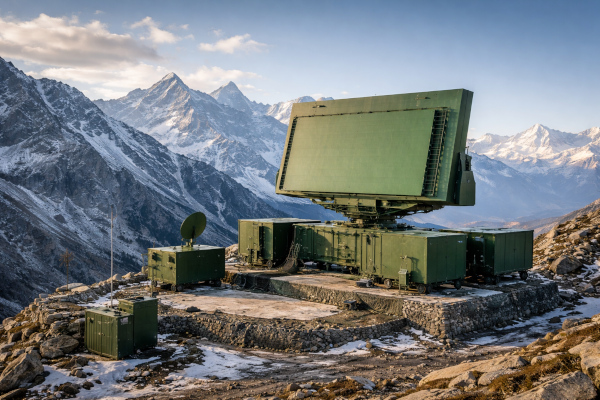
Data Patterns (India) Limited has secured a major order worth approximately ₹585.76 crore from Bharat Electronics Limited (BEL) for radar electronics, further strengthening the role of India’s private sector in the country’s expanding indigenous defence-electronics ecosystem. The order was disclosed on August 21, 2026, and represents a significant conversion of Data Patterns’ previously negotiated business pipeline into a firm contract.
The contract covers the procurement of radar electronics by BEL, one of India’s principal defence public sector enterprises and a major supplier of military radar, electronic warfare, communications and weapon-control systems to the Armed Forces. Data Patterns has not disclosed the precise radar platform or programme for which the equipment will be supplied.
The scale of the contract nevertheless underlines Data Patterns’ increasing importance as a domestic supplier of sophisticated defence electronics. The Chennai-based company has developed capabilities spanning electronic hardware, software, firmware, mechanical systems, prototyping, testing and validation. Its defence portfolio includes technologies associated with radars, electronic warfare systems, communications, avionics, automated test equipment and other mission-critical electronic systems. The company has also participated in programmes connected with platforms such as the Tejas Light Combat Aircraft, Light Utility Helicopter and BrahMos missile ecosystem.
Radar electronics represent one of the more technologically demanding segments of modern defence manufacturing. Contemporary military radars depend on high-speed digital processing, specialised RF electronics, signal-processing hardware, transmit-and-receive systems and sophisticated software to detect, classify and track targets in increasingly complex electromagnetic environments. Building these systems domestically is therefore important not simply from a manufacturing perspective but also for maintaining control over critical defence technologies and long-term support.
The latest order also illustrates the increasingly interconnected structure of India’s defence industrial base. Large system integrators such as BEL are progressively supported by specialised Indian private companies capable of designing and manufacturing complex subsystems. Such a model allows defence PSUs to concentrate on complete radar and weapon-system integration while domestic suppliers provide high-value electronic modules and subsystems that might previously have depended more heavily on foreign sources.
For BEL, deeper participation by Indian subsystem suppliers can provide strategic advantages beyond localisation percentages. Defence radars often remain in operational service for decades and require periodic upgrades, component replacements, software improvements and integration with new weapons or command networks. A domestic electronics supply chain can make such upgrades easier to implement while reducing exposure to overseas export restrictions, supply disruptions and component obsolescence.
The order also reflects a broader transition taking place within India’s defence manufacturing sector. Private companies are increasingly moving beyond conventional fabrication or build-to-print work and entering areas requiring proprietary electronics, embedded computing, radar processing, electronic warfare and complex system engineering. Data Patterns has positioned itself within this higher-technology segment, where the barriers to entry are significantly greater but where indigenous capability carries considerable strategic value.
BEL itself remains at the centre of India’s military radar ecosystem, developing and manufacturing systems for surveillance, air defence, battlefield applications, fire control and maritime operations. Integrating specialised electronics from domestic companies such as Data Patterns can expand production capacity while creating a more distributed Indian supply chain capable of supporting larger procurement programmes.
The ₹585.76-crore contract is therefore significant beyond its financial value. It demonstrates the emergence of a defence-production model in which an established public-sector system integrator and an Indian private-sector electronics specialist work within the same indigenous manufacturing chain. This approach will become increasingly important as India deploys larger numbers of advanced radars, electronic warfare systems, air-defence networks and sensor-equipped military platforms.
Domestic radar programmes grow in both scale and technological sophistication, contracts of this kind could help build the specialised industrial depth required for India to design, manufacture, upgrade and sustain increasingly complex sensor systems within the country.
You may also like
-
Bengaluru Startup Paar Autonomy Develops AI-Powered Drone Systems for GPS-Denied Environments
-
Sigma Advanced Systems Secures Fresh ₹973 Crore NATO Artillery Ammunition Order
-
India Advances Indigenous Defence and Space Technologies Through Naval Innovation, Drones and Advanced Electronics
-
Thales Seeks Indian Partnerships for Next-Generation Missiles, Radars and Electronic Warfare Systems
-
Indian and Australian Armies Conduct Jungle and Coastal Warfare Drills in AUSTRAHIND 2026
