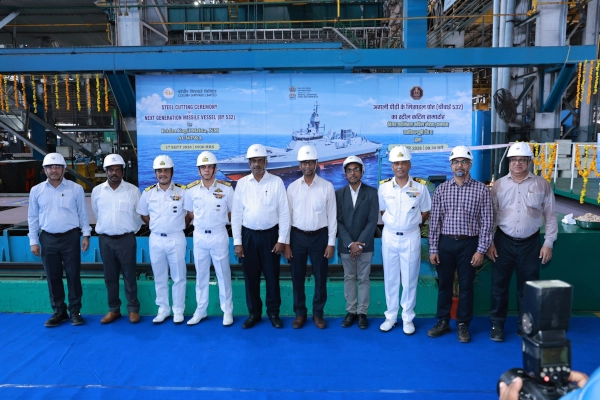
Cochin Shipyard Limited has begun construction of the Indian Navy’s second Next Generation Missile Vessel (NGMV), marking another milestone in the Navy’s programme to strengthen its high-speed surface strike capability with a new class of indigenously built warships.
The steel-cutting ceremony for the vessel was held at Cochin Shipyard Limited in Kochi on September 17, 2026, in the presence of senior officials from the Indian Navy and the shipyard. Rear Admiral Kapil Mehta, Assistant Controller of Warship Production and Acquisition, attended the ceremony as the chief guest.
Steel cutting represents the formal beginning of the shipbuilding process, when structural material for the vessel starts being prepared for fabrication. The milestone indicates that construction of the second vessel in the NGMV programme has now moved into the physical production stage.
Part of India’s Next Generation Missile Vessel Programme
The Ministry of Defence signed the contract with Cochin Shipyard Limited in March 2023 for construction of the Next Generation Missile Vessels.
The programme is intended to provide the Indian Navy with a new class of heavily armed surface combatants equipped with modern weapons, sensors and combat-management systems. The vessels are being designed to operate in increasingly complex maritime environments and contribute to the Navy’s objective of maintaining a force that is both future-ready and combat-ready.
The NGMVs are expected to significantly strengthen the Navy’s ability to conduct offensive surface warfare, maritime strike operations and missions requiring rapid deployment of missile-armed combatants.
Indigenous Weapons and Sensors at the Core
A major feature of the programme is the high level of indigenous equipment planned for the vessels. According to the Ministry of Defence, the principal role-defining systems intended for the NGMVs have been developed and manufactured within India.
These systems include major weapons and sensors that will determine the ships’ operational capabilities. Their indigenous development reduces dependence on foreign suppliers while allowing Indian industry to take a larger role in the design, integration, production and long-term support of frontline naval combat systems.
The programme therefore extends beyond ship construction itself. It brings together shipyards, defence public-sector companies, private manufacturers, electronics companies and specialised suppliers involved in propulsion, weapons, sensors, communications and shipboard systems.
Strengthening India’s Maritime Strike Capability
Missile vessels occupy a specialised role within a modern navy. Their relatively compact size, high speed and heavy anti-surface weapon load allow them to deliver substantial offensive firepower while operating alongside larger destroyers, frigates and other fleet units.
For the Indian Navy, the new class will add another layer to its surface-warfare capability at a time when maritime competition across the Indian Ocean Region is becoming more technologically demanding.
Advanced sensors and networked combat systems can also allow such vessels to operate as part of a wider naval force, receiving targeting information from ships, aircraft and other surveillance platforms while contributing their own sensors to the fleet’s maritime picture.
Another Step in India’s Indigenous Warship Programme
The start of construction of the second NGMV also reflects the expanding capabilities of India’s domestic shipbuilding industry.
Cochin Shipyard has progressively moved from commercial shipbuilding into increasingly sophisticated naval programmes, while Indian industry has developed a larger share of the weapons, electronics and mission systems fitted aboard modern warships.
The Ministry of Defence said the indigenous content of the NGMV programme is aligned with the government’s Aatmanirbhar Bharat, Make in India and Make for the World initiatives.
With steel cutting now completed for the second vessel, the programme moves further into the construction phase, advancing the Indian Navy’s effort to field a new generation of domestically built missile combatants designed for the evolving operational environment of the Indian Ocean.
You may also like
-
Nayan Technologies Selected by JSW MG Motor to Advance AI-Based Road Monitoring and Smart Mobility
-
Indian Navy to Commission Indigenous Anti-Submarine Warfare Ship Mangrol on October 12
-
JSW Steel’s Crude Steel Production Rises 5% to 7.27 Million Tonnes in Q2 FY2027
-
Kabra Extrusiontechnik’s GEON Commissions 20 MWh Battery Storage Project in Rajasthan
-
OBSC Perfection Secures ₹8.9 Crore Israeli Defence Order for Precision Fuze Components
