Research

News on Science, Technology and Research in India

Researchers Develop New Machine for Road Cleaning with Sewage Water

Researchers at the CSIR-Central Mechanical Engineering Research Institute (CMERI), Durgapur, have developed a machine that could be useful in maintaining good cleanliness and hygienic standards of Indian roads/streets. This machine sucks out the wastewater from drain/manhole using slurry pump. The drain water passes through multiple chambers and screened by different mesh size sieves, before it is finally treated with chemical disinfectant. The treated water is stored in a separate chamber that is used in jetting operation. The water intake capacity of the machine from one manhole is more than 1000 litres. The machine can utilize the water to clean the road up to next available manhole within 50-70 meters.

Model to Accurately Assess Rainfall-Induced Damages in Road Networks

The approach, described in the journal Environmental Research Letters, uses satellite imageries, landslide and debris flow models, and flood prediction models to predict the geographical locations that have a high susceptibility of damages after heavy rainfall episodes. It also provides the occurrence time and magnitude of infrastructure disruptions as a consequence of landslides, debris flows, and floods, the researchers said. This hazard model can help authorities identify the ‘hotspots’ which should be reinforced and protected to solve highway-flooding issues and minimise the societal and economic disruptions, they said.

India’s First Banni Buffalo IVF Calf Born

With the birth of first IVF calf of a Buffalo breed namely Banni in the country, India’s OPU – IVF work has reached to next level. This first IVF Banni calf is born out of 6 Banni IVF pregnancies established at the doorsteps of a farmer, Vinay . L. Wala of Sushila Agro farms, located at Dhanej in Somnath district of Gujarat.

Kidney Stone Formation to Gene Marking: 5 Experiments Shortlisted for ISRO Mission; MoUs in Place

From how kidney stones are formed in fruit flies to study of gene markers, from heat sink functioning in microgravity to crystallisation, an expert committee set up by the Indian Space Research Organisation (Isro) has shortlisted five out of the 28 proposals it received from various institutions to send as payloads to conduct experiments in space, as part of the Gaganyaan uncrewed missions.

Researchers Design White Light Emitters for LED Applications

Researchers at Indian Institute of Technology (IIT) Madras have successfully developed a white light emitter for use in LEDs. The development of energy-efficient Light Emitting Diodes or LEDs replaced the energy-inefficient incandescent lamps in lighting and display applications. While LEDs have been available in almost all colours, white LEDs are a more recent development.

Clue to Mystery of Solar Flares & CMEs in Regions on Sun with Disturbed Magnetic Field can Help Improve Solar Weather Predictions

Astronomers exploring regions on the Sun with disturbed magnetic fields or active regions that sometimes exhibitsolar flares without accompanying Coronal Mass Ejection (CME) have confirmed that changing structure of the magnetic field on the Sun’s surface determined whether a flare or a CME was emitted. This understanding will be useful in improving predictions of solar weather, which can affect electrical, and communication systems in Earth and satellite systems in space.

IIT Researchers Working on First-of-its Kind Geography Based Smart Speed Warning System

“Traditional warning systems are based on the fixed speed threshold, however, the concept of a smart warning system is based on upcoming road infrastructure and vehicle location. On approaching curves along a roadway, including blind curves or hairpin bends, vehicles equipped with such a system will warn drivers in advance, which will allow drivers to adopt corrective actions and avoid accidents,” he added.

Tea & Banana Waste Used to Develop Non-Toxic Activated Carbon

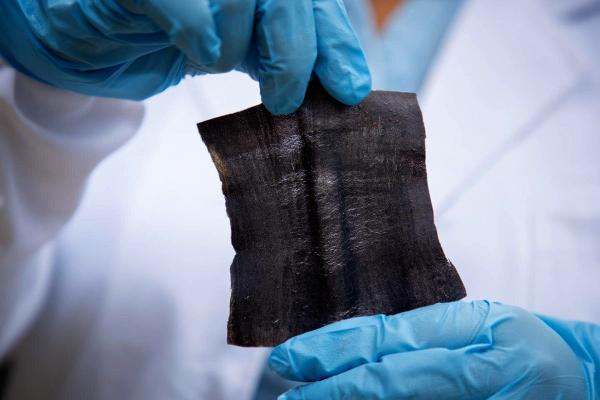
A team of scientists have used tea and banana waste to prepare non-toxic activated carbon, which is useful for several purposes like industrial pollution control, water purification, food and beverage processing, and odour removal. The newly developed process avoids usage of any toxic agent for synthesizing activated carbon, thus making the product cost-effective as well as non-toxic.