Research

News on Science, Technology and Research in India

Low Carbon Bricks Developed Using Construction and Demolition Waste for Energy-Efficient Walling Envelopes

Researchers have developed a technology to produce energy-efficient walling materials using construction and demolition (C&D) waste and alkali-activated binders. These are called low-C bricks, do not require high-temperature firing, and avoid the use of high-energy materials such as Portland cement. The technology will also solve the disposal problems associated with C&D waste mitigation.

‘India’s First Solar Mission Likely to Launch Next Year’: ISRO

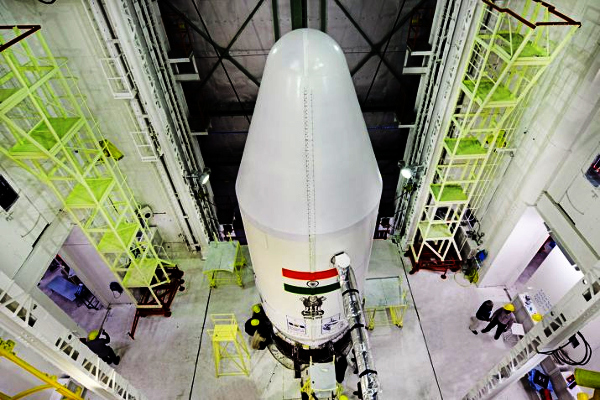
India’s first solar mission, which was pushed from early 2020 due to the Covid-19 pandemic, is likely to be launched in the third quarter of 2022, when the country’s second space observatory Xposat, aimed at helping astronomers study cosmic sources such as pulsars and supernova, will also be launched, senior officials from the Indian Space Research Organisation (ISRO) said.

A New Method Developed to Convert Poultry Feather & Wool Waste to Animal Feed & Fertilizer

Indian scientists have developed a new sustainable and affordable solution for converting keratin waste such as human hair, wool, and poultry feathers to fertilizers, pet, and animal feeds. India generates a huge amount of human hair, poultry feather waste, and wool waste each year. These wastes are dumped, buried, used for landfilling, or incinerated, increasing environmental hazards, pollution, and threat to public health and increasing greenhouse gas emissions. These wastes are inexpensive sources of amino acids and protein, underlining their potential to be used as animal feed and fertilizer.

High-Quality Transparent Ceramics Developed for the First Time in India can be Used in Thermal Imaging and Personal Protection Equipments

Indian researchers have developed transparent ceramics, reaching theoretical transparency through a technique called colloidal processing followed by simultaneous application of temperature and pressure, for the first time in India. The material can be used for thermal imaging applications, especially in harsh service conditions and personal protection systems such as, helmets, face shields, and goggles.

Discovery of New Species of Hybodont Shark From Jurassics of Jaisalmer, Rajasthan

Significantly, the newly discovered crushing teeth from Jaisalmer represent a new species named by the research team as Strophodusjaisalmerensis. The genus Strophodus has been identified for the first time from the Indian subcontinent and is only the third such record from Asia, the other two being from Japan and Thailand. The new species has recently been included in the Shark references.com, an international platform operating in association with International Union for Conservation of Nature (IUCN), Species Survival Commission (SSC), and Germany.

New Study to Help Develop Salt-Tolerant Plants

The advances in genome sequencing and assembly technologies have enhanced the understanding of many plants and animals. While gene expression analysis and whole-genome sequencing studies are beginning to provide a molecular understanding of the mangrove plants, reference-grade genome assembly, which is essential to carry out a comprehensive study on salinity tolerance genes at the whole-genome level, is not available for any mangrove species.

New Nano-Composite to Beat Antimicrobial Resistance

Researchers from IIT Roorkee and Log 9 Materials Scientific Private Limited, which is funded under the Department of Biotechnology’s Bengaluru-based Centre for Cellular and Molecular Platforms (C-CAMP)’s Biotech Ignition Grant scheme, have now developed an antibacterial and antibiofilm composite using non-toxic and hydrophobic nanomaterial, graphene nanoplatelets (GNP), and tannic acid and silver. When tested, it exhibited good antibacterial properties.

Noise Control Sheet Absorber Developed by Mimicking Bee Hives

Dr. B. Venkatesham and Dr. Surya, faculty at Mechanical and Aerospace Engineering Department at IIT Hyderabad, fabricated low thickness and strong acoustic panels mimicking this property using biomimetic design methodology. The design methodology involves understanding the physics of bee hive sample acoustic energy dissipation and then mimicking its design.