Anandavalleeswaram Sri Mahadeva Temple, Kollam
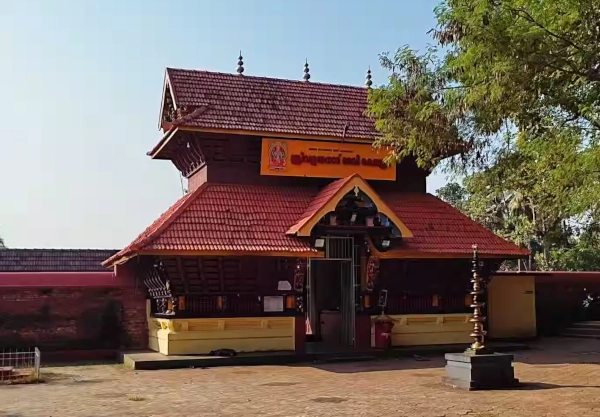
The sreekovil is unique because it is the only Hindu shrine in India where the idols of Sree Krishna, Maha Vishnu, Bhoomi Devi, and Lakshmi Devi are consecrated under a single roof
News, articles and Essays on Sanatana Dharma, Hinduism and Indian way of life.
The sreekovil is unique because it is the only Hindu shrine in India where the idols of Sree Krishna, Maha Vishnu, Bhoomi Devi, and Lakshmi Devi are consecrated under a single roof
The temple is believed to date back to around the 6th to 8th centuries CE, placing it within the early medieval phase of South Indian temple evolution. This period witnessed the spread of rock-cut architecture across peninsular India, influenced by earlier traditions seen in sites like Mahabalipuram and Badami. In Kerala, where climatic conditions favored laterite and wood, such rock-cut monuments remain rare, making Kottukal an important outlier in the region’s architectural history.
In a court that lacked a male successor, the child who might have been raised in silk and ceremony was instead forged in discipline. She was raised as a prince in spirit and expectation, trained in governance, diplomacy, and warcraft from an early age.
Local historical memory ties it closely to Kanthalloor Sala, the celebrated centre of learning often described as the “Nalanda of South India.” That association gives the temple a stature larger than that of a city shrine: it is remembered as a place where worship, scholarship, and political history once stood side by side.
A commonly repeated tradition says she was named Durgavati because she was born on Durgashtami. The same contemporary source clearly names her father and lineage; I did not find an equally strong contemporary source naming her mother.
Located in Attukal, close to the old core of Thiruvananthapuram and only a short distance from East Fort and the Padmanabhaswamy Temple area, the shrine is dedicated to Goddess Bhagavathy, who is widely identified here with Bhadrakali and also with Kannagi, the heroic woman of the Tamil epic Silappathikaram.
The Centre’s Namami Gange programme has moved well beyond a narrow river-cleaning mission into a
Rajendra was the son of Rajaraja I, the great Chola emperor who had already laid the foundations of Chola imperial expansion. Rajaraja I was one of the most celebrated rulers of the dynasty, and Rajendra inherited from him not only a large and disciplined state but also a political culture that valued military organisation, temple patronage, administrative order, and long-distance ambition.
He ruled the Chalukya kingdom of Vatapi, present-day Badami, from about 610 to 642 CE, and under him Chalukya power reached its high noon. He was the son of Kirtivarman I, and he inherited not a settled throne, but a kingdom already bruised by succession conflict.
That image of struggle appears vividly in the Bhitari pillar inscription, one of the most important records of his reign. It presents Skandagupta as a prince who restored the fallen glory of his lineage after his enemies had become powerful.