Economy

News on Indian Economy

Assam’s GI-Tagged Tezpur Litchi Reaches Dubai in a Major Boost for North East Agri Exports

The first shipment, dispatched on 7 June 2026, consisted of one metric tonne of GI-tagged Tezpur Litchi. The fruit is widely known for its bright red appearance, rich sweetness, pleasant aroma and superior eating quality. Tezpur’s litchi-growing belt produces several well-known varieties such as Bombaya, Bilati, Elaichi, Piyaji and Sahi, each valued for its distinct flavour and quality.

India’s Space Economy: From ISRO Missions to a $45 Billion Growth Engine

The numbers show the scale of ambition. India’s space economy, valued at about 8.4 billion dollars in 2023, is officially projected to reach around 44 billion dollars by 2033 and about 100 billion dollars by 2040. This means India wants to raise its share in the global space economy from a small base to a much larger position over the coming decade.

SBI’s ₹8,813 Crore Dividend: India’s Largest Bank Strengthens the Public Exchequer

SBI’s payout also reflects the strength of India’s banking system. For FY26, SBI reported a net profit of ₹80,032 crore, recording 12.88 percent year-on-year growth. Its fourth-quarter net profit stood at ₹19,684 crore, while operating profit for the full year rose 11.25 percent to ₹1,23,015 crore. These figures show that the bank has delivered growth across both profitability and operational performance.

India Records USD 7.1 Billion Current Account Surplus in March Quarter

The strongest pillar behind the improvement was the services sector. India’s net services receipts rose to USD 60.4 billion in the January–March quarter, supported by computer services, business services and other export-oriented segments. This once again highlights the strategic value of India’s services economy. Software, IT services, consulting, business-process operations, financial services and professional exports continue to act as a powerful cushion for the external account.

Railways Clears ₹448-Crore Traction Upgrade for Key South India Routes

The project is focused on upgrading the existing 1×25 kV electric traction system to a modern 2×25 kV system. In simple terms, this means trains will receive a stronger, more stable and more efficient power supply. A railway line with better traction power can handle heavier trains, support higher traffic density and improve reliability during regular operations. For passengers, this can translate into smoother services and better punctuality. For industries, it can support faster movement of freight and stronger logistics connectivity.

India Secures EU Market Access for Aquaculture, Honey, Eggs and Animal-Origin Exports Beyond 2026

The European Union has amended Regulation (EU) 2021/405 through Commission Implementing Regulation (EU) 2026/1189. The revised framework has been introduced in the context of growing international concern over antimicrobial resistance, commonly known as AMR. From September 2026, countries exporting specified animal-origin products to the EU will have to meet additional regulatory requirements. India’s inclusion in the authorised list means that its export system has been recognised for continued eligibility under this new framework.

Jharkhand’s Amrapali Mangoes Reach London: A New Export Milestone for Women Farmers

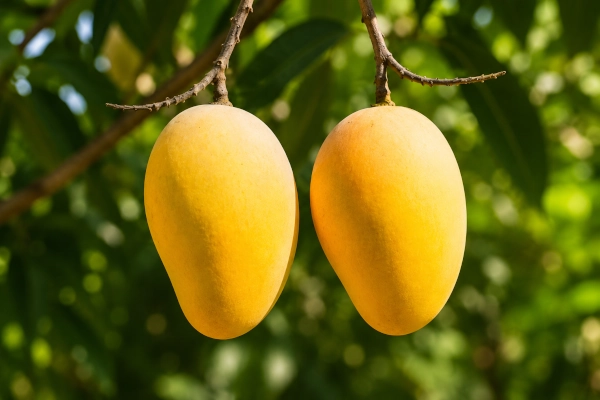
The shipment consists of 1.5 metric tonnes of fresh Amrapali mangoes grown by Beura Farmer Producer Company Ltd., an all-women Farmer Producer Company located in Bano Block of Simdega district. The mangoes are being exported by M/s JGB Agrofresh Pvt. Ltd., Kolkata, to London. This makes the consignment important from two angles: it expands Jharkhand’s export footprint and places women farmers directly inside the global agri-value chain.

Centre Standardises Edible Oil Pack Sizes to Bring Transparency to India’s Kitchen Economy

Edible oil is one of the most essential items in the Indian kitchen. A small change in price, quantity or packaging affects millions of households because cooking oil is purchased regularly across income groups. When packets come in uneven quantities such as odd millilitre or gram measures, the buyer often compares only the printed price and misses the actual cost per litre or kilogram. Standard pack sizes reduce this confusion and bring the consumer’s attention back to real value.

India’s Solar Rise: From 2.8 GW to 155 GW, a Clean Energy Revolution Powers the Nation

The rise of solar power reflects a deep national shift. India is no longer treating renewable energy as a supporting source of electricity. Solar energy has become part of the country’s development model. It powers homes, farms, industries, public buildings, railway stations, villages and large solar parks. It is helping India reduce dependence on fossil fuels while expanding electricity access across regions.

India’s Ethanol Mobility Push: 5,000 Fuel Stations by 2027 and a New Roadmap for Flex-Fuel Vehicles

This marks a major step from ethanol blending in petrol towards a dedicated flex-fuel ecosystem. Until now, India’s ethanol story has largely focused on E20, where petrol is blended with 20 percent ethanol. The next stage moves towards vehicles that can run on much higher ethanol blends such as E85 and, in advanced cases, even E100. This requires a complete support system of compatible vehicles, separate fuel storage, dedicated dispensing points, pricing support, testing fuel availability and consumer awareness.