Economy

News on Indian Economy

ISRO to Tap Startups to Build Local Tech for Gaganyaan, Future Missions

India’s space agency will tap startups to develop food and medicines for astronauts, better tools to access machines in a spacecraft and green engines for its maiden humanspace flight Gaganyaan-1.

It will also potentially help them build products and solutions that they can exploit commercially.

“We have already made the announcement of opportunities for research organisations and academics, it will expand to startups and industry,” Indian Space Research Organisation (Isro) Chairman K Sivan told ET.

Last month, Isro identified a set of 17 technologies that it invited researchers to develop locally at lower costs for use in its Gaganyaan missions.

These included food and medicine for astronauts during space voyages, life support systems including a spacesuit, inflatable habitats and anti-radiation and thermal protection technologies for spacecraft to bring the astronauts back to earth safely.

The space agency has already indicated that it was looking at several humanspace flight missions, housing a space station and eventually aim to send human beings to the moon. It has set up a small group to do a feasibility study for a manned mission to the moon.

“This opens up opportunities for new types of companies to come up in India,” said Awais Ahmed, founder and CEO of Pixxel, a homegrown startup that is building India’s first private remote sensing satellite fleet. “There will be Indian startups doing biological experiments, private habitats in space and robotic arms that will benefit.”

Isro should also share its intellectual property for the technologies, except for those that are very strategic, to any private entity that develops them, he added.

Sivan said Isro has opened up its facilities to private players, including helping a consortium of companies led by Larson & Toubro and HALNSE 6.29 % build its homegrown rocket – polar satellite launch vehicle (PSLV).

India has sent four Air Force pilots to Russia for training, the first set of potential astronauts for the Gaganyaan-1 mission, which is expected by 2022. The space agency has built a spacecraft that can carry three astronauts.

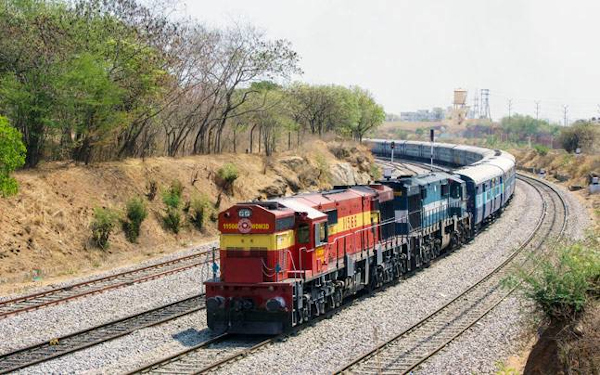
Artificial Intelligence will Help in Indian Railways

The country is moving towards artificial intelligence to help doctors and other medical staff at this time of the epidemic. SCR has developed a robotic device, “Rail Bot” aka R-Bot. R-Bot will help railways in hospital management functions towards patient care in this era of COVID-19.

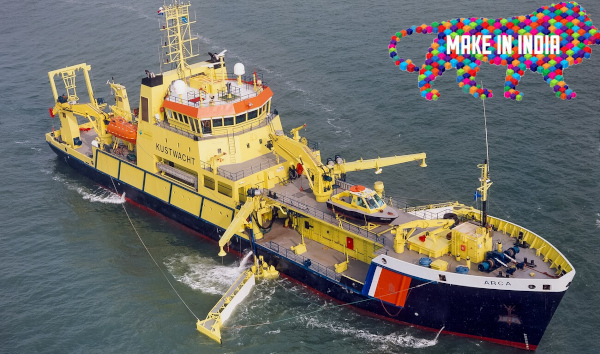
GSL Makes Lowest Bid to Build Oil Spill Control Ships- Make in India

Goa Shipyard Ltd has emerged as the front runner to build two pollution control vessels for the Indian Coast Guard, pipping L&T Shipbuilding and two other public sector shipyards. GSL will build the vessels for approximately Rs 600 crore once the final contract is inked, chairman and managing director of GSL, Bharat Bhushan Nagp