Rajya Sabha Passes The Medical Termination of Pregnancy (Amendment) Bill, 2021
The Rajya Sabha has approved the Medical Termination of Pregnancy (Amendment) Bill, 2021 to amend the Medical Termination of Pregnancy Act, 1971 on 16th March 2021.
Government policies, leadership stories and much more
The Rajya Sabha has approved the Medical Termination of Pregnancy (Amendment) Bill, 2021 to amend the Medical Termination of Pregnancy Act, 1971 on 16th March 2021.
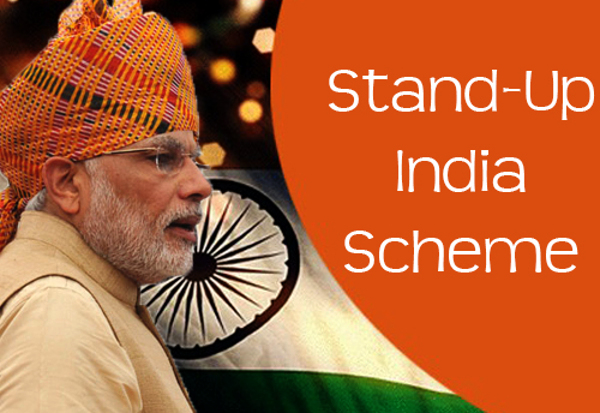
The objective of the Stand-Up India Scheme is to facilitate loans from Scheduled Commercial Banks (SCBs) of value between Rs. 10 lakh (US$ 13.78 thousand) and Rs. 1 crore (US$ 137.79 thousand) to at least one Scheduled Caste (SC) or Scheduled Tribe (ST) borrower and one woman borrower per bank branch for setting up a greenfield enterprise in manufacturing, services or trading sector.
Under this project, geophysical field measurements, ice core drilling, snow core drilling, ice-sheet modelling and satellite remote sensing-based studies were conducted to understand the future Antarctic contribution to the global sea-level rise.
The new rules for permits are expected to go a long way in promoting tourism across the States in our country, while simultaneously, growing the revenue of state Governments. The step was discussed in the 39th & 40th Transport Development Council Meetings and was appreciated & concurred to by participants from the states. The rules come even as the Ministry is in the pursuit of providing seamless movement to tourist passenger vehicles, after the success of goods carriage vehicles under National Permit Regime.
India has imposed anti-dumping duty on the Chinese antibacterial drug Ciprofloxacin Hydrochloride to guard the domestic industry against cheap imports from the neighbouring country. The duty was imposed following a recommendation by the commerce ministry’s investigation arm Directorate General of Trade Remedies (DGTR).
Shri Sudhanshu Pandey, Secretary, Department of Food & Public Distribution under Ministry of Consumer Affairs, Food & Public Distribution today addressed a Press Conference on “One Nation One Ration Card” (ONORC) plan. On this occasion Secretary also launches Mera Ration mobile app. This app will benefit especially those ration card holders who move to new areas for livelihoods.
The portal will have a dedicated digital investment promotion and facilitation team at Invest India which will facilitate domestic investors to directly connect or request meetings with the Invest India experts and discuss their specific investment/ doing business related matters.
Science and Engineering Board (SERB), a statutory body of the Department of Science and Technology (DST) with the mandate to plan, promote, and fund internationally competitive research in emerging areas, has set up a portal that offers real time information on the various research projects supported by it.
New Delhi is wary about awarding new technology business to Chinese firms both because of security fears and a desire to get Indian manufacturers to produce more telecoms equipment.
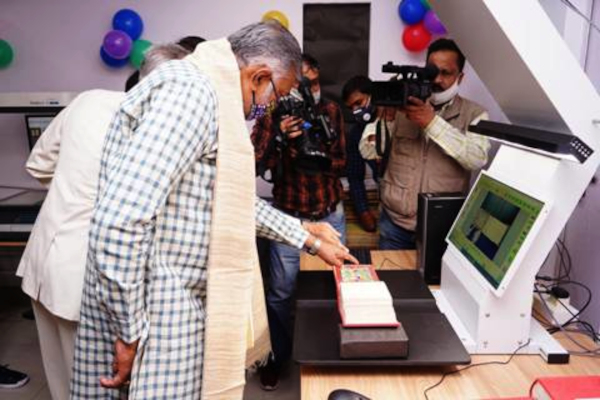
On the occasion of the 131st Foundation Day of the National Archives, the Union Minister of State for Culture and Tourism (Independent Charge) Shri Prahlad Singh Patel inaugurated the digitization of 4.5 Crore pages of Records and Exhibition based on “Mahatma Gandhi& the Cooperation Movement” today. The National Archives initiated the digitization Records.