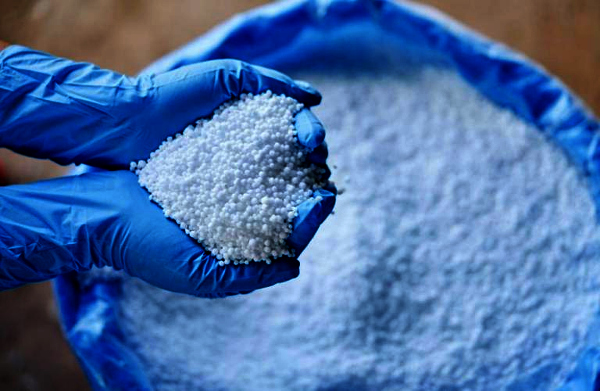
The Cabinet Committee on Economic Affairs (CCEA), chaired by Prime Minister Narendra Modi, on Wednesday approved the National Investment Policy for Urea-2026 for Atmanirbhar Bharat (NIPU-2026), aimed at encouraging fresh investments in domestic urea production and reducing India’s dependence on imports.
The new policy seeks to promote the establishment of gas-based urea manufacturing plants across the country, supporting the government’s objective of achieving self-sufficiency in fertilizer production.
According to the government, NIPU-2026 introduces several reforms over the earlier New Investment Policy (NIP)-2012 to make investments more transparent and financially viable. These include the separation of fixed and variable costs, the introduction of a Return on Equity (RoE) band with a minimum of 12 per cent and a maximum of 16 per cent, and measures to reduce foreign exchange risk by converting fixed costs into Indian rupees after four years based on prevailing exchange rates.
The government estimates that these changes will result in savings of more than ₹250 crore for every new urea plant established under NIPU-2026 compared to projects developed under the 2012 policy.
Under the new framework, all future gas-based urea manufacturing projects will be implemented through the National Investment Policy for Urea-2026, providing a structured mechanism to attract investments and expand domestic production capacity.
The previous New Investment Policy, introduced in 2012, was designed to encourage investments in revamp, expansion, revival, brownfield and greenfield urea projects. Under that policy, six new urea manufacturing units were established, including four through joint venture companies promoted by public sector undertakings and two by private companies. The investment window under NIP-2012 expired in October 2019.
India currently has 33 operational urea manufacturing units with a total reassessed and installed production capacity of 269.42 lakh metric tonnes (LMT). Despite this capacity, domestic production remains insufficient to meet the country’s growing demand, requiring significant imports to bridge the supply gap.
The Department of Fertilizers has received multiple proposals for setting up new urea plants, highlighting continued investor interest in the sector. The government said the approval of NIPU-2026 provides a renewed policy framework to facilitate these investments, strengthen domestic fertilizer production and advance the goal of Atmanirbhar Bharat in the fertilizer sector.
Source: PIB
You may also like
-
India’s Economic Warfare Challenge: Strategic Autonomy, Energy Security and the Rise of a Global Power
-
India-US Trade Deal Stalemate: Why Washington’s Tariff Pressure Has Failed to Secure an Agreement
-
US Double Standards in Foreign Policy: 16 Recent Cases Involving India, Russia, China and Global Trade
-
India’s Arctic Energy Ambitions: Russian Oil, LNG and a New Sea Route to Indian Ports
-
India and Russia Explore Joint Icebreaker Construction as Maritime Industrial Cooperation Expands
