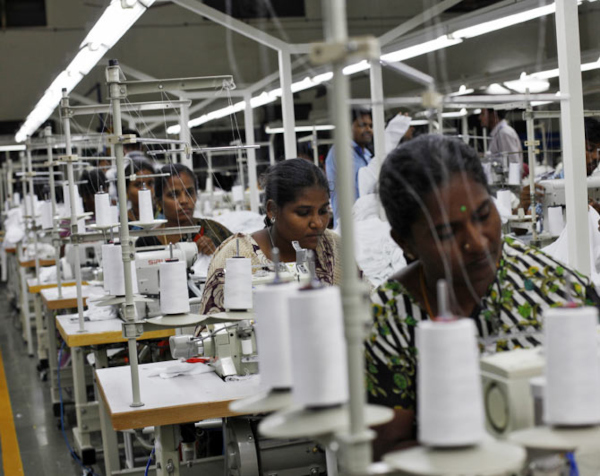
The Union Cabinet has approved a ₹10,000 crore government commitment to establish the SME Growth Fund, creating a new source of long-term equity capital for Indian small and medium enterprises that are ready to scale beyond the early stages of growth.
The fund will focus heavily on manufacturing-oriented SMEs, while also supporting companies in services, technology, innovation-led sectors and strategic value chains. The government intends the initiative to help promising enterprises expand capacity, adopt advanced technologies, enter international markets and develop into larger Indian companies capable of competing globally.
A Growth Fund Rather Than Another Credit Scheme
The SME Growth Fund is important because it targets a different financing gap from conventional MSME lending programmes.
India already operates several credit-support mechanisms for smaller enterprises, but the government says a structural shortage remains in long-term growth equity for viable small and medium companies. Existing equity funds also tend to concentrate more heavily on early-stage businesses and micro enterprises.
The new fund is designed to provide what the government describes as patient growth equity capital to SMEs that have demonstrated commercial viability and the ability to scale. This means the support is intended for companies that have moved beyond the earliest startup phase but still need capital to expand substantially.
Manufacturing Will Receive the Largest Share
Manufacturing sits at the centre of the programme.
The government has said that a majority of the SME Growth Fund’s allocation will go to manufacturing-focused small and medium enterprises. The objective is to help these firms expand production capacity, adopt advanced technologies, improve productivity and strengthen their ability to compete in export markets.
This gives the fund a distinctly industrial character. Rather than spreading capital evenly across the entire MSME universe, the structure is intended to direct substantial equity towards enterprises capable of moving into larger-scale manufacturing and strategic supply chains.
Such companies can occupy an important middle layer of the industrial economy. They are larger than many micro enterprises but often lack the balance sheets, access to capital markets or institutional investors available to major corporations.
Fund Will Operate Through an Alternative Investment Fund
The SME Growth Fund will operate as an Alternative Investment Fund, or AIF, under the SGF framework.
The Government of India will provide an aggregate commitment of ₹10,000 crore to the AIF. Unlike a grant or conventional subsidised loan programme, the mechanism is designed around direct equity investment in selected businesses.
This distinction matters because equity allows enterprises to raise capital without taking on an equivalent amount of debt. For companies investing heavily in machinery, technology, acquisitions or international expansion, a stronger equity base can also improve their ability to raise additional financing later.
The government has not positioned the fund as universal support for every SME. Its stated focus is on high-potential enterprises with proven viability and scalability.
Technology Adoption Is a Major Objective
One of the clearest objectives of the fund is to help Indian SMEs move into more technologically advanced forms of production.
The government specifically identifies advanced technology adoption, innovation, manufacturing-capacity expansion and productivity improvements among the uses that long-term capital can support.
This could become particularly relevant for companies investing in automation, precision manufacturing, advanced materials, electronics, industrial software, digital production systems and modern quality-control infrastructure.
Indian manufacturing increasingly depends on smaller suppliers being able to meet demanding standards for consistency, precision, traceability and delivery. Capital that allows such firms to upgrade equipment and processes can therefore strengthen larger industrial ecosystems as well.
Tier-II and Tier-III Industrial Clusters Included
The SME Growth Fund will also consider enterprises operating in industrial clusters in Tier-II and Tier-III cities.
The government expects this to support more geographically balanced industrial development while strengthening local supply chains and generating employment outside the largest metropolitan centres.
This is significant because much of India’s manufacturing capacity is already distributed across specialised regional clusters. Automotive components, textiles, engineering goods, machine tools, pharmaceuticals, electronics and other sectors depend on networks of small and medium suppliers located well beyond the major metros.
Providing growth equity to stronger firms within these clusters could allow them to expand without relocating their operations or depending entirely on large corporate customers for capital.
SMEs Already Form a Large Part of India’s Economy
The scale of the sector explains why improving SME access to capital has broader economic implications.
According to the government’s October 2026 backgrounder, MSMEs account for approximately 31.1% of India’s GDP, 35.4% of manufacturing output and 48.58% of exports.
Registrations under Udyam and the Udyam Assist Platform had reached about 9.78 crore enterprises by October 6, 2026, while registered MSMEs reported roughly 43.28 crore employment opportunities. Manufacturing accounted for around 1.93 crore registrations, alongside large numbers of enterprises in services and trading.
These figures include the wider MSME ecosystem rather than only the small and medium enterprises that will be targeted by the new growth fund.
New SME Classification Defines the Eligible Scale
India’s revised MSME classification, effective from April 2025, provides the broader framework within which these businesses operate.
A small enterprise can have investment in plant, machinery or equipment of up to ₹25 crore and annual turnover of up to ₹100 crore. A medium enterprise can have investment of up to ₹125 crore and turnover of up to ₹500 crore.
The Growth Fund is therefore aimed at businesses that can already operate at a substantial scale but may still face difficulty securing the type of patient equity available to larger listed or institutionally backed companies.
This segment can be especially important in manufacturing because companies often need significant capital before revenue catches up. New production lines, tooling, testing infrastructure and export certification can require large upfront investments.
From Small Supplier to Industrial Champion
The government’s stated ambition is to create a pipeline of Indian SMEs capable of becoming larger sectoral champions.
Long-term equity can support companies seeking to acquire other businesses, expand into international markets, integrate into global value chains and undertake strategic investments that might otherwise be difficult to finance through short-term borrowing.
The approach also complements existing MSME programmes rather than replacing them. Credit guarantees, entrepreneurship programmes, technology-upgradation initiatives, procurement support and skill-development schemes will continue alongside the new equity mechanism.
The difference is that the SME Growth Fund is aimed specifically at enterprises approaching an inflection point where access to larger pools of capital could determine whether they remain regional suppliers or grow into national and international businesses.
A New Layer in India’s Manufacturing Strategy
The ₹10,000 crore SME Growth Fund adds another layer to India’s broader effort to deepen domestic manufacturing capability.
Large industrial programmes often depend on hundreds of smaller suppliers capable of producing specialised components, tooling, electronics, materials and engineering services. Strengthening these suppliers can therefore have effects well beyond the individual companies receiving investment.
The fund also creates a mechanism through which growth-stage manufacturing companies can obtain equity before they are large enough to access public markets or attract substantial institutional capital independently.
For India’s manufacturing ambitions, this middle layer is increasingly important. Building globally competitive industries requires not only large anchor companies but also financially strong domestic suppliers able to invest continuously in technology, scale and quality.
By directing patient capital towards viable and scalable SMEs, the new fund is designed to help more Indian enterprises make that transition and strengthen the domestic industrial base from the ground up.
References
- Prime Minister of India — Cabinet Approves Commitment of ₹10,000 Crore Towards Establishment of the SME Growth Fund for Direct Equity Investments in Small and Medium Enterprises to Create Future Champions, October 6, 2026. PM India
- Press Information Bureau — Small and Medium Enterprises Growth Fund: Providing Capital to India’s Future Champions, October 6, 2026. Press Information Bureau
- Press Information Bureau, Ministry of Finance — Union Budget 2026-27: Dedicated ₹10,000 Crore SME Growth Fund, February 1, 2026. Press Information Bureau
You may also like
-
India to Track Challenges Faced by Women Entrepreneurs in New National Business Survey
-
India Updates Vehicle Rules to Strengthen E85 and E100 Flex-Fuel Technology
-
Adani Green Energy Expands Battery Storage to 6.63 GWh at Khavda, Strengthening India’s Renewable Power Infrastructure
-
Manastu Space Secures ₹116 Crore Government Support to Develop Indigenous Green Propulsion Systems
-
GeM’s AABHAR Collection Showcases 294 Indigenous Products, Strengthens Market Access for Indian Artisans
