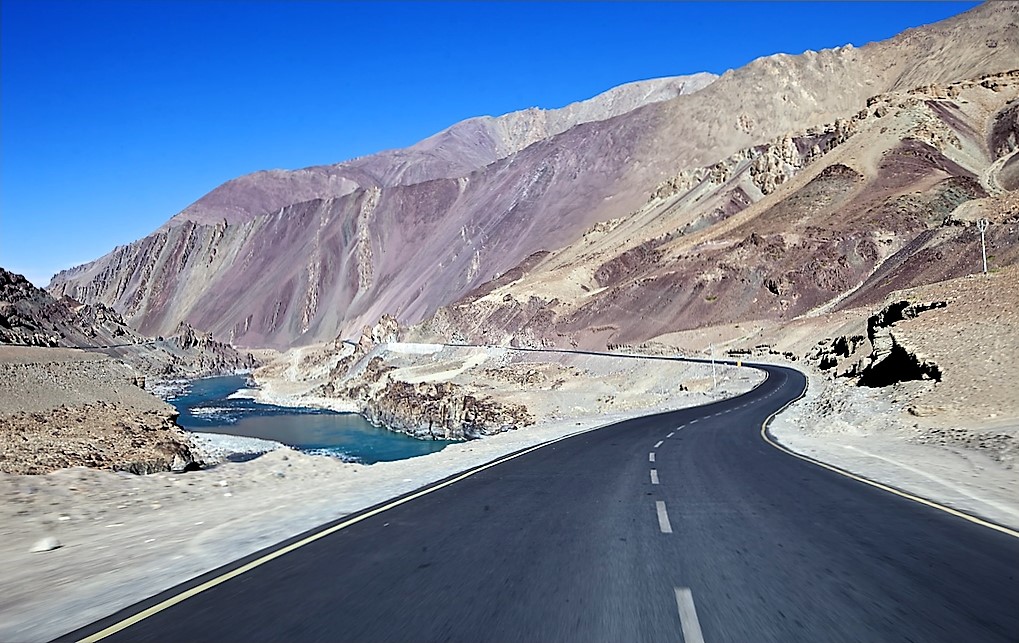
A fresh wave of road and bridge construction is beginning to change the ground reality in the border sub-division of Nowshera in Jammu and Kashmir’s Rajouri district, where residents have long dealt with narrow single-lane roads, difficult travel and chronic connectivity gaps. One of the key works underway is a 3-km road project estimated at Rs 8 crore and planned with a 10-metre width, as existing stretches are upgraded into double-lane blacktopped routes to improve movement in the area. Residents quoted in recent reports said the scale of development now visible is something the region has not seen in decades.
The impact is expected to extend well beyond easier commuting. Better roads in Nowshera could reduce travel hardship for students and patients, support faster access to schools and medical facilities, and create room for more local business activity in villages that have remained physically constrained for years. A bridge under construction between Nowshera and the border-side Seri Block, described as a long-pending public demand, is also moving ahead and is expected to close a major local connectivity gap once completed.
The larger Rajouri picture shows that this is part of a wider frontier infrastructure build-out rather than a stand-alone project. In nearby Qila Dharhal tehsil, the Border Roads Organisation’s Project Sampark has already been executing bridge and road works to improve all-weather access in remote areas. Recent examples include the Jambhir Steel Bridge along the Balavenue–Lam–Dharal axis and the Bhawani Sethu Bridge over the Bhawani Nala, which reduced travel distance between Bhawani, Nowshera and Qila Dharhal from nearly 30 km to about 11 km. Reporting from the area has linked these works to better ambulance access, safer student travel, lower seasonal isolation and added local employment during construction.
The policy framing around these works is also becoming clearer. During a visit to Sariah in Rajouri on April 17, Lieutenant Governor Manoj Sinha said infrastructure and welfare measures were being carried to border villages through the Border Area Development Programme under the Vibrant Villages framework. At the national level, the government has said Vibrant Villages Programme-II covers interventions such as road connectivity, village infrastructure, health facilities, education, telecom access and livelihood generation across border regions, including Jammu and Kashmir.
BRO’s own profile of Project Sampark underlines why Rajouri matters in this push: the project covers Rajouri and other districts of the Jammu division, and says it now handles a road network of roughly 2,963 km with an annual budget of nearly Rs 1,000 crore. Alongside the hard infrastructure push, local officials in Rajouri have also pointed to the livelihoods side of development, with the NRLM “Umeed” network in the district said to include around 9,000 members and 1,100 self-help groups. Taken together, the latest works in Nowshera suggest a broader attempt to turn border connectivity from a long-standing weakness into an asset for mobility, economic activity and strategic resilience.
You may also like
-
Exercise Tarang Shakti 2026 Concludes in Jodhpur, Showcasing India’s Air Power, Indigenous Defence Technology
-
Indian Navy Vice Chief Inspects Japan’s Mogami-Class Stealth Frigate as India-Japan Shipbuilding Cooperation Expands
-
Philippine Marine Wargames Reportedly Show BrahMos Can Penetrate Chinese Destroyer Air Defences
-
Safran Signs 18 Agreements with Indian Aerospace Suppliers, Expanding Make in India Manufacturing Partnerships
-
Indian Army’s Vajra Corps Certifies First Batch of Drone Operators, Strengthens Battlefield Surveillance
