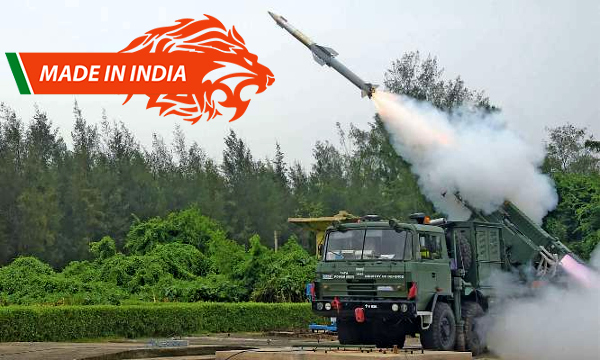
Bharat Electronics Limited (BEL) has initiated advance production-readiness activities for India’s indigenous Quick Reaction Surface-to-Air Missile (QRSAM) programme, ahead of an anticipated procurement contract valued at approximately ₹30,000 crore. The defence public sector undertaking has begun qualification-related work and preparations for the First of Production Model (FOPM), marking an important step towards manufacturing a sophisticated air defence system developed through collaboration with the Defence Research and Development Organisation (DRDO).
BEL Chairman and Managing Director Manoj Jain disclosed the development during the company’s second-quarter FY2026–27 earnings conference call held on November 3. He confirmed that BEL, the nominated production agency for the integrated QRSAM system, had already undertaken preparatory investments alongside its industrial partners to accelerate execution once the anticipated procurement order receives government approval. The company expects the proposal to be considered by the Cabinet Committee on Security (CCS), although no final approval or contract award had been announced as of November 6.
BEL Advances Production Readiness Before Contract Approval
BEL’s decision to begin preparatory activities reflects its intention to shorten the time required to transition the QRSAM programme from development to production. The company has initiated work associated with qualification testing and the First of Production Model, allowing technical preparations and supplier coordination to progress while the procurement approval process continues.
During the earnings conference call, Manoj Jain explained that BEL had been associated with the QRSAM programme for more than a decade and had participated in its development alongside DRDO. The company has accumulated considerable technical expertise through its involvement in system design, integration and engineering activities, providing an established foundation for the proposed manufacturing programme.
The company has submitted its bid in response to the Request for Proposal issued for the system. According to Jain, BEL expects the contract to be awarded following the necessary government approvals, and its ongoing preparatory work is intended to reduce the time required for production activities after the order is received.
Advance preparation is particularly important for complex military systems involving numerous specialised components and industrial suppliers. By undertaking qualification-related activities and coordinating with manufacturing partners before the formal contract award, BEL aims to improve production readiness and accelerate the subsequent execution schedule.
Indigenous QRSAM System to Strengthen India’s Air Defence Network
The Quick Reaction Surface-to-Air Missile system is an indigenous air defence programme designed to provide mobile protection against hostile aerial threats. Developed by DRDO, the system is intended to detect, track and engage airborne targets while supporting the operational requirements of military formations.
QRSAM is designed as an integrated weapon system comprising surveillance and tracking radars, missile launchers, communication equipment, command-and-control systems and associated support infrastructure. These components operate together to provide an air defence capability capable of responding to threats within the system’s operational envelope.
During the November 3 conference call, Jain emphasised that QRSAM is considerably more complex than a standalone missile procurement programme. He described it as an integrated arrangement involving multiple radars, launchers, communications systems and connections to broader military networks, with BEL responsible for bringing these components together into a coordinated operational system.
This systems-integration responsibility is central to BEL’s role in the programme. The company has developed extensive capabilities in military radar systems, defence communications, electronic warfare and integrated command-and-control technologies, allowing it to contribute to the sophisticated electronics infrastructure required for modern air defence operations.
The QRSAM missile itself has been developed by DRDO with Bharat Dynamics Limited (BDL) as a development partner. BEL’s nominated production role primarily concerns the integrated air defence system, demonstrating how different Indian defence organisations contribute specialised capabilities to a common indigenous programme.
More Than 200 MSMEs Expected to Join Production Ecosystem
One of the most significant aspects of the proposed QRSAM manufacturing programme is the scale of participation expected from India’s domestic industrial ecosystem. BEL management indicated that more than 200 micro, small and medium enterprises (MSMEs) could participate in the programme, alongside larger private-sector companies and public sector suppliers.
According to Manoj Jain, approximately 70 percent of the anticipated programme orders could be distributed among BEL’s supply-chain partners. These organisations would contribute to the production of equipment, components and subsystems required for the integrated QRSAM architecture, creating substantial opportunities across India’s defence manufacturing sector.
Several industrial partners have already undertaken preparatory investments associated with qualification activities and First of Production Model development. Their participation demonstrates the growing capabilities of Indian companies in supplying specialised equipment for sophisticated defence systems and reflects the importance of industrial cooperation in executing large military procurement programmes.
The programme is expected to generate opportunities for manufacturers involved in precision engineering, electronic components, communication equipment, radar subsystems, mechanical assemblies and specialised defence manufacturing. Such participation can strengthen domestic supply chains while supporting the development of technical expertise and manufacturing capacity across a broad range of Indian enterprises.
The QRSAM programme therefore represents more than a major procurement opportunity for BEL. Its proposed industrial structure would distribute manufacturing activity across a network of domestic suppliers, strengthening the participation of Indian private-sector companies and MSMEs in advanced defence technology programmes.
First of Production Model Marks Important Manufacturing Milestone
The First of Production Model is a critical stage in the transition from system development to regular manufacturing. It involves producing a representative system using the intended production processes and components, allowing manufacturers and military users to evaluate its performance, reliability and compliance with operational requirements.
For QRSAM, this phase is particularly important because the system combines multiple sophisticated technologies that must operate together reliably. Radar equipment, missile launchers, communication systems and command-and-control infrastructure require coordinated integration and evaluation before the complete system can progress towards serial production.
BEL has previously indicated that realisation of the First of Production Model could require approximately 12 to 18 months because of the complexity of the programme. The company’s latest preparations are intended to advance the necessary engineering and qualification work, potentially shortening the execution period following contract award.
The initiative also illustrates the importance of early coordination with industrial suppliers. Advance planning allows manufacturers to identify production requirements, develop tooling and establish technical arrangements before large-scale manufacturing begins, supporting a more organised transition into the production phase.
The current activities should be distinguished from serial manufacturing against an approved procurement order. BEL has confirmed that preparatory work is underway, while the anticipated contract and subsequent production schedule remain subject to the required government decisions.
₹30,000 Crore Programme Represents Major Defence Manufacturing Opportunity
The anticipated QRSAM contract, estimated at approximately ₹30,000 crore, represents one of BEL’s largest prospective defence manufacturing orders. The programme would strengthen the company’s involvement in integrated missile-based air defence systems while expanding its manufacturing and systems-engineering activities.
BEL management expressed confidence that the procurement would progress through the necessary government approval process. Jain indicated that the company hoped to receive clearance at an upcoming Cabinet Committee on Security meeting, although the timing and final value remain subject to government consideration.
The programme also builds upon BEL’s experience in developing and manufacturing systems associated with India’s Akash surface-to-air missile family. Its established capabilities in radar technology, missile-system electronics and command-and-control integration provide an industrial and technological foundation for undertaking the QRSAM programme.
The anticipated order would support India’s efforts to strengthen indigenous air defence capabilities while expanding domestic manufacturing of advanced military technologies. It would also provide opportunities for the development of specialised engineering expertise and the integration of increasingly sophisticated electronic systems into India’s military infrastructure.
Strengthening India’s Indigenous Defence Manufacturing Capabilities
The QRSAM programme reflects the growing technological capabilities of India’s domestic defence industry and the increasing importance of collaboration between DRDO, defence public sector undertakings and private manufacturing companies. Its development combines indigenous missile technology with radar systems, communications equipment and integrated command-and-control infrastructure.
BEL’s role as the nominated production agency highlights the company’s position within India’s defence electronics ecosystem. Its ability to coordinate multiple technologies and industrial partners is particularly relevant as modern military systems become increasingly dependent on integrated electronics, advanced sensors and networked operations.
The participation of more than 200 prospective MSME partners also demonstrates how major defence programmes can support industrial development beyond their principal manufacturers. By distributing production activities across domestic suppliers, such programmes create opportunities for smaller companies to develop specialised capabilities and participate in increasingly complex defence manufacturing projects.
This approach aligns with the Government of India’s Atmanirbhar Bharat initiative, which emphasises indigenous design, development and production of critical defence technologies. The QRSAM programme brings together national research capabilities and domestic industrial expertise to support the development of an advanced air defence system.
Advancing India’s Air Defence Modernisation
BEL’s advance production preparations represent an important development in India’s indigenous QRSAM programme. By initiating qualification-related activities and First of Production Model preparations before receiving the anticipated ₹30,000 crore contract, the company is working to improve manufacturing readiness and accelerate the eventual transition to production.
The programme’s significance extends across the wider defence manufacturing ecosystem, with substantial participation expected from MSMEs, private companies and specialised suppliers. The coordinated development of radars, communications infrastructure, launchers and missile technologies demonstrates the increasingly sophisticated capabilities available within India’s domestic defence industry.
The anticipated QRSAM procurement would contribute to the modernisation of India’s air defence infrastructure while strengthening national manufacturing capabilities in advanced military systems. BEL’s preparations establish an important foundation for the programme’s next phase, supporting India’s objective of developing a technologically capable, integrated and increasingly self-reliant defence industrial ecosystem.
You may also like
-
Indian Armed Forces Successfully Validate Integrated Electronic Warfare Capabilities at Sea During Tri-Service Exercise
-
Government Connects Indian Startups with 31,540 Scientific Equipment Listings Through I-STEM
-
Sigma Advanced Systems Reports ₹2,315 Crore Defence Orders in Artillery and Anti-Drone Technologies
-
India, Philippines in Advanced Talks for $800 Million BrahMos Missile Deal
-
Bharat Dynamics Strengthens India’s Indigenous Missile Manufacturing Capabilities Through Pralay Programme
