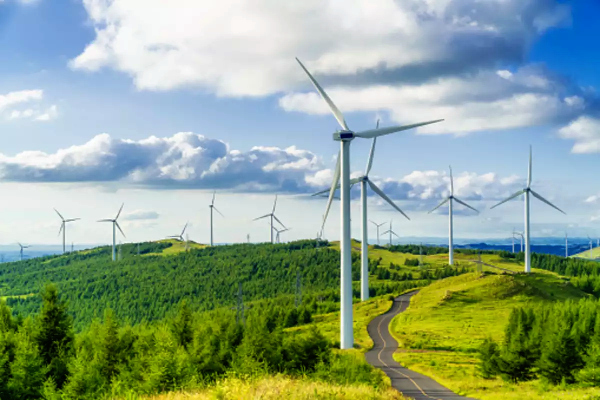
India’s renewable-energy transition received another major boost as Avaada Group announced that its total renewable-energy portfolio has surpassed 17.7 GW, reinforcing the country’s rapidly expanding clean-energy ecosystem and long-term energy-security ambitions. The milestone highlights the growing scale of India’s private-sector renewable-energy industry at a time when the country is accelerating efforts to reduce fossil-fuel dependence, strengthen domestic manufacturing, and position itself as a global clean-energy powerhouse.
Avaada Group, headquartered in Mumbai and led by renewable-energy entrepreneur Vineet Mittal, has emerged as one of India’s major integrated clean-energy conglomerates with business interests spanning:
- solar power,
- wind energy,
- battery energy storage systems,
- pumped hydro,
- solar manufacturing,
- green hydrogen,
- green ammonia,
- and sustainable fuels.
The company stated that its expanding 17.7 GW portfolio includes operational, under-construction, and planned renewable-energy projects across multiple Indian states. The portfolio expansion reflects the broader transformation underway in India’s energy sector, where utility-scale solar parks, hybrid renewable systems, storage infrastructure, and green hydrogen initiatives are increasingly becoming central pillars of national energy strategy.
India has set some of the world’s most ambitious renewable-energy targets, including the goal of achieving 500 GW of non-fossil-fuel electricity capacity by 2030. Solar energy has become the primary driver of this transformation, supported by falling module costs, large-scale government auctions, transmission-corridor expansion, production-linked incentives, and increasing investor confidence in India’s clean-energy sector.
Avaada’s rapid expansion is particularly significant because the company is positioning itself not merely as a renewable-power developer, but as a vertically integrated clean-energy ecosystem. Through Avaada Electro, the group is also investing heavily in domestic solar photovoltaic manufacturing capacity, including advanced solar-cell and module production facilities.
This manufacturing push aligns closely with India’s broader strategy to reduce dependence on imported solar equipment, particularly from China. New Delhi has increasingly focused on building indigenous solar manufacturing capabilities under initiatives such as:
- Production Linked Incentive (PLI) schemes,
- Approved List of Models and Manufacturers (ALMM),
- and import-duty frameworks designed to strengthen domestic clean-energy manufacturing ecosystems.
The expansion of large renewable-energy portfolios also carries major implications for India’s long-term energy security. Traditionally, India has remained heavily dependent on imported crude oil, natural gas, and fossil fuels, making the economy vulnerable to geopolitical instability and global price volatility. Renewable energy increasingly offers India the possibility of reducing external energy dependence while simultaneously strengthening industrial growth and climate resilience.
This strategic dimension has become even more important amid rising global energy competition, supply-chain disruptions, and geopolitical tensions affecting oil and gas markets worldwide.
Avaada’s investments in battery energy storage systems and pumped hydro projects are also strategically important because renewable-energy expansion increasingly requires large-scale storage infrastructure to stabilise grids and support round-the-clock clean-energy supply. Solar and wind generation are inherently intermittent, making storage technologies essential for maintaining reliable power delivery as renewable penetration rises.
The company has additionally expanded into green hydrogen, green ammonia, green methanol, and sustainable aviation fuel — sectors expected to play a major role in future decarbonisation efforts globally. India is positioning itself aggressively in the green-hydrogen race, viewing it as a strategic opportunity to become both an industrial manufacturing hub and a future exporter of clean fuels.
Avaada’s broader growth trajectory also reflects rising international investor interest in India’s clean-energy market. The group has previously attracted investments and partnerships involving global financial and strategic entities including Brookfield, Thailand’s GPSC, ADB, DEG, and other international investors.
The scale of investments flowing into India’s renewable-energy ecosystem underscores how the country is emerging as one of the world’s largest clean-energy growth markets. India’s expanding electricity demand, industrialisation, electric-mobility push, digital infrastructure growth, and manufacturing ambitions are all expected to drive enormous future energy requirements. Renewable energy therefore occupies a central position not only in climate policy, but also in economic strategy and geopolitical planning.
The renewable-energy transition is also increasingly tied to India’s broader industrial and technological ambitions. Large-scale solar deployment supports:
- semiconductor ecosystems,
- electric-vehicle expansion,
- green manufacturing,
- battery industries,
- and AI/data-centre infrastructure,
all of which require enormous and stable electricity supply.
The growth of Indian renewable-energy companies like Avaada therefore reflects more than just environmental transition. It signals the emergence of a new industrial architecture where energy independence, climate goals, strategic manufacturing, and technological competitiveness are becoming deeply interconnected.
India’s clean-energy transformation is now evolving from isolated solar projects into a far larger ecosystem involving:
- domestic manufacturing,
- storage infrastructure,
- hydrogen economy development,
- grid modernisation,
- electric mobility,
- and integrated green-industrial supply chains.
Avaada’s crossing of the 17.7 GW mark is therefore symbolic of a broader national shift underway — one where India is attempting not merely to adopt renewable energy, but to fundamentally reshape its long-term economic and strategic future around clean-energy leadership.
You may also like
-
India’s Economic Warfare Challenge: Strategic Autonomy, Energy Security and the Rise of a Global Power
-
India-US Trade Deal Stalemate: Why Washington’s Tariff Pressure Has Failed to Secure an Agreement
-
US Double Standards in Foreign Policy: 16 Recent Cases Involving India, Russia, China and Global Trade
-
India’s Arctic Energy Ambitions: Russian Oil, LNG and a New Sea Route to Indian Ports
-
India and Russia Explore Joint Icebreaker Construction as Maritime Industrial Cooperation Expands
