Kautilya

India–Rwanda Defence Partnership Gains New Momentum at 2nd JDCC Meeting in New Delhi

The key outcome of the meeting was the decision to expand bilateral defence cooperation in four major areas: military training, military exercises, medical cooperation and defence industries. This makes the India–Rwanda defence partnership more practical and capability-oriented. Training builds professional military capacity, exercises create operational familiarity, medical cooperation strengthens battlefield and institutional health systems, and defence industry engagement opens possibilities for technology, equipment and long-term capability building.

India and Costa Rica Open New Trade Dialogue as Bilateral Commerce Reaches USD 391 Million

The meeting was co-chaired by Shri Vimal Anand, Joint Secretary in India’s Department of Commerce, Ministry of Commerce and Industry, and Ms. Adriana Castro, General Director of Foreign Trade from Costa Rica. Both sides discussed the current state of bilateral trade and investment relations and noted the steady rise in merchandise trade, which reached approximately USD 391 million in 2025–26.

India Hosts 13th AITIGA Joint Committee Meeting: A Major Push to Upgrade ASEAN-India Trade Partnership

The 13th Joint Committee meeting was co-chaired by Shri Nitin Kumar Yadav, Additional Secretary, Department of Commerce, Ministry of Commerce and Industry, Government of India, and Ms. Mastura Ahmad Mustafa, Deputy Secretary General for Trade, Ministry of Investment, Trade and Industry, Malaysia. Delegations from Brunei, Cambodia, Indonesia, Lao PDR, Malaysia, Myanmar, the Philippines, Singapore, Thailand and Viet Nam participated in the discussions.

PM Modi’s Indonesia Visit: India and Indonesia Turn Civilisational Ties into Strategic Partnership

Both leaders reaffirmed their commitment to the Shared Vision of India-Indonesia on Maritime Cooperation in the Indo-Pacific, first announced in 2018. They also underlined their support for a free, open, transparent, rules-based, peaceful, prosperous and inclusive Indo-Pacific region. This is important at a time when the Indo-Pacific is witnessing strategic competition, maritime pressure, supply-chain uncertainty and new security challenges.

India’s Steel Sector: The Industrial Backbone of Viksit Bharat

India is already the world’s second-largest crude steel producer. According to World Steel Association data, India produced 164.9 million tonnes of crude steel in 2025, registering 10.4 percent growth over 2024, while global steel production remained under pressure in several large economies. This makes India one of the clearest growth centres in the global steel market.

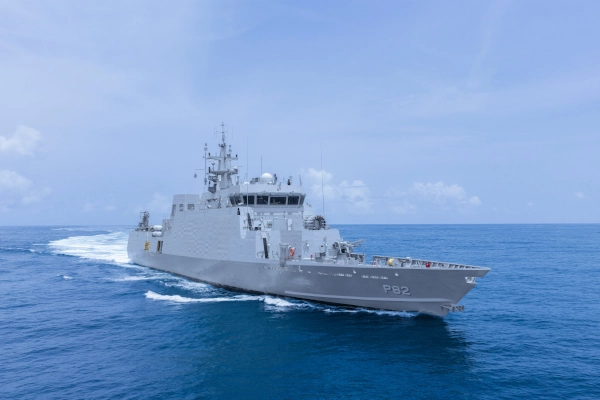
Mahendragiri: India’s Sixth Project 17A Stealth Frigate Strengthens the Navy’s Indigenous Combat Edge

Named after the Mahendragiri mountain range in the Eastern Ghats, the frigate carries a name associated with strength, endurance and majesty. As the first Indian naval warship to bear this name, Mahendragiri enters service with a distinct identity and a powerful symbolic connection to India’s geography, civilisational memory and maritime ambition. Its motto, “Mighty–Majestic–Matchless,” captures the spirit of a warship built for high-end combat, sustained deployment and national service.

Thekkumkur Rajas: The Royal House that Shaped Kottayam’s Medieval Identity

The name Thekkumkur is commonly understood as the “southern regent” or southern division, often remembered in relation to Vadakkumkur, the northern counterpart. These two political houses emerged after the older regional order of Vempolinad weakened and split into smaller principalities. Local historical accounts connect the Kottayam region with the older Kulasekhara and Vempolinad background before the rise of Thekkumkur and Vadakkumkur as separate powers.

DRDO Counter-Drone Architecture: India’s Indigenous Shield Against the Drone Battlefield

The Ministry of Defence has stated that DRDO’s indigenous anti-drone technology is capable of detecting enemy drones, jamming their communication links and destroying them through a laser-based hard-kill mechanism. This gives the system a complete response chain: first identify the threat, then disrupt it electronically, and finally neutralise it physically when required.

Categories