Drone Delivered: Beyond Visual Range Test Flights to Commence Soon
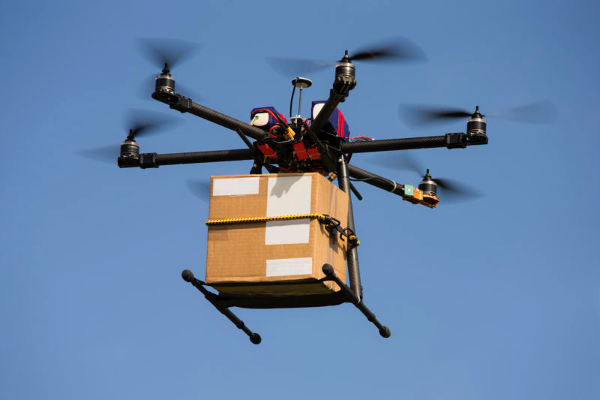
India will soon conduct ‘Beyond Visual Line of Sight’ (BVLOS) test flights of drone systems for the creation of last mile air delivery connectivity in the country.
The chute, which is designed using fire resistant Kevlar polymer and aluminium alloy rings, can hold up to five tonne weight, and can extend to 50 metres in height, said Mahipal Meena, a scientist and deputy director of Centre for Fire Explosive and Environment Safety of a Defence Research and Development Organisation (DRDO) laboratory based out of New Delhi.
As the services strive for network-centric operations, seamlessly interlinking formations and battlefield platforms for command, control, coordination, communications, intelligence and assist decision-making at all hierarchal levels, a Defence Cyber Agency has been set up to control and coordinate the joint cyber operations. The tri-service agency will have both offensive and defensive capability.
“Important point: why aren’t the Americans confronting the Taliban masters in Pakistan in a similar manner? The Taliban and their masters in Rawalpindi are responsible for the killing of 3500 US servicemen in Afghanistan,” asked Saad Mohseni, a prominent Afghan entrepreneur.
“We have identified 10 persons who are providing support to Hizbul MUjahideen terrorist Jehangir Saroori and registered a case against them under the Unlawful Activities (Prevention) Act,” Senior Superintendent of Police, Kishtwar, Harmeet Singh Mehta told PTI.
The Prime Minister said, “Seed hubs have been built to promote pulses production in India, of which more than 30 centers are located in Karnataka, Andhra, Kerala, Tamil Nadu and Telangana itself.”
BIRAC had initiated the Bio-Nest programme as part of an effort to promote the biotech innovation ecosystem in the country. Enterprising ideas in the biotech sector need incubation support of a different kind from the IT sector. They need a landing space to test their ideas, run their operations, have access to high end instrumentations and locate in a place where they connect with other start ups and mentors.
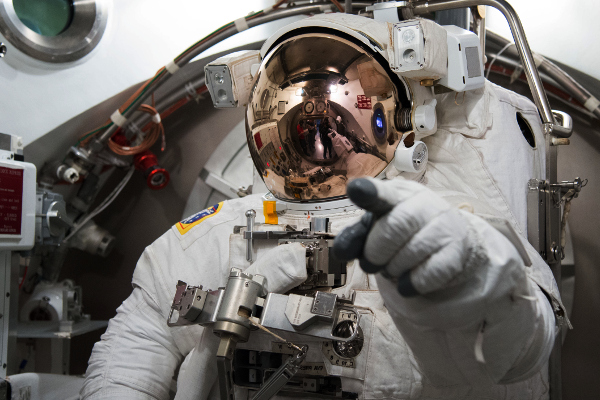
The suit transfers signals pertaining to the health parameters of the astronauts from the spacecraft to the mission control room, said Vinoth P, scientist and member of DEBEL team at the 107th Indian Science Congress under way in Bengaluru.The signals will be analysed by doctors from Bengaluru-based Institute of Aerospace Medicine (IAM).
The Defence Acquisition Council (DAC) last month cleared a Rs 9,000 crore joint proposal of the Defence Research and Development Organization (DRDO) and the Indian Air Force to purchase two Airbus 330s and convert them into 360-degree long-range capability Airborne Warning and Control Systems (AWACS), senior officials familiar with the development said on Saturday.
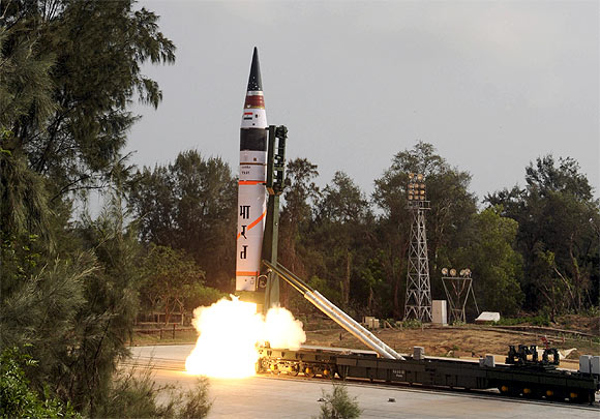
The latest generation of Indian-made nuclear-capable ICBM InterContinental Ballistic Missile Agni-V could enter in service in 2020 after a few additional firing tests. On December 10, 2018, India has successfully test-fired its ICBM Agni-V, according to a statement from the Indian Ministry of Defense (MoD).