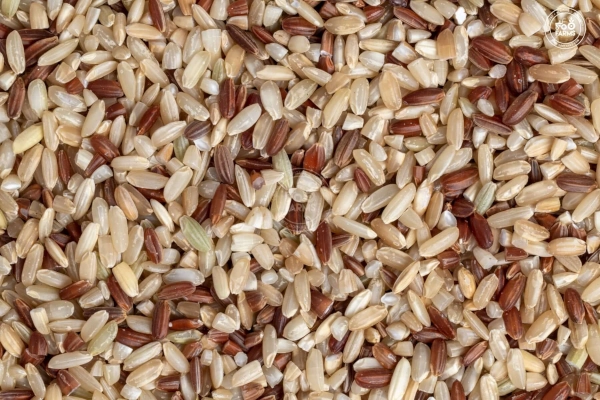
Among Maharashtra’s traditional rice varieties, few possess the distinctive identity of Ambemohar Rice, a short-grained aromatic rice cultivated historically in the Maval region of Pune district, particularly around Mulshi. Its name comes from Marathi: ambe means mango and mohar refers to blossom. The description is literal as much as poetic, because the cooked rice is valued for an aroma traditionally compared with the fragrance of mango blossoms.
Ambemohar belongs to India’s large family of indigenous non-basmati aromatic rices. Unlike basmati, whose identity is built around long, slender grains and elongation after cooking, Ambemohar is characteristically short-grained, soft and aromatic. The official GI specification describes it as white rice with a short grain, sweet taste and distinctive aroma, with a soft texture and good chewability after cooking.
A Rice Shaped by the Maval Landscape
The traditional home of Ambemohar lies in the western part of Pune district, where the land rises towards the Sahyadri ranges of the Western Ghats. Maval and Mulshi receive substantial monsoon rainfall, and paddy cultivation has long been part of the agricultural landscape of valleys and lower hill slopes in this region.
The GI documentation identifies Ambemohar as a traditional rice variety of the Maval region and specifically connects it with Pune district. Its survival in this terrain is closely tied to local farming knowledge, monsoon agriculture and the continued use of traditional seed material by growers.
The geographical setting is important because Ambemohar is not simply the name of a rice sold in Maharashtra. Its reputation developed from a particular agricultural environment in which local farmers maintained aromatic rice landraces over generations. That relationship between grain, place and inherited cultivation practice is central to its GI identity.
Why It Is Called Ambemohar
The variety’s most memorable feature is its fragrance. When cooked, Ambemohar releases an aroma traditionally compared with mango flowers in bloom, giving rise to the name by which the rice has become known across Maharashtra.
The GI specification records this mango-blossom-like aroma as one of the rice’s defining qualities. The grain is also distinguished by its sweet taste, softness and short-grained appearance, separating it clearly from the long-grained aromatic rices more commonly associated with northern India. Network
IBEF similarly describes Ambemohar as an aromatic short-grained rice from Maharashtra whose name reflects its characteristic mango-blossom fragrance.
Short Grain, Soft Texture and Strong Aroma
Ambemohar is visually modest compared with long-grained premium rices. Its grains are relatively short and compact, and when cooked they become soft rather than remaining sharply separated. This texture makes the rice particularly suited to dishes where fragrance and tenderness matter more than grain elongation.
Its culinary identity therefore comes from the combination of three characteristics: aroma, softness and sweetness. The grain absorbs flavours well and works naturally in both simple household preparations and festive dishes.
The very qualities that distinguish it also make Ambemohar different from modern high-yielding commercial varieties. Traditional aromatic landraces are often cultivated for flavour and cultural value rather than maximum yield, which has contributed to the decline of several such varieties across India.
A Traditional Non-Basmati Aromatic Rice
India’s scented rices are broadly divided into basmati and non-basmati groups. Ambemohar belongs to the latter, but the official GI documentation stresses that several non-basmati aromatic rices possess fragrance and eating qualities comparable with celebrated basmati varieties.
This distinction is important because aromatic rice diversity in India extends far beyond basmati. Traditional varieties such as Ambemohar, Joha, Gobindobhog, Jeerakasala and several regional landraces developed in very different ecological zones, each with its own grain form, fragrance and culinary tradition.
Ambemohar represents Maharashtra’s contribution to this wider heritage of indigenous aromatic rice.
Cultivation and Traditional Farming
Ambemohar has historically been cultivated during the monsoon season in the wet paddy fields of the Maval region. Farmers traditionally depended heavily on seasonal rainfall and the moisture-rich conditions created by the Sahyadri landscape.
Traditional cultivation begins with the arrival of the monsoon, followed by nursery preparation and transplantation into puddled fields. The crop has historically required a relatively long growing period compared with many modern varieties, and traditional harvesting has involved cutting mature panicles and carefully drying and threshing them before milling.
Such cultivation is more labour-intensive than growing many modern commercial varieties. This partly explains why traditional Ambemohar declined as farmers increasingly shifted toward varieties offering higher yields and greater disease resistance.
The Challenge of Declining Cultivation
The official GI documentation explicitly places Ambemohar within the wider problem of declining indigenous aromatic rice. Traditional non-basmati scented varieties have lost cultivation area because of the spread of hybrids and modern high-yielding varieties. Many survive only in limited pockets where farmers continue growing them for household consumption, festivals or specialised markets.
Ambemohar faced the same pressure. Its comparatively low productivity made it less attractive in purely commercial agriculture, even though its culinary quality remained highly valued.
The decline of traditional varieties has implications beyond cuisine. Indigenous landraces contain valuable genetic diversity, including traits that may become important for plant breeding, climate adaptation and disease resistance. Protecting Ambemohar therefore also contributes to conserving Maharashtra’s agricultural biodiversity.
Ambemohar and Modern Rice Breeding
The traditional Ambemohar gene pool has also contributed to formal rice improvement programmes. According to the GI documentation, pure-line selections including Ambemohar-157, Ambemohar-159 and Ambemohar-102 were developed from the traditional variety.
This illustrates an important role played by heritage varieties. Traditional landraces are not merely remnants of old agriculture; they can also serve as genetic resources from which improved lines are selected while attempting to retain desirable qualities such as aroma and eating quality.
Ambemohar therefore occupies a position both as a heritage grain and as part of Maharashtra’s broader agricultural breeding history.
A Rice Embedded in Maharashtrian Food Culture
Ambemohar’s soft texture and aromatic character have made it suitable for a wide range of regional preparations. Traditionally, it has been used for everyday steamed rice, khichdi, festive rice dishes and sweet preparations where fragrance contributes strongly to the final dish.
It has also been associated with bhatachi pej, a simple rice gruel prepared in Maharashtrian households, as well as puffed-rice preparations and fermented batters for dishes such as idli and dosa. Its soft cooked texture works particularly well in dishes that do not require the grains to remain completely separate.
The rice has also been used in religious and marriage ceremonies, reflecting the cultural importance traditionally attached to fragrant rice in Maharashtra.
The Importance of Aroma in Traditional Rice
Aromatic rice varieties possess a sensory identity that cannot be measured solely by grain length or yield. Their fragrance becomes strongest during cooking, when volatile compounds are released from the grain.
For communities that preserved Ambemohar, this fragrance was itself part of the rice’s value. It differentiated the grain from ordinary paddy and justified its use for special meals, ceremonies and festivals even when higher-yielding alternatives became available.
This sensory heritage is one reason traditional aromatic varieties continue to command interest among farmers, chefs and consumers despite their smaller production volumes.
The GI Journey
Ambemohar Rice was registered as a Geographical Indication following an application by the Mulshi Taluka Ambemohar Samvardhan Sangha. The official Intellectual Property India database records GI Application No. 478, filed on 26 March 2014, with the product classified under Class 30. The application was published in GI Journal No. 88 on 28 July 2016.
The GI Registry records Certificate No. 279, dated 9 March 2017, and lists the registration as valid until 25 March 2034 following renewal. This current validity date is important because older catalogues may still display the previous registration period before renewal.
Geographical Indication: Ambemohar Rice
GI Application Number: 478
Category: Agricultural
Class: 30
State: Maharashtra
Applicant/Registered Proprietor: Mulshi Taluka Ambemohar Samvardhan Sangha
Date of Filing: 26 March 2014
GI Journal: No. 88
Journal Availability Date: 28 July 2016
Certificate Number: 279
Certificate Date: 9 March 2017
Current Registration Valid Until: 25 March 2034
What the GI Protection Means
The GI registration formally links the reputation of Ambemohar Rice with its geographical origin. It helps distinguish the recognised product from rice marketed under the same name without the corresponding connection to the protected geographical area and production tradition.
Such protection becomes especially important for traditional foods whose reputation can otherwise be diluted as their names become commercially popular. By protecting the geographical identity of Ambemohar, the GI system provides a framework through which farmers and producer organisations can defend the authenticity associated with the name.
The GI can also create opportunities for growers to position Ambemohar as a premium heritage product rather than competing solely with high-yielding commodity rice.
Conservation Through Consumption
Ambemohar’s future ultimately depends on cultivation continuing to remain economically worthwhile for farmers. Heritage rice varieties cannot survive simply as entries in seed banks or historical documents; they require functioning markets that reward farmers for maintaining them.
Growing consumer interest in traditional grains, regional cuisine and GI-certified foods offers an opportunity to support such varieties. When buyers specifically seek authentic Ambemohar, they create demand for the agricultural landscape and seed traditions that produced it.
This relationship between conservation and consumption is particularly important for low-yielding aromatic varieties. Their survival depends upon consumers recognising qualities such as fragrance, flavour and cultural significance that cannot be captured by yield alone.
A Fragrant Grain of Maharashtra’s Agricultural Heritage
Ambemohar Rice represents a distinctive combination of geography, agriculture and food culture. Grown traditionally in the Maval landscape of Pune district, it is defined by its short white grain, soft cooked texture, sweet flavour and characteristic aroma reminiscent of mango blossom.
Its history also tells a broader story about Indian agriculture. Traditional aromatic rices once occupied thousands of local ecological niches, but many lost ground as modern high-yielding varieties expanded. Ambemohar survived because farmers continued to value its flavour and cultural importance, while formal GI protection eventually recognised its regional identity.
Today, the grain stands as more than a speciality rice from Maharashtra. It is part of the living agricultural heritage of the Sahyadri foothills—an indigenous aromatic variety whose fragrance carries with it the landscape, farming traditions and food culture of the Maval region.
You may also like
-
BEML Secures ₹5,400 Crore High-Speed Train Order, Strengthening India’s Indigenous Rail Manufacturing
-
Juniper Green Energy Commissions 65.40 MW Wind Power Capacity, Expands Operational Portfolio to 2,811 MWp
-
India’s Space Economy Set to Reach $45 Billion as Private Investment Accelerates
-
Ajara Ghansal Rice: Maharashtra’s Aromatic Heritage Grain from the Western Ghats
-
Mankind Pharma to Acquire 70% Stake in Belgian CAR-T Cancer Therapy Developer for €48 Million
