Over the next 48 days, scientists from the Indian Space Research Organisation (Isro) will work towards ensuring that the lander-rover on-board Chandrayaan-2 successfully reaches the moon’s South Pole on September 7 at 02:58 am.
However, Chandrayaan-2 is not the only big ticket mission that Isro is working on.
“We have already taken a review today (Monday) to talk about the next mission, the Cartosat 3 mission. We are going to have a series of Cartosat missions this year,” said Isro chairperson K Sivan, after the successful launch of Chandrayaan-2. Cartosat is a series of Earth observation satellites.
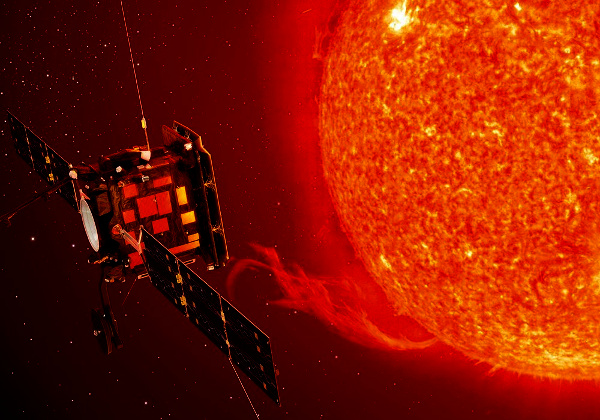
In the first half of 2020, the Isro will attempt a purely scientific mission to the Sun, previous announcements by the agency said. The mission to the Sun, called Aditya-L1, will see Isro sending a satellite 1.5 million kms away from Earth to the L1 point.
The L1 or Lagrangian point, between the Earth and the Sun, is where the gravitational pull of both the bodies on the satellite is equal to centripetal force needed to keep it in orbit.
“The Aditya L1 mission is in an advanced stage. The payloads on the satellite will study the radiations emitted from the sun,” said Dipankar Banerjee, professor at Indian Institute of Astrophysics and a collaborator on the mission.
By the end of 2020, Isro also plans to launch the first unmanned mission to the low earth orbit in preparation for India’s Gaganyaan mission that Isro plans to attempt in December 2021, the previous announcements said.
Source:HT
Image Courtesy: Sandesh
You may also like
-
Indian Scientists Reveal How Common Preservatives Destroy Bacteria From Within
-
ISRO–ESA Extend Space Partnership to 2032, Expand Into Human Exploration
-
India Strengthens Space Surveillance Network With ISRO’s NETRA Radar Facility in Assam
-
India Commissions 51st Doppler Weather Radar at Sambalpur, Plans Around 40 More Under Mission Mausam
-
IIT Bhilai Develops 4D-Printable Hydrogel That Lifts 250 Times Its Weight and Cleans Wastewater
