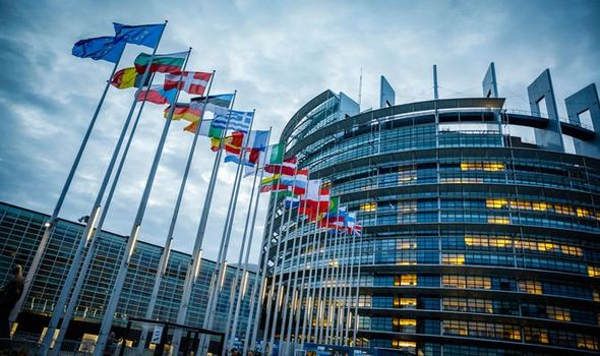
India and the European Union held the 12th round of Foreign Policy and Security Consultations in New Delhi on 27 November 2026, reaffirming their commitment to strengthening strategic cooperation and addressing shared security challenges. The consultations were co-chaired by Sibi George, Secretary in India’s Ministry of External Affairs, and Olof Skoog, Deputy Secretary-General for Political Affairs at the European External Action Service. The discussions covered defence industrial cooperation, maritime security, cybersecurity, space security, counterterrorism and significant regional and international developments.
Strengthening the India–EU Strategic Partnership
The consultations reviewed the implementation of the comprehensive strategic agenda endorsed during the 16th India–EU Summit in January 2026. Known as the Towards 2030 agenda, the framework provides a roadmap for expanding engagement between India and the European Union across strategic, economic, technological and security-related domains. The meeting provided an opportunity to assess progress and identify areas requiring closer institutional coordination.
The discussions build upon the India–EU Security and Defence Partnership signed on 27 January 2026. The partnership establishes a structured mechanism for engagement between Indian and European institutions on contemporary security challenges. Regular consultations and specialised dialogues are intended to translate the broader strategic commitments into practical cooperation.
Expanding Defence Industrial and Technological Cooperation
India and the European Union exchanged views on strengthening cooperation in defence manufacturing, industrial capabilities and military technologies. Engagement in these sectors could provide opportunities for collaboration between Indian and European defence manufacturers, research institutions and technology developers. Such cooperation could complement India’s efforts to strengthen indigenous defence manufacturing and diversify its international technology partnerships.
The consultations also reviewed opportunities arising from the inaugural India–EU Security and Defence Dialogue held in New Delhi on 6 March 2026. Both sides agreed to convene the second edition of the dialogue in 2027, maintaining institutional continuity in defence and security engagement. The latest consultations did not announce specific procurement contracts or joint manufacturing projects, with discussions remaining focused on advancing the existing partnership.
Progress Towards the Security of Information Agreement
An important component of the consultations was the progress towards concluding the India–EU Security of Information Agreement. The proposed agreement is intended to establish a framework for the protection and exchange of classified information between India and the European Union. Such arrangements can facilitate more substantive engagement in security-related matters by establishing mutually recognised information protection requirements.
The eventual conclusion of the agreement could support closer institutional cooperation and information exchange in areas of common strategic interest. It could also provide an additional foundation for defence industrial and technological engagement where the protection of sensitive information is essential. Both sides acknowledged the importance of completing the agreement, although its formal conclusion has not yet been announced.
Maritime Security and Stability in the Indo-Pacific
India and the European Union reiterated their commitment to maintaining an open, peaceful and prosperous Indo-Pacific region. Both sides emphasised respect for international law, national sovereignty, territorial integrity and the peaceful settlement of disputes. The discussions highlighted the importance of closer coordination in addressing maritime security challenges across a region central to international trade and economic connectivity.
Maritime security remains a significant area of cooperation under the India–EU Security and Defence Partnership. India’s geographical position in the Indian Ocean and the European Union’s international maritime interests provide a basis for continued engagement in protecting sea routes and strengthening regional stability. Greater institutional coordination could support maritime security initiatives while contributing to the resilience of international supply chains.
Cooperation in Cybersecurity, Space and Emerging Security Challenges
The consultations also addressed cybersecurity, hybrid threats and space security, reflecting the changing nature of contemporary security challenges. The increasing dependence of governments, industries and critical infrastructure on digital networks and satellite-based services has expanded the scope of international security cooperation beyond conventional military domains. India and the European Union are seeking to address these challenges through their established strategic engagement mechanisms.
Cooperation in these areas could facilitate the exchange of institutional expertise and strengthen resilience against emerging technological threats. Space security represents another important area of engagement, given the growing significance of satellite infrastructure in communications, navigation, disaster management and national security. Specific collaborative programmes will depend on subsequent institutional discussions and implementation arrangements.
Joint Commitment to Combating Terrorism
India and the European Union strongly condemned terrorism and violent extremism, including cross-border terrorism. Both sides reaffirmed the importance of international cooperation in addressing terrorist threats and strengthening collective security. Counterterrorism remains an established component of the India–EU strategic relationship and forms part of the broader Security and Defence Partnership.
Continued engagement through specialised dialogues provides opportunities for India and the European Union to exchange assessments and strengthen institutional cooperation. Addressing terrorism through sustained international coordination is particularly important given the transnational nature of terrorist networks and associated security challenges. The reaffirmation of this shared position reinforces counterterrorism as an enduring priority within the bilateral strategic framework.
Supporting Peace in Ukraine and Global Food Security
The consultations also addressed the ongoing conflict in Ukraine, with both sides emphasising the need for a comprehensive and lasting peace consistent with international law and the principles of the United Nations Charter. The discussions reflected the broader international implications of the conflict, including its consequences for economic stability, transportation networks and essential commodity supplies.
India and the European Union also discussed the importance of restoring freedom of navigation in the Black Sea to reduce disruptions to global food security. The region constitutes an important transportation corridor for agricultural commodities, making uninterrupted commercial navigation significant for international food supply chains. The discussions underscored the interconnected nature of regional conflicts, maritime transportation and global economic stability.
Building a Long-Term India–EU Security Architecture
The 12th Foreign Policy and Security Consultations represent another stage in the institutional development of the India–EU strategic partnership. The proposed Security of Information Agreement, continued defence dialogues and engagement across conventional and emerging security domains provide avenues for translating diplomatic commitments into practical cooperation. The consultations also demonstrate the expanding scope of the relationship beyond its traditional economic and commercial foundations.
As India and the European Union continue implementing their Towards 2030 strategic agenda, sustained cooperation could contribute to stronger industrial partnerships, technological resilience and regional security. The development of structured mechanisms for dialogue and information exchange provides a foundation for addressing shared challenges while respecting the respective strategic priorities of both partners.
You may also like
-
India and Denmark Adopt Joint Action Plan to Deepen Green Strategic Partnership
-
Danish Foreign Minister Visits HAL, Highlights India–Denmark Aerospace and Defence Industrial Cooperation
-
Omnitech Engineering Secures Development Order from BrahMos Aerospace
-
India and Finland Explore Startup Cooperation in Satellite Technology and Gaming
-
India Strengthens Educational Infrastructure in Nepal’s Mustang District
